Overview
Sustainable aquarium useFully submerged
Growth formRosette
Growth habitVertical, Runners
Typical submerged height30–100 cm
Typical width or spread0.8–1.5 cm
Primary placementBackground
Growth rateFast
Care
Minimum light levelLow
Recommended light levelMedium
CO₂ requirementNot required
Nutrient uptakeRoot
Substrate requirementsRooting required
PlantingWhen planting, the root collar (the junction of roots and leaves) should be left at or slightly above the substrate surface, not buried, to prevent rot. Fine sand or rounded gravel 3–5 mm is most suitable; plants are planted in groups of 3–5 with an interval of 3–5 cm, preferably in nutrient-rich substrate or with added root tablets.
MaintenanceBasic care involves regular thinning: the plant actively produces offsets and quickly forms dense thickets, so excess shoots and daughter plants should be removed. Damaged or yellowing leaves are best cut at the base, not trimmed partially, as cut leaves often rot. Weekly water changes of about 20% and removal of dead parts are recommended to maintain water quality.
Compatibility
CompatibilityVallisneria spiralis is a hardy plant with tough leaves that are generally not eaten by herbivorous fish, including goldfish and Malawian cichlids; it is suitable for most common aquariums, provides cover for fish and fry, but requires control of its growth to prevent shading other plants.
Leaf toughnessFirm
Rooting stabilityMedium
Structural fragilityOrdinary
Disposal warningValisneria spiralis is an invasive species with high risk: plant fragments, offsets, and seeds should not be disposed of in natural water bodies or sewage; before disposal, the plant should be completely dried or frozen, then placed in a sealed bag and discarded with household waste.
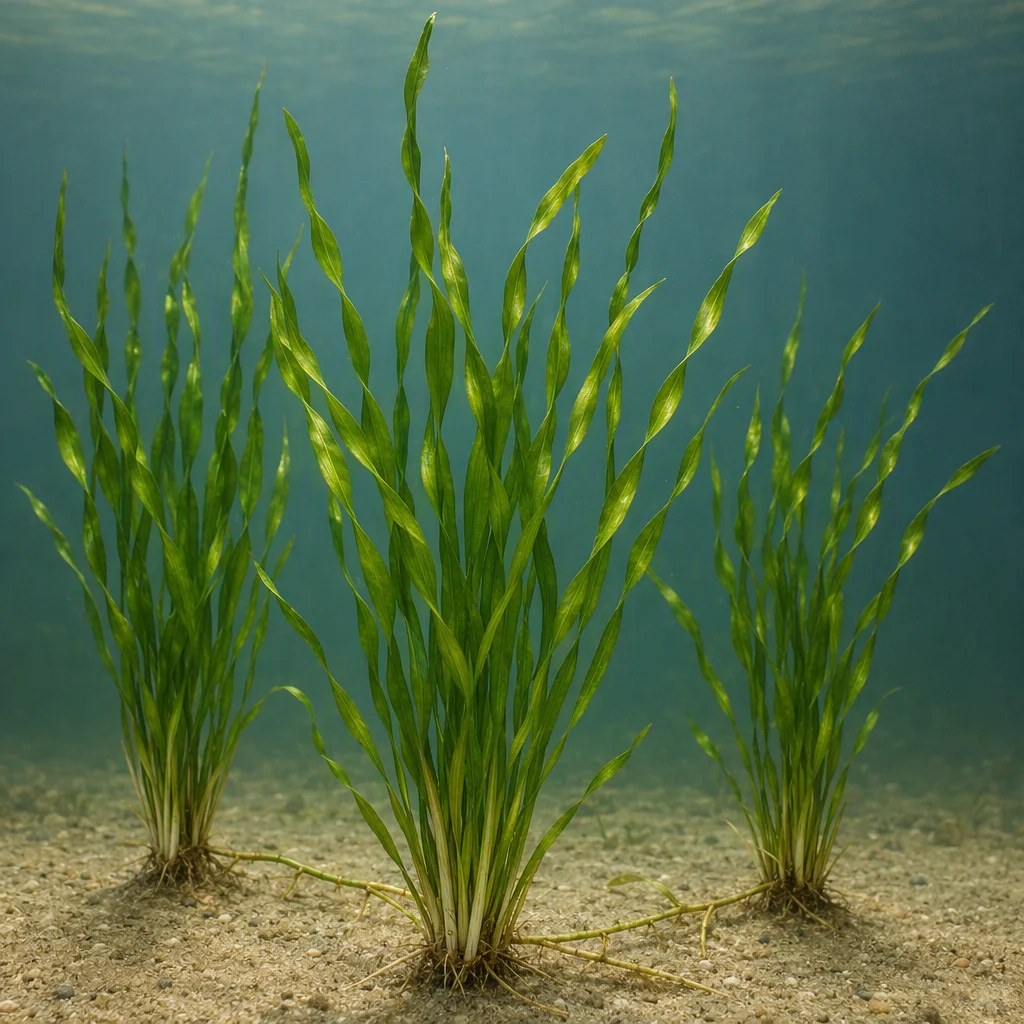 Reference illustration · may contain inaccuracies