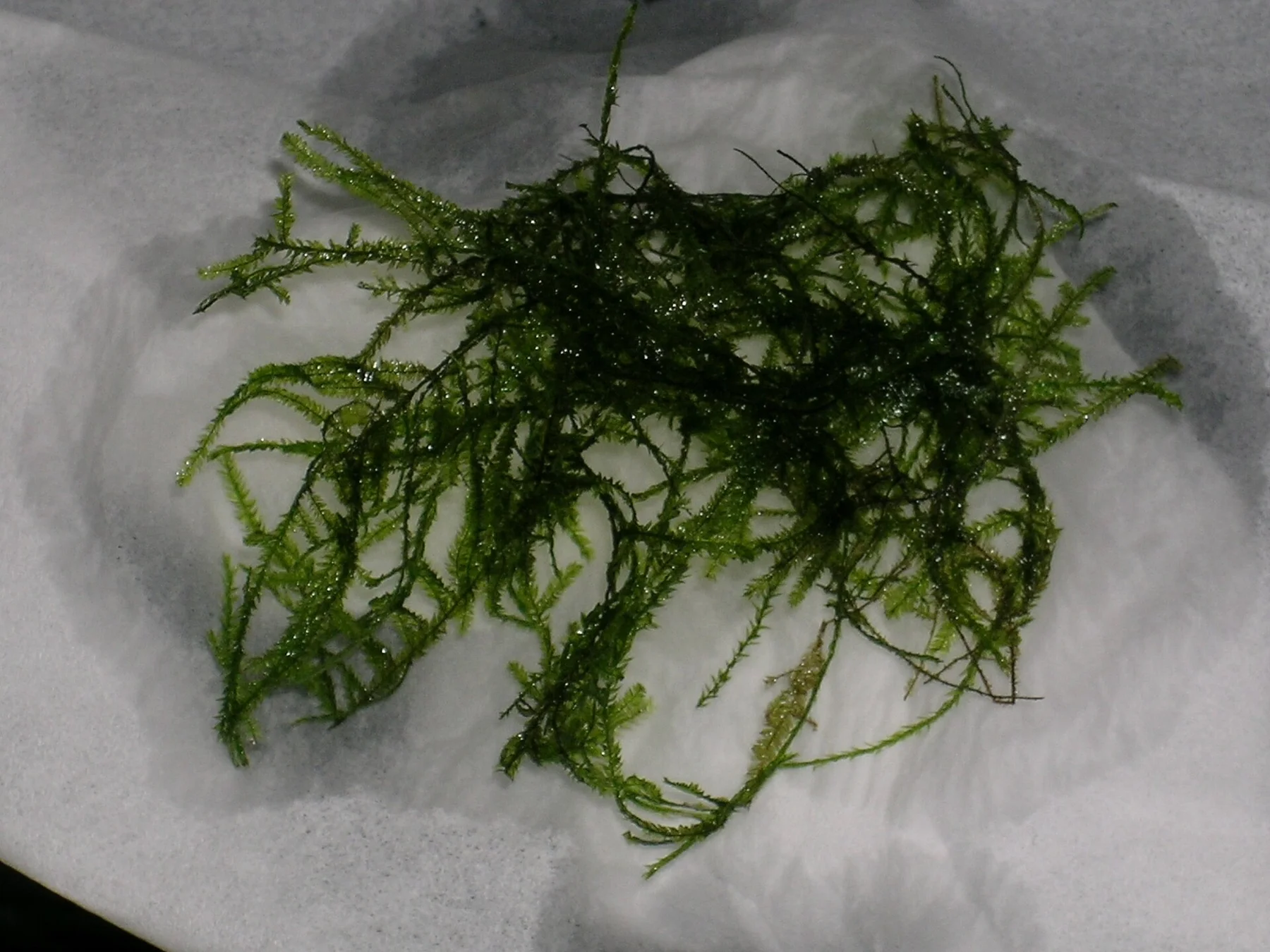
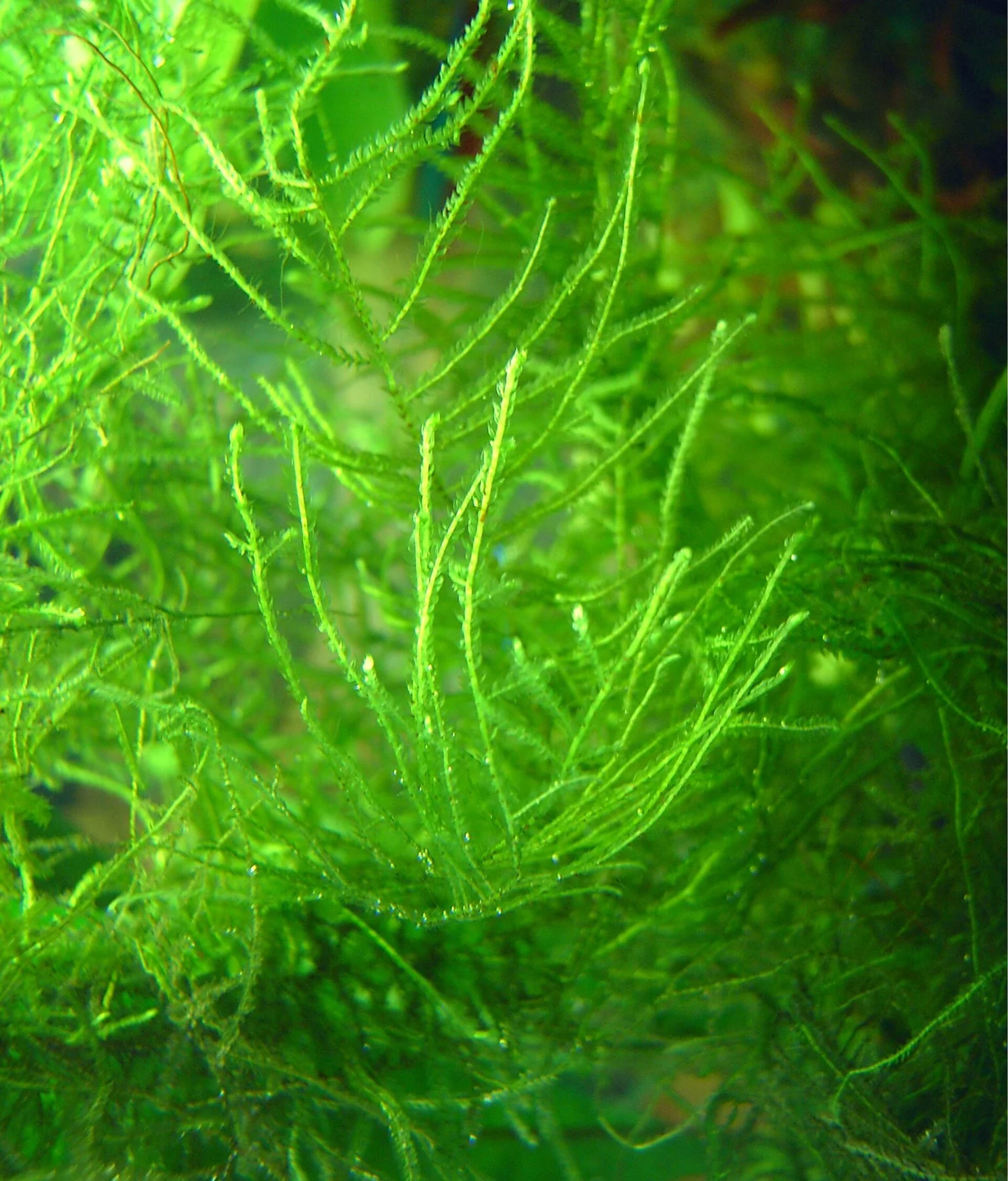
Overview
Sustainable aquarium useFully submerged, Floating, Paludarium
Growth formMoss or liverwort
Growth habitCreeping, Branching
Height3–10 cm
Primary placementForeground
Growth rateMedium
Care
Minimum light levelLow
Recommended light levelLow
CO₂ requirementNot required
Nutrient uptakeWater column
Substrate requirementsNone
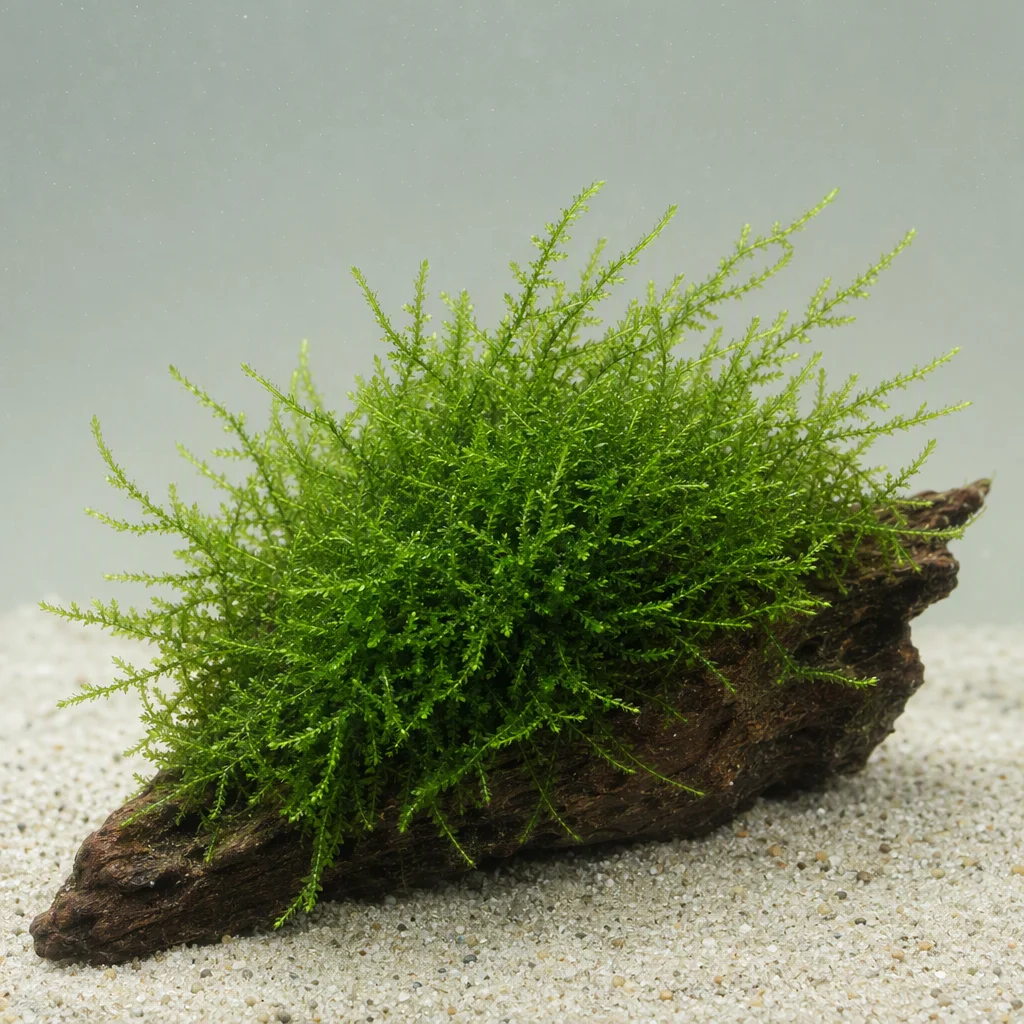
PlantingJava moss is not planted in substrate. It is attached to stones, driftwood, nets, or other surfaces using fine fishing line, cotton thread, or aquarium glue. The moss is spread in a thin layer (several small clumps, not a thick layer) and fixed until it attaches itself with rhizoids, which usually takes 3–4 weeks. After attachment, the line or thread can be removed. It is also possible to freely place the moss in the water column or create a carpet on a net between two layers of plastic or stainless steel mesh.
MaintenanceTaxiphyllum barbieri is one of the most undemanding aquarium plants. Basic care involves regular trimming: as it grows, the carpet is cut with scissors every 3–6 weeks, returning the thickness to about 1 cm; otherwise, the lower layers, deprived of light and water flow, die off, and the entire mat may detach from the substrate. It is important to maintain gentle water flow through the thickets and prevent debris accumulation inside the moss—periodic rinsing or blowing is recommended. Trimming is conveniently done before water changes, with cut fragments removed by siphon (any moss fragment can root in a new place). The plant is tolerant of water parameters: pH 5.5–8.0, hardness 2–20 °dGH, temperature 15–28 °C (optimal 18–24 °C; above 26 °C, growth becomes loose and elongated). Lighting is sufficiently low, with a photoperiod of 6–8 hours. CO₂ supplementation and fertilizers are not mandatory but accelerate growth when available. In the aquarium, moss is attached to driftwood, stones, or nets with a thin layer using fishing line, thread, or gel glue.
Compatibility
CompatibilityTaxiphyllum barbieri is one of the most versatile and compatible aquarium plants. It serves as excellent cover for fry and small fish, shelter for shrimps, a spawning substrate for egg-laying species (barbs, danios, killifish, rainbowfish), and a grazing area for microorganisms that feed the young. It is recommended for aquariums with peaceful fish (neon, danios, tetras, rasboras), shrimps (neocaridinas, caridina), and snails. The plant is not eaten by most fish due to its tough structure; only large cichlids and herbivorous species that actively dig in the substrate may damage it. It does not require rooting in the substrate, making it suitable for aquariums with burrowing fish. It may become overgrown with algae under excessive light and organic matter, which should be considered when selecting algae-eating neighbors.
Rooting stabilityMedium
Structural fragilityFragile
 Reference illustration · may contain inaccuracies