Overview
Sustainable aquarium useFully submerged, Paludarium
Growth formStem
Growth habitCreeping, Carpeting
Height5–10 cm
Primary placementForeground
Growth rateSlow
Care
Minimum light levelMedium
Recommended light levelMedium
CO₂ requirementBeneficial
Nutrient uptakeRoot
Substrate requirementsNutrient substrate or root feeding
PlantingWhen planting, the longest vertical stem is cut off, and the bush is divided into 2–4 parts, which are planted closely together in a small group in the foreground (less often midground). After planting, the stem is slightly pressed into the substrate to encourage horizontal spread. The plant can also be attached to rocks or driftwood. Emergent (above-water) leaves gradually die off when submerged — they can be removed during planting. Stems are fragile, best handled with tweezers.
MaintenancePrimary care includes: planting in groups in nutrient-rich substrate (long vertical stems are divided into 2–4 parts and planted close together); regular pinching/cutting of protruding vertical stems to maintain a compact carpet form (typically once a month); fertilization — the plant is sensitive to iron and potassium deficiency, a nutrient-rich substrate base and liquid micronutrient fertilizers are recommended; weekly water changes of ~20% volume. The plant has a long adaptation period after planting, stems are fragile — best planted with tweezers. As it spreads, horizontal stems root independently, forming a dense carpet. Propagation is by apical cuttings.
Compatibility
CompatibilityStaurogyne repens is compatible with peaceful aquarium inhabitants: tropical fish (tetras, rasboras, gouramis, small Corydoras catfish), shrimp (Neocaridina, Crystal shrimp), and snails. Dense thickets provide shelter for fry and grazing surfaces for shrimp. The plant is safe for all invertebrates. It is not recommended to keep it with large herbivorous fish and active burrowing species (some cichlids, goldfish), which may uproot or damage the plant. It pairs well with other ground covers in aquascaping — Glossostigma and Hemianthus cuba.
Leaf toughnessFirm
Rooting stabilityStrong
Structural fragilityFragile
Aquarium toxicity riskNo toxicity data: Staurogyne repens is considered safe for fish, shrimp, and other aquarium inhabitants. It should be noted that stems may be eaten by herbivorous fish, but this is not related to toxicity.
Disposal warningGeneral rule for safe disposal of aquarium plants; Staurogyne repens is not listed as an invasive species in the EU, but as a live plant should not be released into natural water bodies.
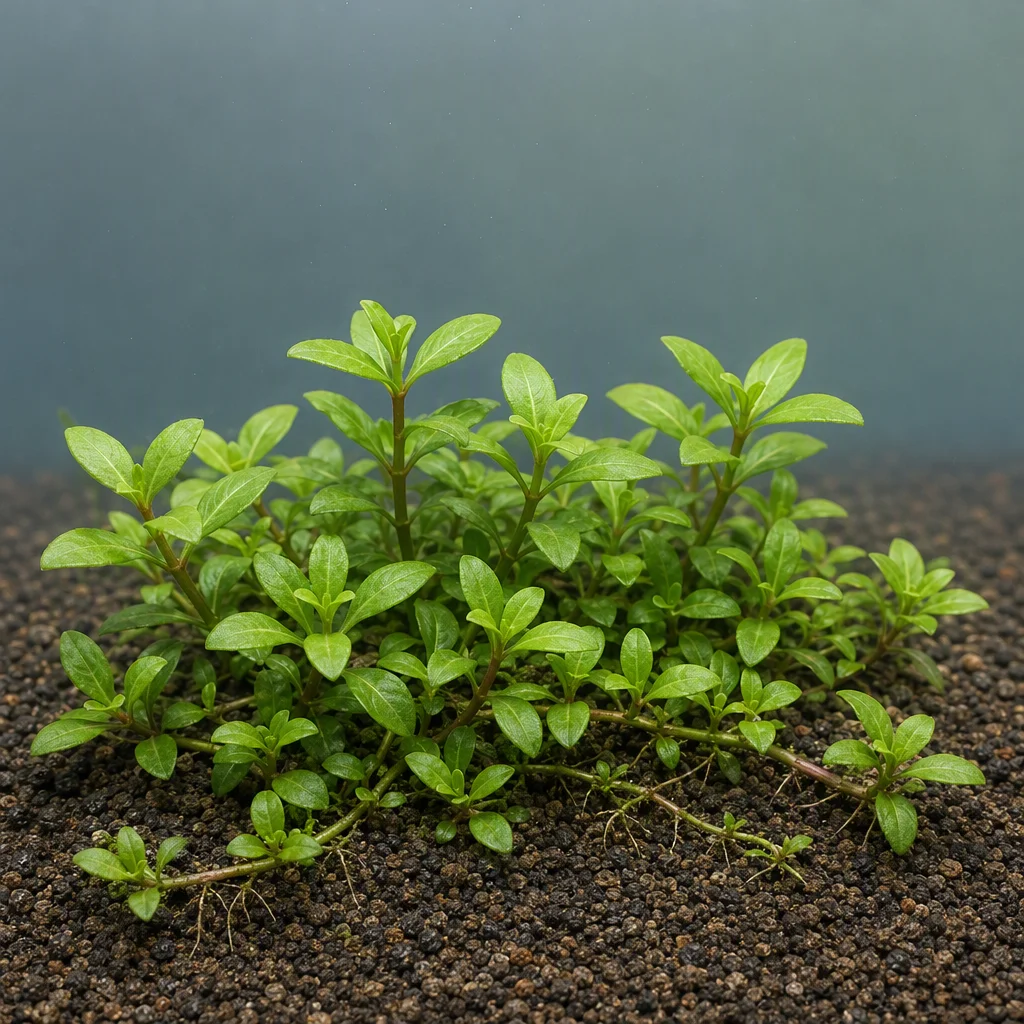 Reference illustration · may contain inaccuracies