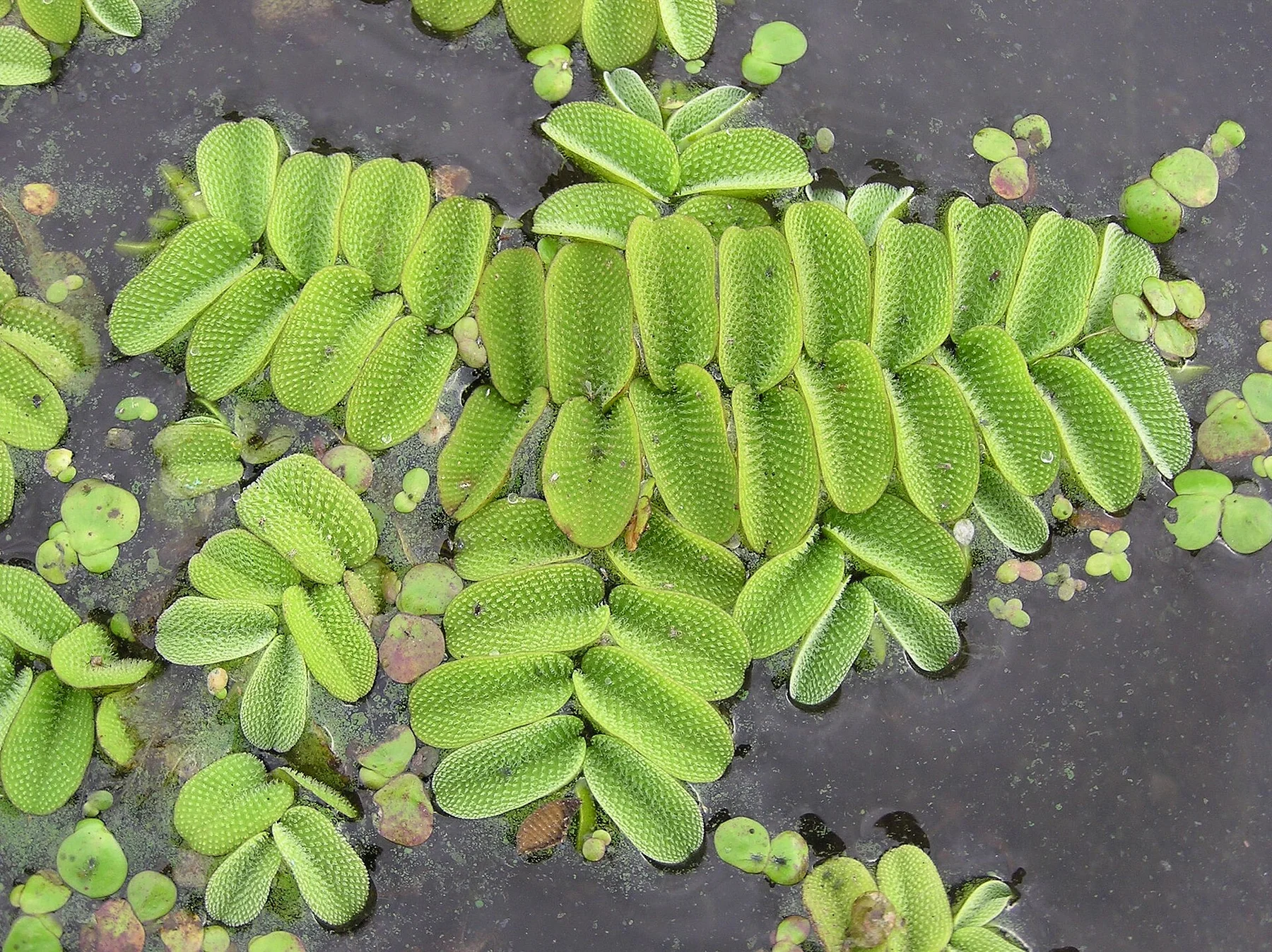
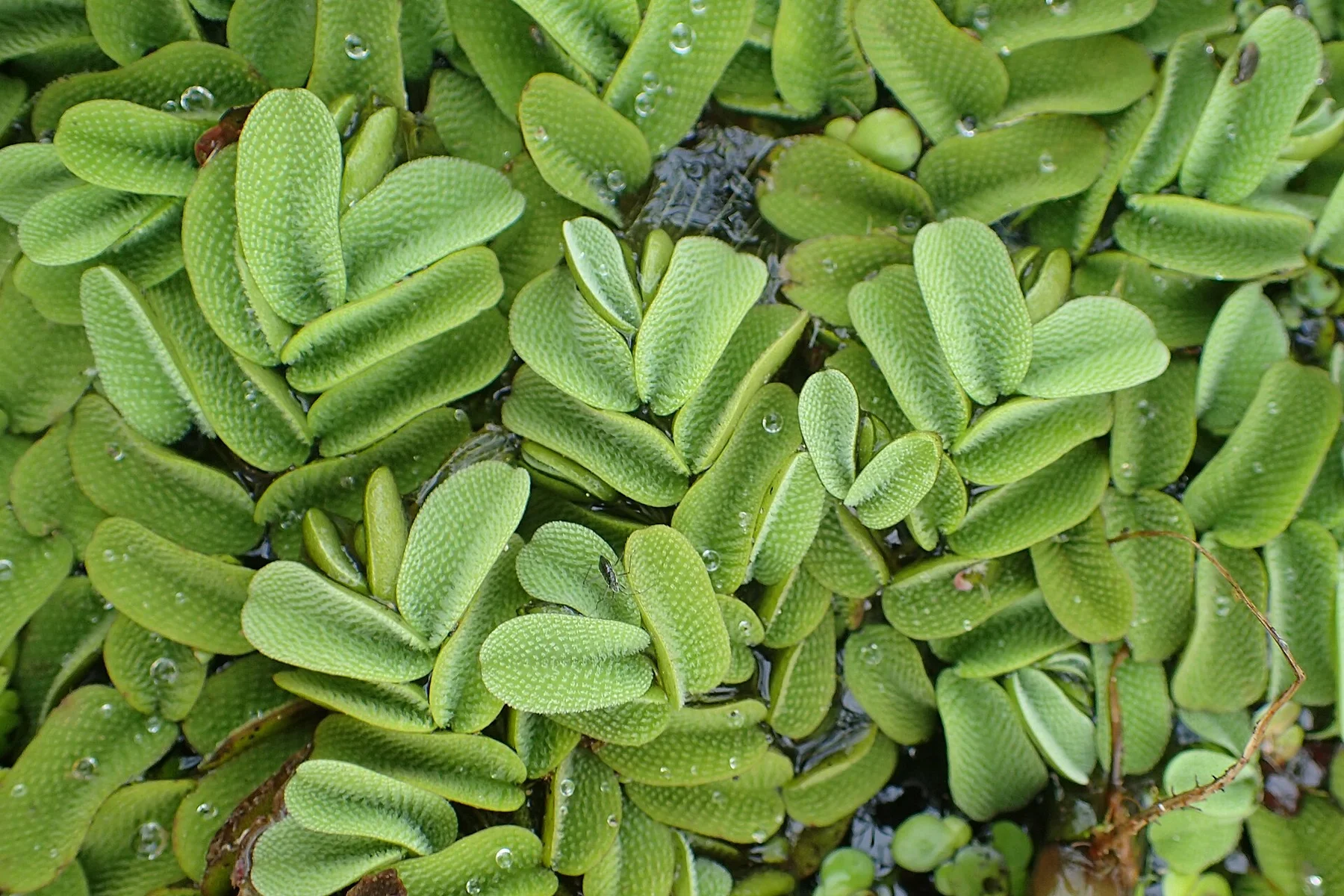
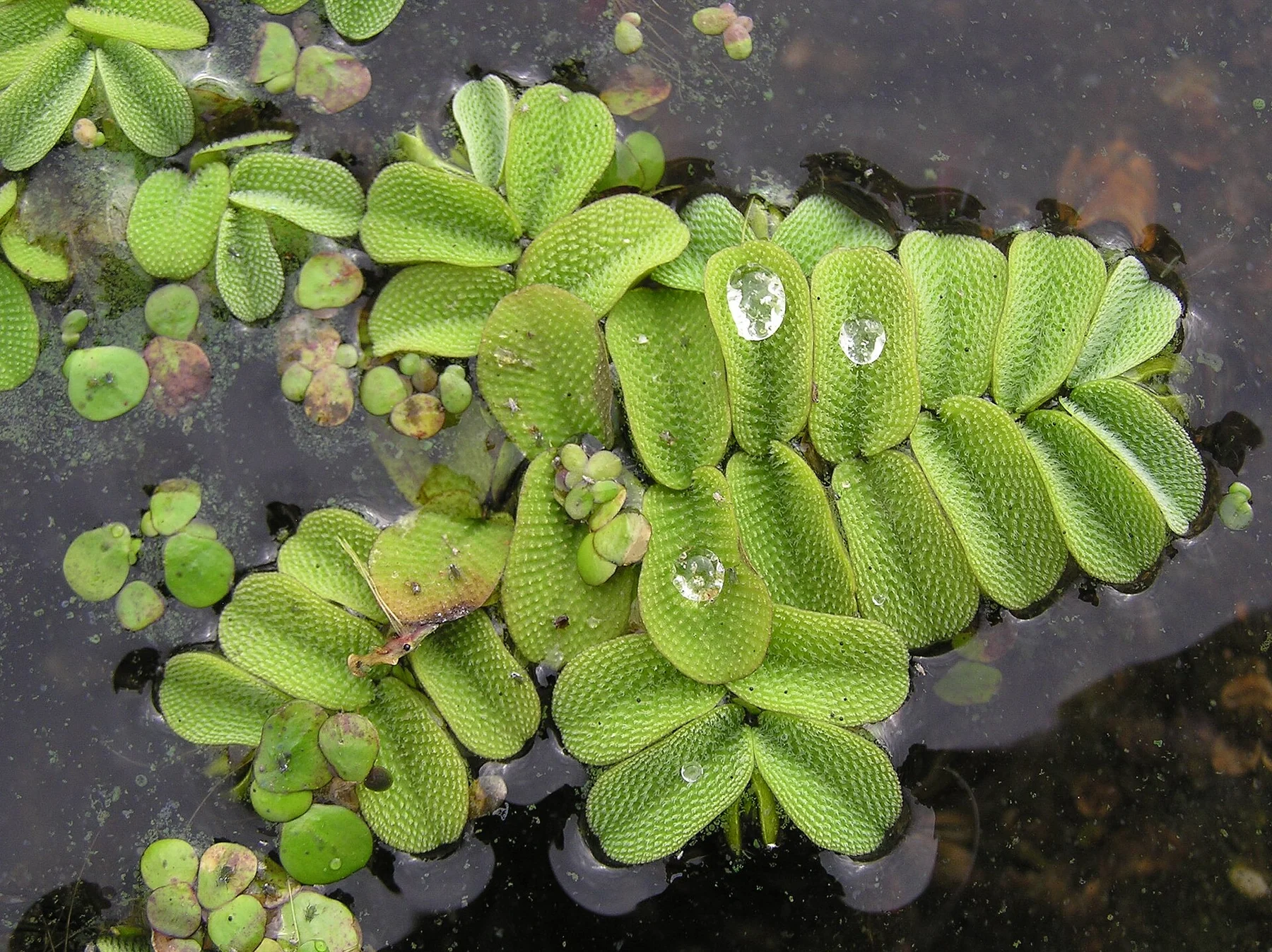
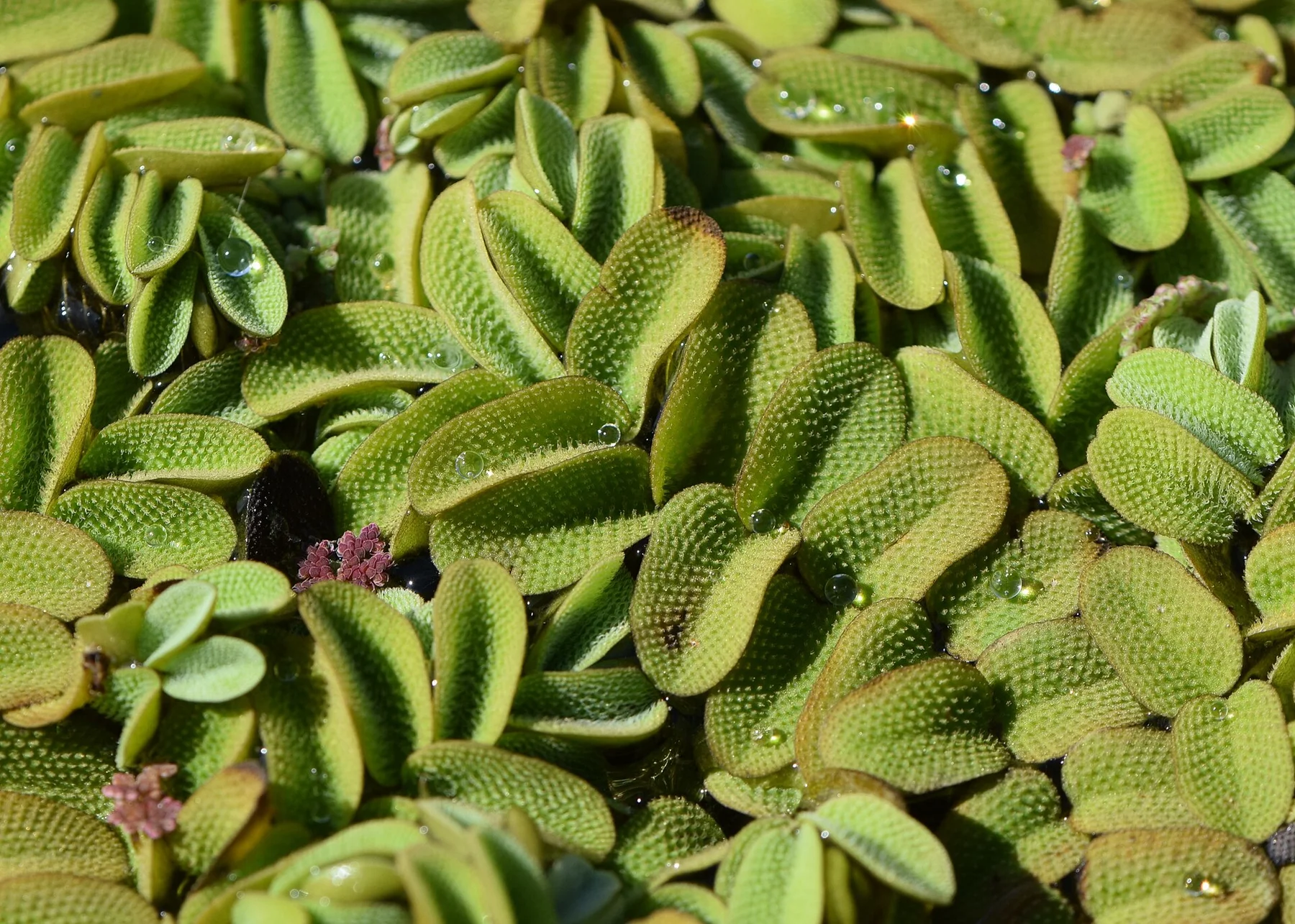
Overview
Sustainable aquarium useFloating, Roots in water, Paludarium
Growth formFloating
Growth habitFloating colony
Height1–3 cm
Primary placementSurface
Growth rateFast
Care
Minimum light levelLow
Recommended light levelHigh
CO₂ requirementNot required
Nutrient uptakeWater column
Substrate requirementsNone
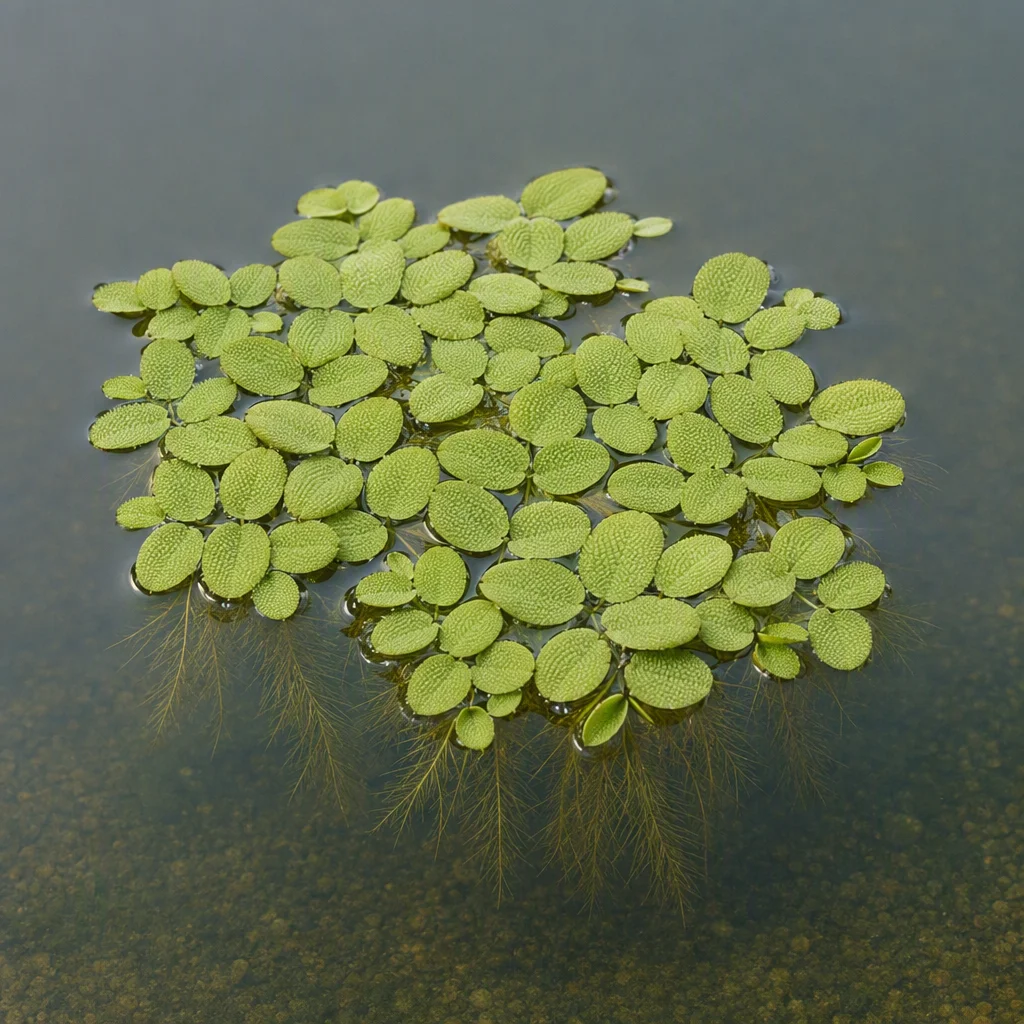
PlantingPlanting is not required: Salvinia is a free-floating fern that is not anchored in the substrate and is not attached to decorations. It is enough to place the plant on the water surface in a calm area without strong currents: the floating leaves should be above the water, and the submerged thread-like leaves ('roots') in the water. Soil and nutrient substrate are not needed; in strong currents, the plant is flooded and sinks.
MaintenanceThe main care involves regular thinning: every 1–2 weeks, 30–40% of the shoots are removed with a net to prevent the plant from covering the entire water surface and shading lower plants. Weekly water changes of 20–25% of the volume are recommended, along with removal of dead and yellowed leaves. It is preferable to keep in an open aquarium without a lid (it does not tolerate condensation drops), with calm water flow — strong currents can damage the plant. At temperatures below 20°C, growth slows down; in cool water, the plant may produce spores and die off, so warm water (24–28°C) is needed for year-round keeping.
Compatibility
CompatibilityCompatibility: Water lettuce (Salvinia natans) is suitable for aquariums with peaceful fish, shrimp, and other small aquatic organisms. Dense floating mats create shaded areas and serve as natural cover for fry and juvenile shrimp. It can also be beneficial in aquariums with newts, providing additional support at the water surface.
Limitations: When kept with other floating plants, competition for light, space, and nutrients may occur. Especially undesirable is cohabitation with Pistia (Pistia stratiotes), which can suppress water lettuce growth. It is also unsuitable for aquariums with species that actively eat or damage soft vegetation.
Rooting stabilityNone
Structural fragilityFragile
Aquarium toxicity riskNo obvious toxicity to aquarium inhabitants has been identified: floating Salvinia is not listed among toxic plants (e.g., in the ASPCA database) and is widely used as cover for fry and shrimps. The plant actively absorbs nitrates, phosphates, and ammonia, improving water quality. The only indirect risk is excessive growth, when a dense carpet completely covers the surface, causing strong shading and disrupting gas exchange in the aquarium.
Disposal warningNever dispose of removed Salvinia into natural water bodies, ponds, rivers, channels, or storm drains: in some regions (e.g., Ontario, Canada), the genus Salvinia is fully prohibited as invasive, and in tropical countries, Salvinia forms dense mats that block light, reduce oxygen, and clog water intakes. Additional risk: in trade, a much more aggressive invasive species, Salvinia molesta (EPPO), is often sold under the name S. natans, which is difficult to distinguish without expertise. Dispose of plant material in household trash or thoroughly dry and compost it away from water bodies (at least 30 m from the shoreline). Do not release the plant into the wild or outside its natural range.
 Reference illustration · may contain inaccuracies