Overview
Sustainable aquarium useFully submerged, Paludarium, Roots in water
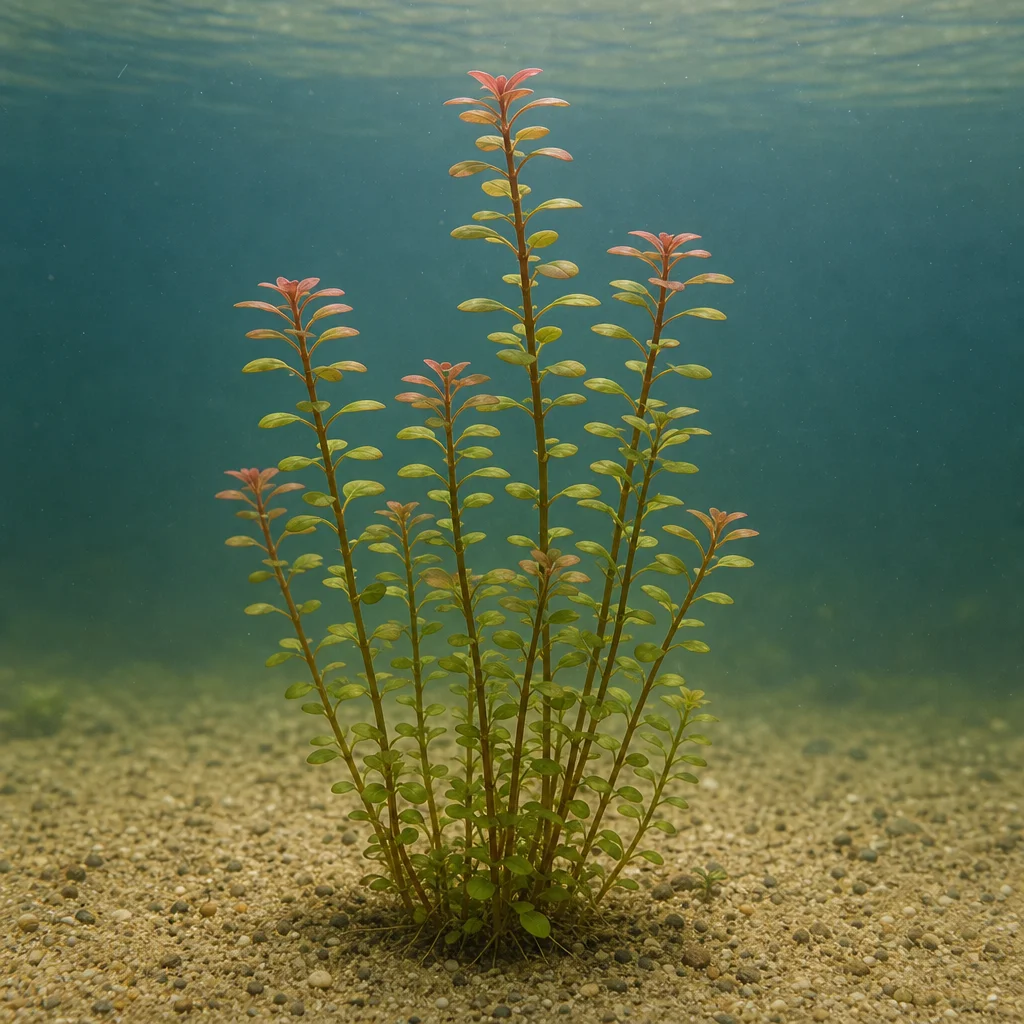
Growth formStem
Growth habitVertical, Branching, Creeping
Height20–80 cm
Primary placementBackground
Growth rateFast
Care
Minimum light levelMedium
Recommended light levelMedium
CO₂ requirementBeneficial
Nutrient uptakeMixed
Substrate requirementsAnchoring only
PlantingBefore planting, shorten the stems from the bottom to the required length. No more than three specimens should be planted in one hole at a distance of 2–3 cm from each other. The substrate should be loose sand with a fraction of 1–4 mm or a nutrient-rich substrate. Top cuttings 5–8 cm long are planted in the substrate, where they quickly root. In a high-tech aquarium, stems are placed at least 1.5–2 cm apart to allow for lateral shoot development.
MaintenanceRotala rotundifolia is an undemanding long-stemmed plant that requires regular trimming to maintain a compact shape and stimulate branching. It is recommended to plant it in dense groups in the middle or background. Bright lighting (0.6–1.0 W/l, photoperiod ~12 hours), nutrient-rich substrate, regular fertilization (especially iron and potassium), and weekly water changes (20–25%) are necessary. The plant is fragile and requires careful handling; it is not recommended to keep with burrowing fish. It is propagated by top cuttings 5–8 cm long.
Compatibility
CompatibilityRotala rotundifolia is compatible with most peaceful aquarium fish and shrimp, providing cover for fry and small inhabitants. It is not recommended to keep with burrowing fish (such as bettas, some catfish) that may uproot the plant due to its weak root system. Not suitable for tanks with herbivorous fish. It pairs well with broad-leaved plants (Anubias, Cryptocoryne), creating textural contrast. Suitable for paludariums and vivariums. It is recommended to plant in groups on the midground and background.
Leaf toughnessSoft
Rooting stabilityWeak
Structural fragilityFragile
Aquarium toxicity riskRotala rotundifolia is non-toxic to fish and invertebrates. The plant is safe for shrimp and sensitive fish. However, its soft, fragile stems and leaves can be damaged by large or active fish, as well as burrowing species (botiids, some catfish) that disturb the substrate. The plant does not release toxic substances into the water.
Disposal warningRotala rotundifolia is an invasive species in some regions (notably Florida, USA, where it is classified as a Category 2 invasive species). Releasing the plant and its fragments into natural water bodies or using it in open garden ponds in warm climates is prohibited. The plant propagates by stem fragmentation and seeds, so cuttings should not be left by the water. Before disposal, plant residues should be completely dried (e.g., in the sun for several days) and then discarded in compost or trash. Do not drain aquarium water with plant fragments into natural water bodies.
 Reference illustration · may contain inaccuracies