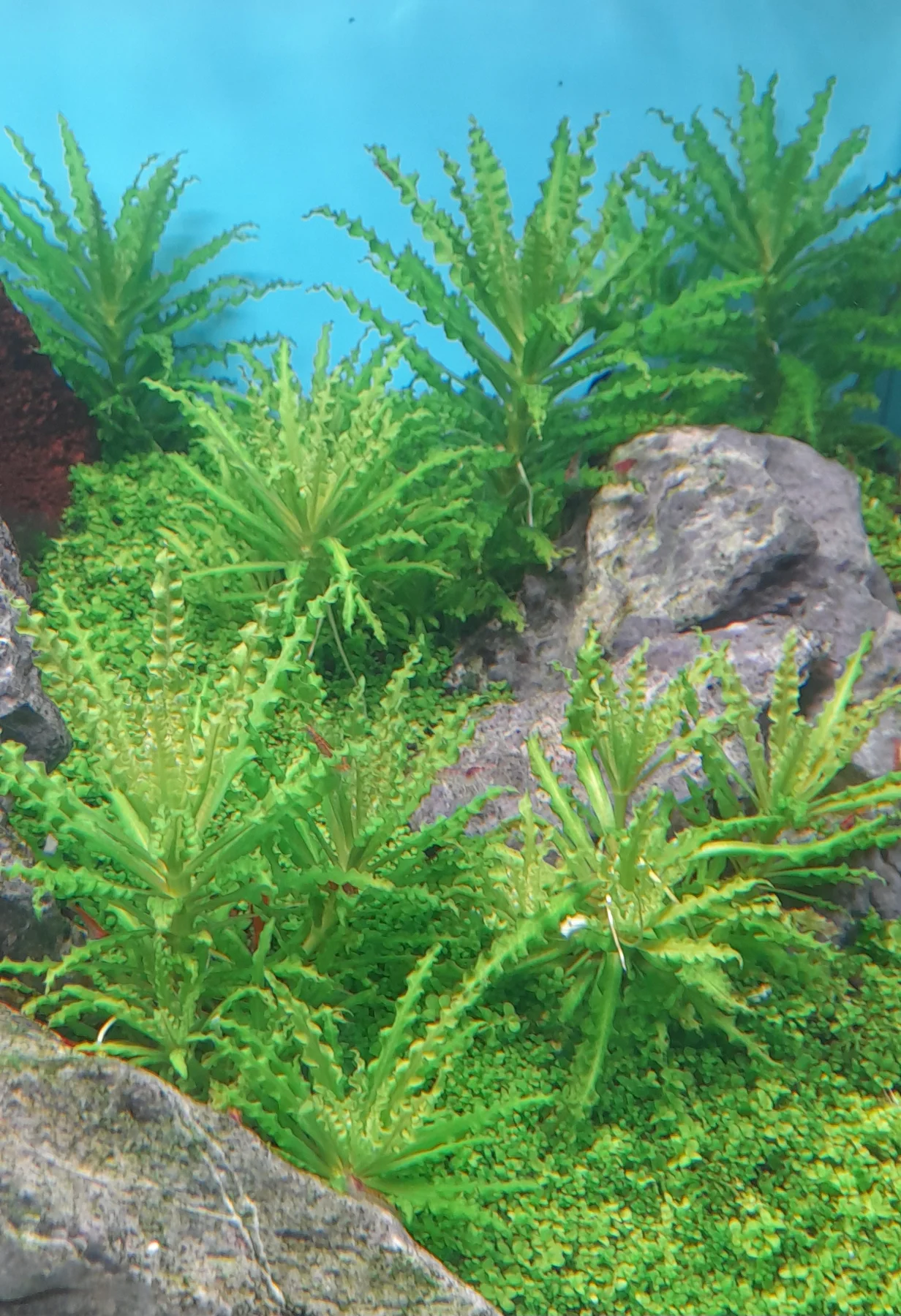
Overview
Sustainable aquarium useFully submerged, Paludarium
Growth formStem
Growth habitCreeping, Branching
Height3–15 cm
Primary placementForeground
Growth rateMedium
Care
Minimum light levelMedium
Recommended light levelHigh
CO₂ requirementRequired
Nutrient uptakeRoot
Substrate requirementsNutrient substrate or root feeding
PlantingThe plant is planted in nutrient-rich substrate (preferably with a nutrient base). When planting, a cluster of several plants is divided into 4–5 blocks and planted 3–5 cm apart to quickly form a carpet. Dead or damaged leaves and large clumps of roots are removed. The plant can also be attached to driftwood and rocks with thread or fishing line until roots are established. It is important not to bury the growth point.
MaintenancePogostemon helferi is a moderately difficult plant requiring stable conditions. Bright lighting (0.5–1 W/l), CO₂ injection (7–14 mg/l according to Tetra, 20–30 mg/l according to Dennerle), and regular fertilization, especially with iron and potassium, are necessary. The substrate should be nutrient-rich and fine-grained; a nutrient substrate is recommended. The plant poorly tolerates sharp water parameter fluctuations and should only be planted in an established aquarium. When reaching 5–6 cm in height, pinching the top is recommended to stimulate side shoot growth. Propagation is through side shoots and cuttings. The leaves are fragile; avoid keeping with fish that nibble on greenery.
Compatibility
CompatibilityPogostemon helferi has delicate, fragile leaves that are favored by many herbivorous fish and snails, so keeping it with herbivorous inhabitants is not recommended — the plant may be completely destroyed. Safe neighbors include small peaceful fish: tetras, danios, small livebearers, and characins, as well as shrimps (e.g., Neocaridina davidi), which do not damage the plant and even help clean the leaves of algae. Large burrowing fish (e.g., corydoras and bottom catfish) should be avoided, as they may uproot recently planted rosettes. The plant poorly tolerates aggressive algae and requires a stable, established aquarium; in newly set-up tanks with unstable parameters, the plant often loses leaves and dies.
Leaf toughnessSoft
Rooting stabilityStrong
Structural fragilityFragile
Aquarium toxicity riskNo toxicity has been identified. Pogostemon helferi poses no danger to fish, shrimp, or other aquarium inhabitants. Tropica guarantees that plants cultivated in vitro are completely safe for sensitive shrimp and fish. The main risk is not toxicity but that the soft, delicate leaves may be eaten by herbivorous fish and snails.
Disposal warningDo not dispose of the plant or its fragments into natural water bodies. Pogostemon helferi can survive in a wide range of conditions (including seasonally drying biotopes), and if introduced outside its natural range, it may pose an invasive risk. Dispose of excess plants through composting, freezing, or drying before discarding with household waste.
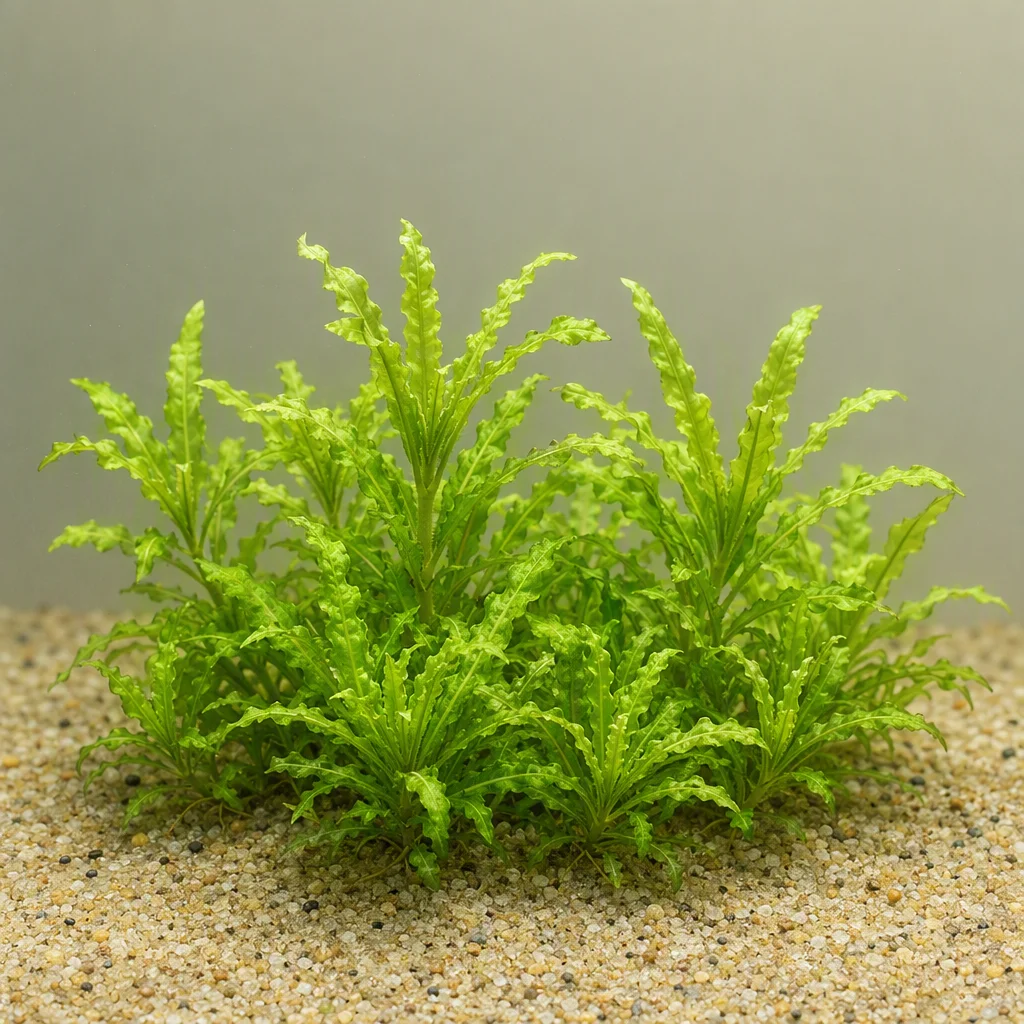 Reference illustration · may contain inaccuracies