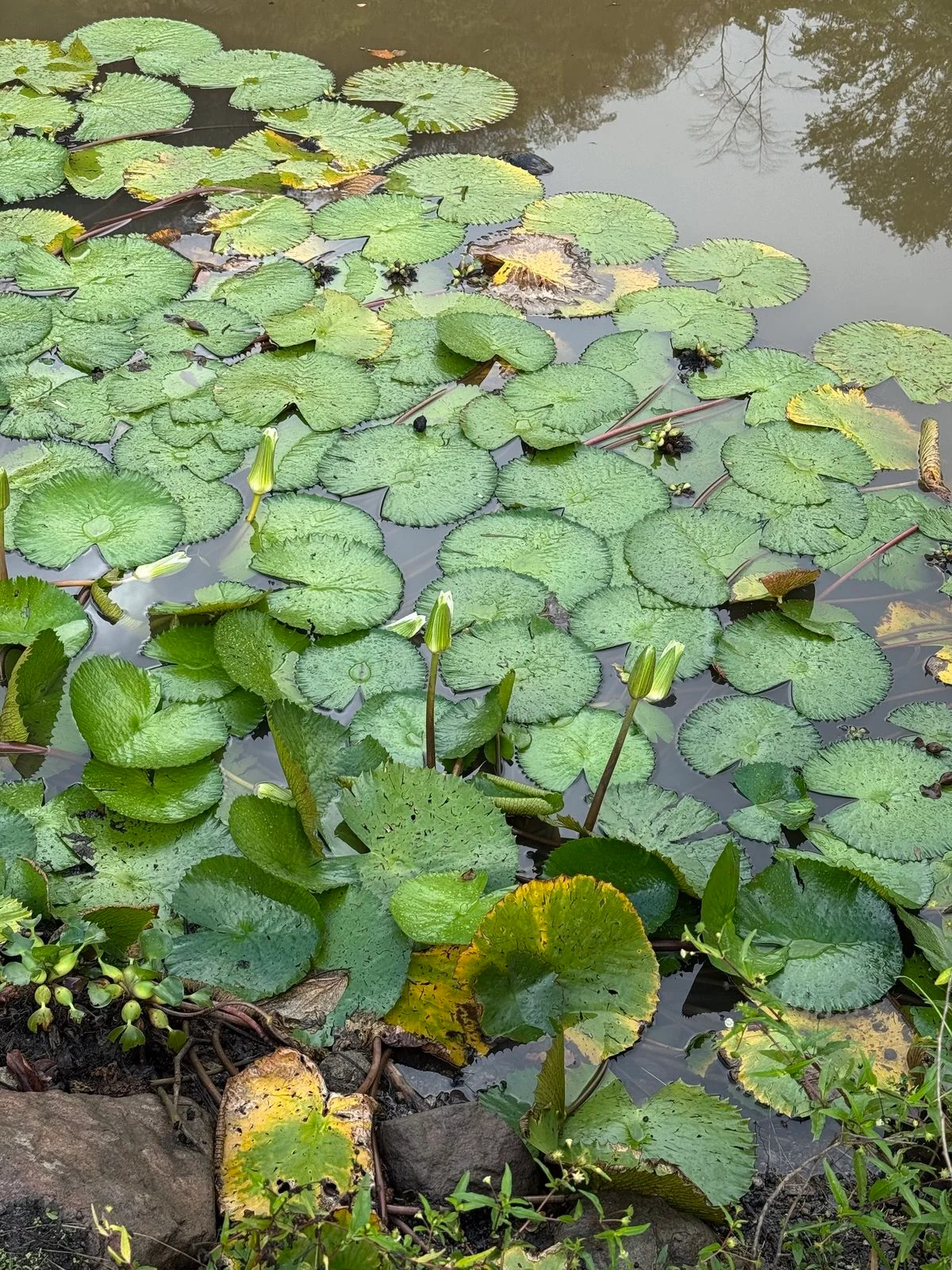
Overview
Sustainable aquarium useFully submerged, Floating, Roots in water
Growth formBulb or tuber
Growth habitVertical
Height20–80 cm
Primary placementMidground
Growth rateFast
Care
Minimum light levelMedium
Recommended light levelMedium
CO₂ requirementBeneficial
Nutrient uptakeRoot
Substrate requirementsNutrient substrate or root feeding
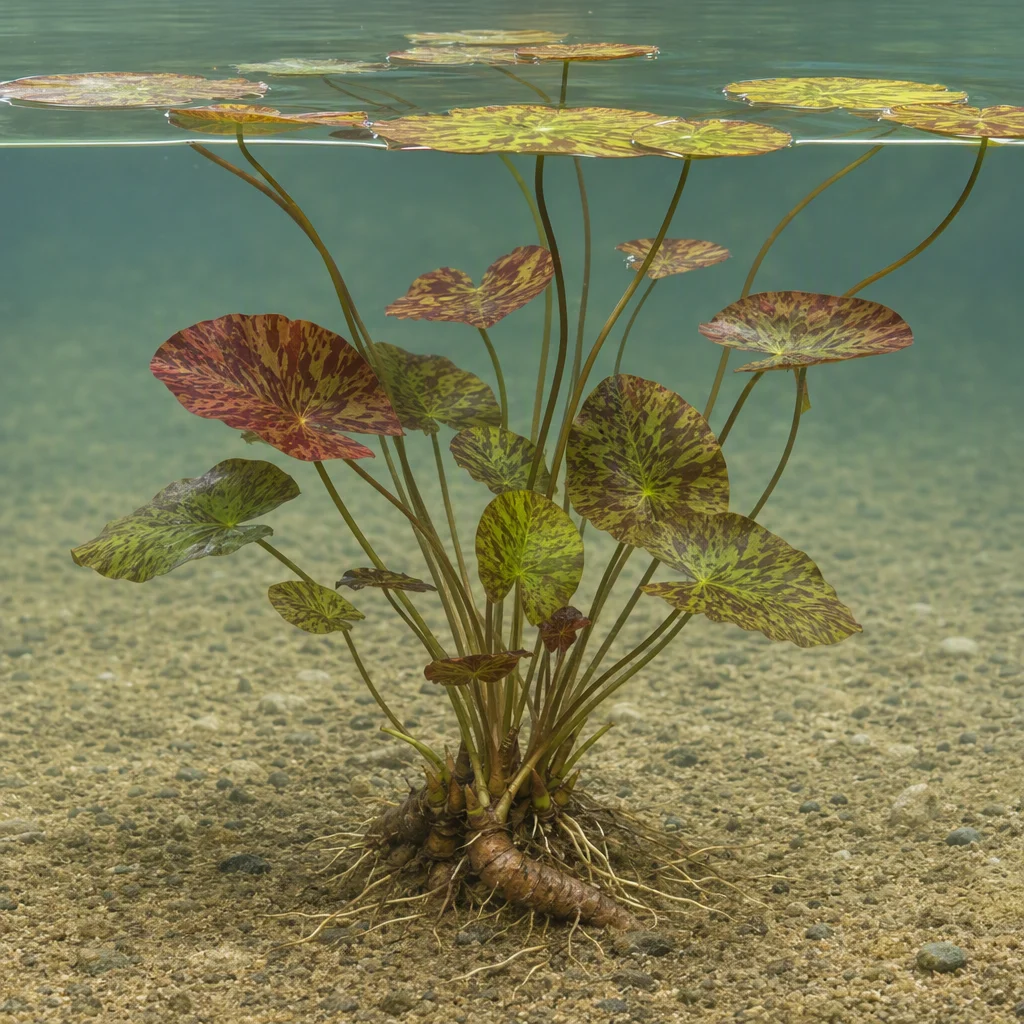
PlantingPlant the tuber with the pointed (tufted) end facing up on the substrate, not burying it completely — about a third of the tuber should remain above the ground, otherwise it may rot; if the top is not visible, simply place the tuber in a small depression, and it will turn to the correct position as it roots.
MaintenanceBasic care: regularly cut leaves that tend to surface ('scout leaves') and remove large old leaves at the base of the tuber, leaving 5–6 medium ones; use nutrient-rich substrate with a bottom layer and root fertilizers, optionally add CO₂ and iron supplements; prefers 'old' water and infrequent water changes (up to 20% every 10–14 days); temperature 24–28 °C, pH 6.0–7.0.
Compatibility
CompatibilityNymphaea lotus is compatible with most peaceful small and medium fish (tetras, guppies, platies, rasboras, danios, barbs, etc.) and shrimp; there are no notable "herbivorous" specialized enemies among common aquarium fish. The main limitations are not the fish, but the plant itself: it grows quickly, forms long-stemmed floating leaves, and actively shades neighboring light-loving plants, and as a "heavy root feeder," it draws nutrients from the substrate, competing with other species. Not recommended for very small aquariums or for co-planting with light and nutrient-demanding plants without control; large digging/herbivorous fish (large cichlids, some catfish, goldfish, koi) may damage delicate leaves and tubers.
Leaf toughnessFirm
Rooting stabilityStrong
Aquarium toxicity riskThere is no data on the toxicity of Nymphaea lotus to fish, invertebrates, and other aquarium inhabitants — the plant is widely kept with fish and shrimp without negative consequences; the species is traditionally used as food (roots/seeds) and is safe. Note: psychoactive alkaloids (apomorphine, nuciferine) are characteristic of the related species Nymphaea caerulea (blue lotus), not N. lotus.
Disposal warningDo not dispose of water lily or its plant residues into natural water bodies and do not drain them there: the species is recognized as exotic and is established in water bodies in various regions, so the plant should be disposed of by sealing in a bag and sending to household waste.
 Reference illustration · may contain inaccuracies