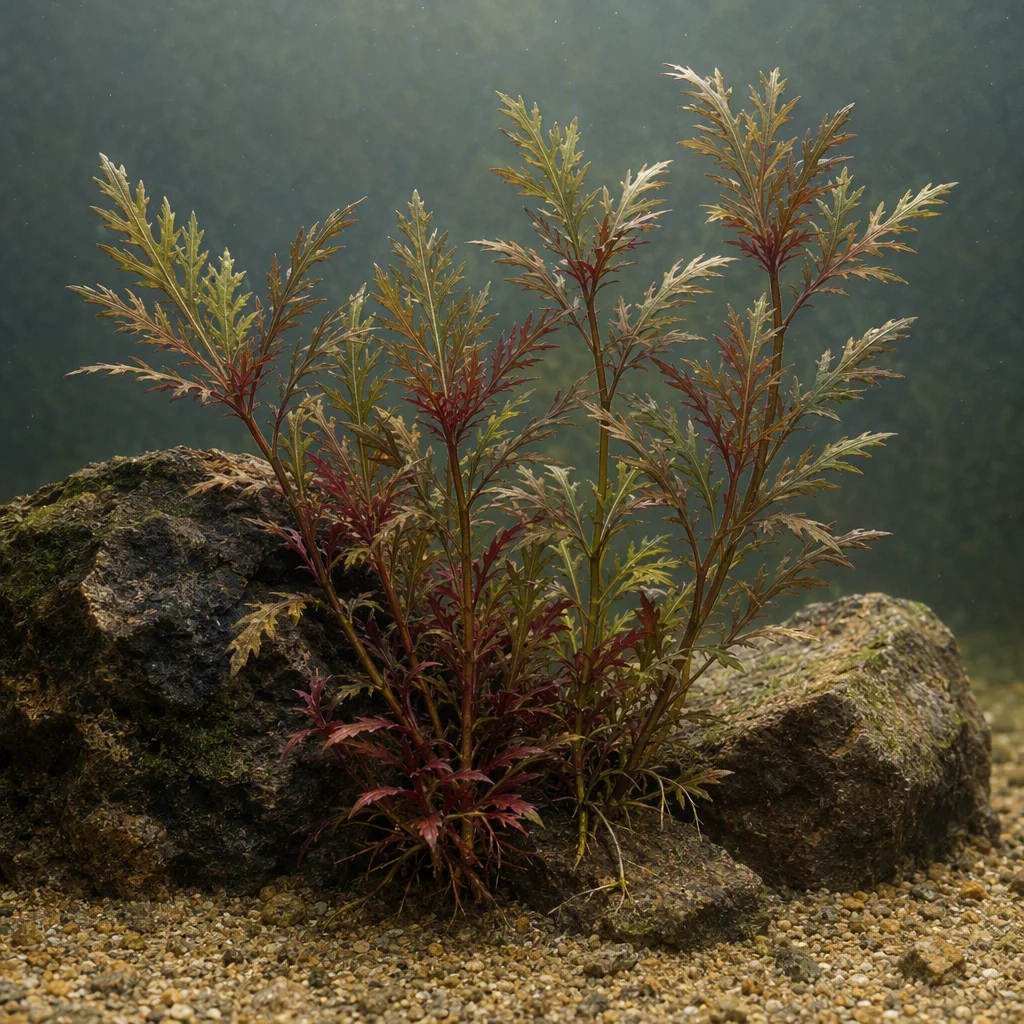
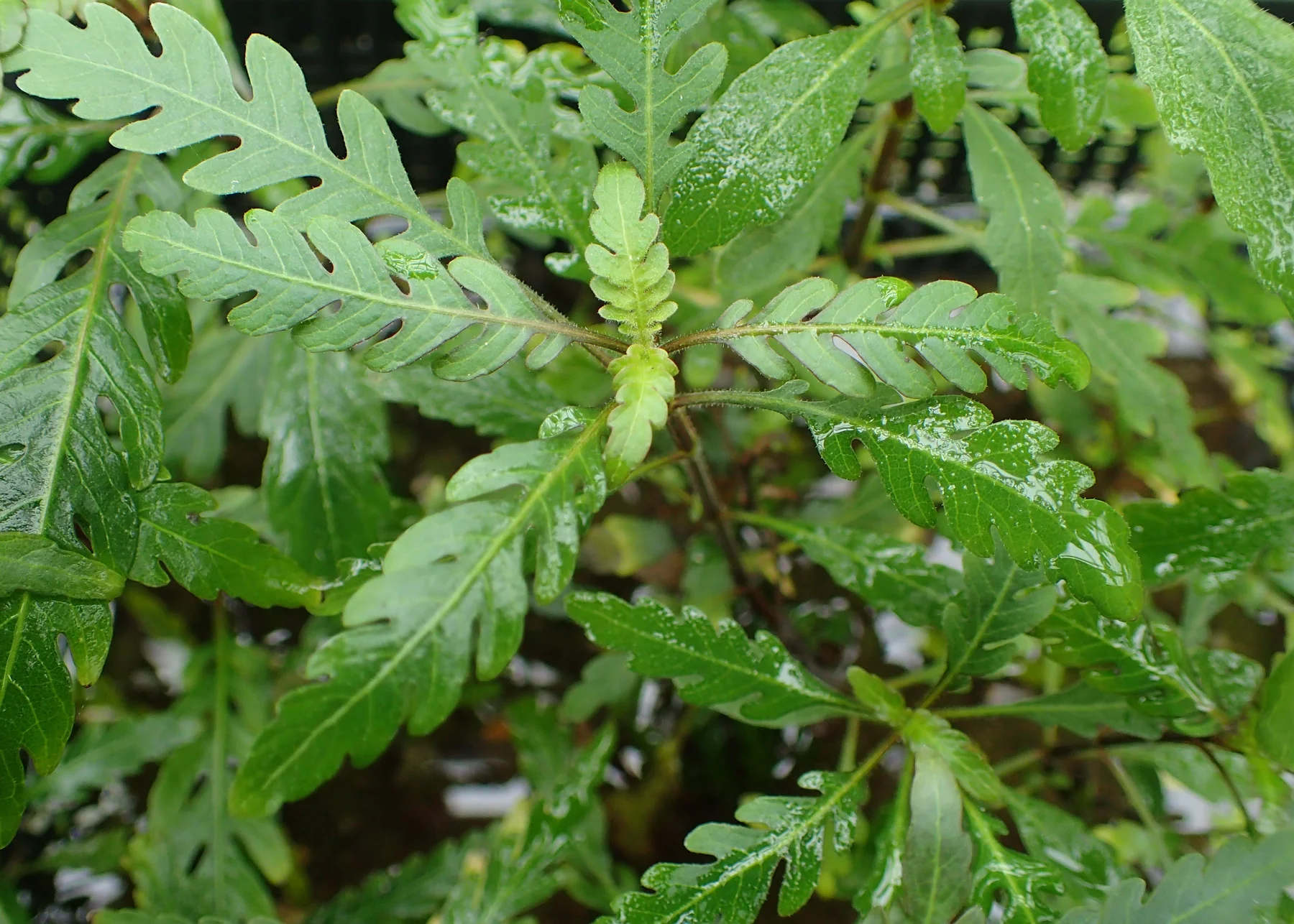
Overview
Sustainable aquarium useFully submerged, Paludarium
Growth formStem
Growth habitCreeping, Branching, Vertical
Height15–40 cm
Primary placementMidground
Growth rateMedium
Care
Minimum light levelMedium
Recommended light levelMedium
CO₂ requirementBeneficial
Nutrient uptakeMixed
Substrate requirementsAnchoring only
PlantingThe plant can be planted in substrate (fine fraction 2–4 mm) in groups of several stems or attached to rocks and driftwood. For attachment to hardscape, use cotton thread, fishing line, or gel superglue: press a small piece of the plant against the surface, roots will grow within 2–3 weeks. Horizontal side shoots easily root onto wood and stones on their own. When planting in substrate, the root system is weak and mainly serves for anchoring.
MaintenanceBasic care includes regular pruning of the tips of vertical shoots to maintain a compact shape and prevent elongation to the surface. The plant can be grown in substrate (fine fraction 2–4 mm) or attached to rocks and driftwood. Weekly water changes (~20% volume) and regular application of liquid fertilizers, especially potassium and iron, are required — potassium deficiency causes holes and dark spots on the leaves. Propagation is by separating rooted horizontal side shoots. Growth is slow; frequent trimming is not necessary.
Compatibility
CompatibilityHygrophila pinnatifida is well-suited for most peaceful community and planted tanks. It is compatible with small and medium peaceful fish—tetras, rasboras, danios, guppies, small labyrinth fish, corydoras, and other species that do not damage plants. It coexists well with shrimp and aquarium snails: dense foliage and divided leaves provide additional shelter and grazing surfaces for small invertebrates.
It is undesirable to keep with large herbivorous and actively digging fish. Goldfish, large cichlids, and other species prone to nibbling, uprooting, or damaging plants can quickly ruin Hygrophila pinnatifida. When selecting plant neighbors, consider its ability to form side shoots and spread over decorations: it is periodically trimmed near small, slow-growing species to prevent shading them.
Leaf toughnessFirm
Rooting stabilityMedium
Structural fragilitySturdy
Aquarium toxicity riskToxicity to fish and invertebrates has not been identified. The plant is safe for shrimp and sensitive fish, including those from in-vitro cultures free of pesticides. In aquariums with herbivorous or fast-moving fish, the plant may be nibbled, and some snail species may eat its leaves.
Disposal warningDo not dispose of the plant into natural water bodies. Hygrophila pinnatifida is a fast-growing species capable of active vegetative reproduction via stolons; related species (e.g., H. polysperma and H. costata) are already recognized as invasive in several regions. USDA Weed Risk Assessment rates H. pinnatifida as a high invasive risk (score 10, threshold for rejection 6). Dispose of plant residues only in compost or household waste after drying.
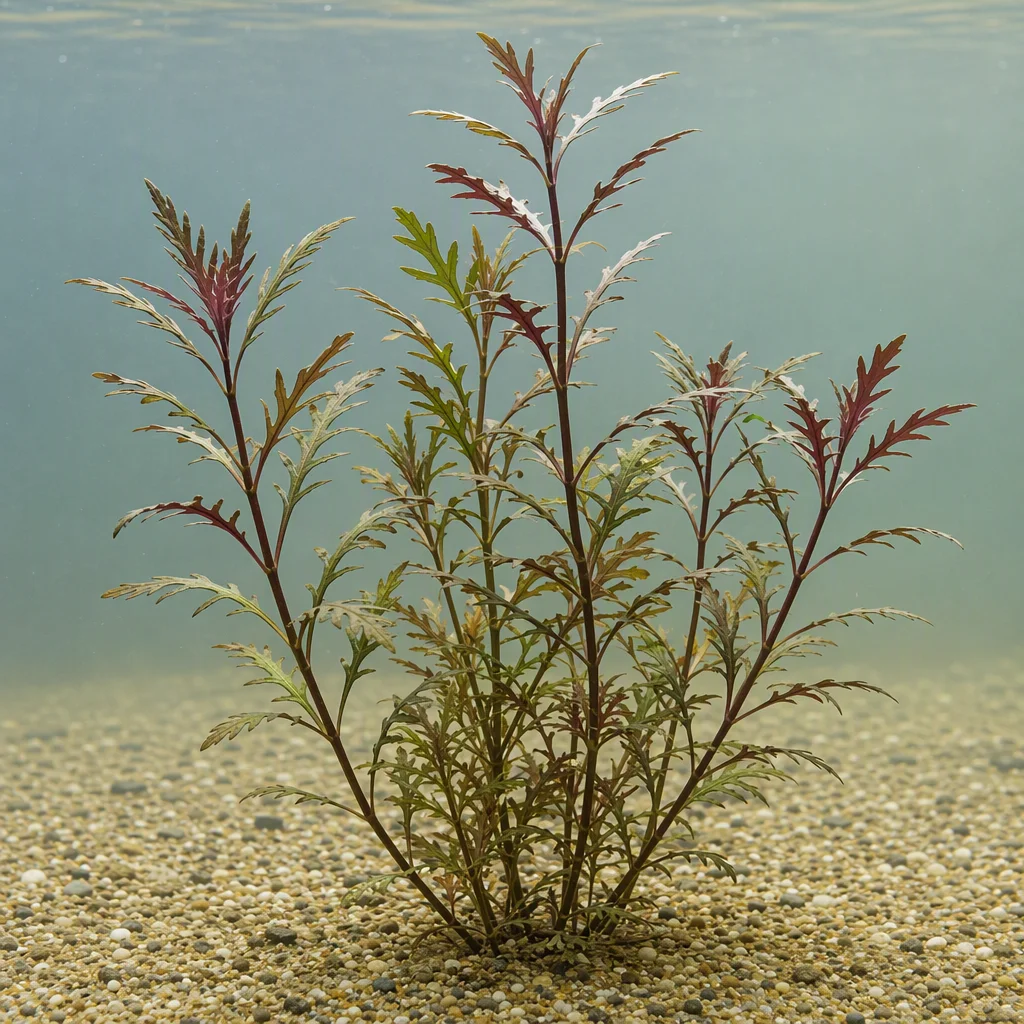 Reference illustration · may contain inaccuracies