Overview
Sustainable aquarium useFully submerged, Floating, Roots in water
Growth formStem
Growth habitVertical, Branching, Floating colony
Height20–100 cm
Primary placementBackground
Growth rateFast
Care
Minimum light levelLow
Recommended light levelMedium
CO₂ requirementNot required
Nutrient uptakeWater column
Substrate requirementsAnchoring only
PlantingCanadian waterweed can be planted in the substrate in groups of 3–5 stems at the back or along the side walls, burying the lower 2–3 nodes. Any substrate is suitable — from sand to gravel, but a light substrate with rounded granules is preferred. The plant also grows well in free-floating form without planting in the substrate. Cuttings for planting should be at least 10–20 cm long. When planting in the substrate without developed roots, the lower part of the stem may rot, so some aquarists recommend first allowing the plant to root in a floating state.
MaintenanceCanadian waterweed is one of the most undemanding aquarium plants. Main care actions: (1) regular trimming/pruning of overgrown stems, preferably outside the aquarium, as the plant's sap can negatively affect fry; (2) weekly water changes (~20%) and good filtration, since small leaves easily trap organic suspensions; (3) planting in light substrate with rounded granules in groups of 3–5 shoots along the back or side walls (or free-floating in the water column); (4) moderate lighting; prolonged lack of light causes leaves to rot and fall off; (5) keeping at temperatures of 17–24°C (cold and moderately warm aquariums); (6) high temperatures are not recommended — the plant sheds leaves; presence of shrimps for cleaning shoots is also beneficial.
Compatibility
CompatibilityElodea canadensis is well compatible with most peaceful cold and moderately warm water fish. Dense thickets serve as shelter for fry and small fish (guppies, platies, macrognaths, gouramis), and are also used as spawning substrates. The plant actively absorbs nitrates and phosphates, suppresses algae growth (including through allelopathic effects on epiphytic algae and cyanobacteria). Compatible with shrimp and snails, which help clean the leaves. Not recommended to keep with herbivorous fish (goldfish, carp), which may completely eat the plant. The juice of Elodea, when cut, can be toxic to fry and delicate shrimp, so pruning should be done outside the aquarium. Not suitable for tropical aquariums with temperatures above 24–25°C.
Leaf toughnessSoft
Rooting stabilityWeak
Structural fragilityFragile
Aquarium toxicity riskThe sap of Canadian waterweed has toxic properties. Scientific research (Aniskina, Vagonov, 2014) confirmed the toxic effect of Elodea canadensis sap on Daphnia pulex. In aquarium practice, the sap released during mass pruning can cause the death of fish fry and inhibit the development of delicate plants. However, toxicity manifests only at very high concentrations (for example, about 4 liters of sap per 40 liters of water), so under normal operation and pruning outside the aquarium, the plant is safe for adult fish and invertebrates.
Disposal warningIt is strictly prohibited to release the plant or its fragments into natural water bodies, ponds, rivers, lakes, or to drain aquarium water into storm drains or natural watercourses. Elodea canadensis is a dangerous invasive species: even a small stem fragment can root and form dense thickets, displacing native flora and disrupting ecosystems. The plant is listed as a hazardous invasive species by the Russian Ministry of Natural Resources (Order No. 77 of 13.02.2026) and must be destroyed in specially protected natural areas. Unwanted plants should be dried or frozen, then hermetically packed in a plastic bag and disposed of as household waste. Do not compost or throw into compost heaps.
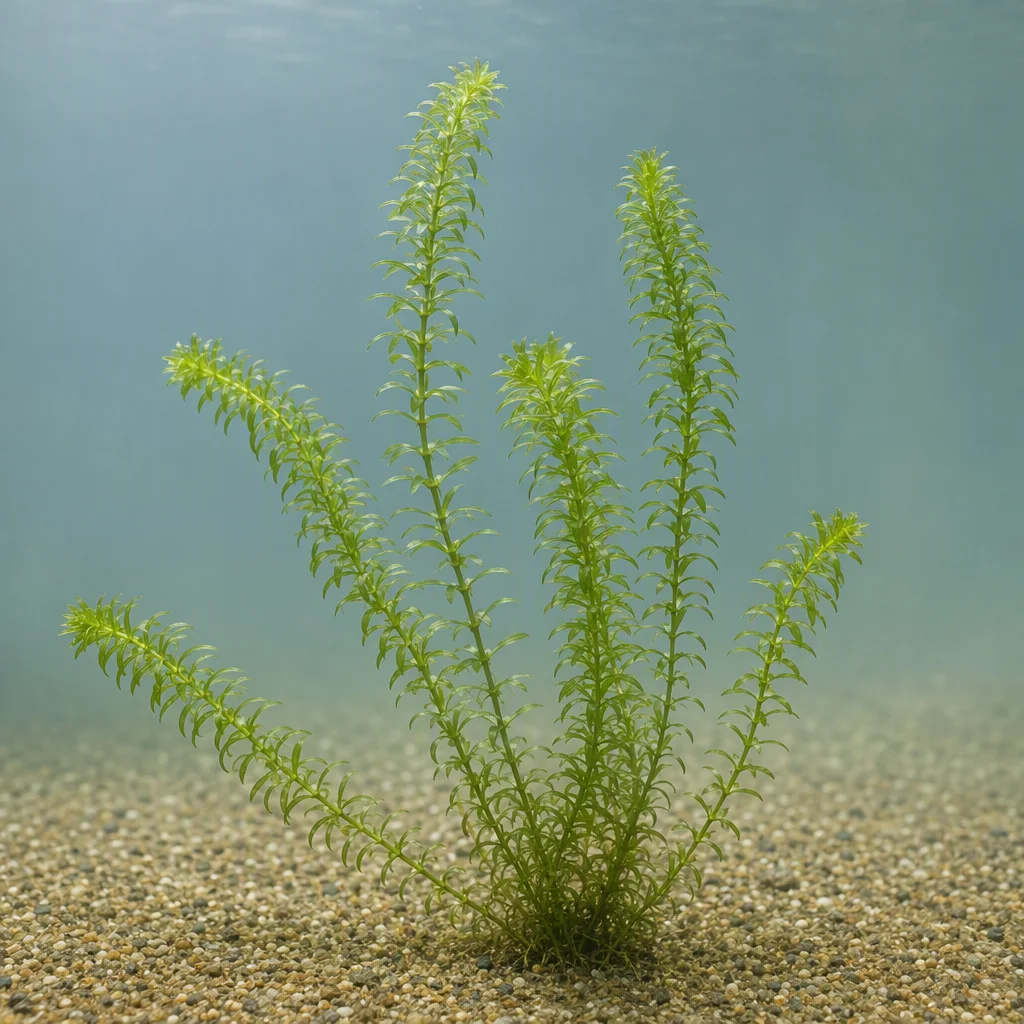 Reference illustration · may contain inaccuracies