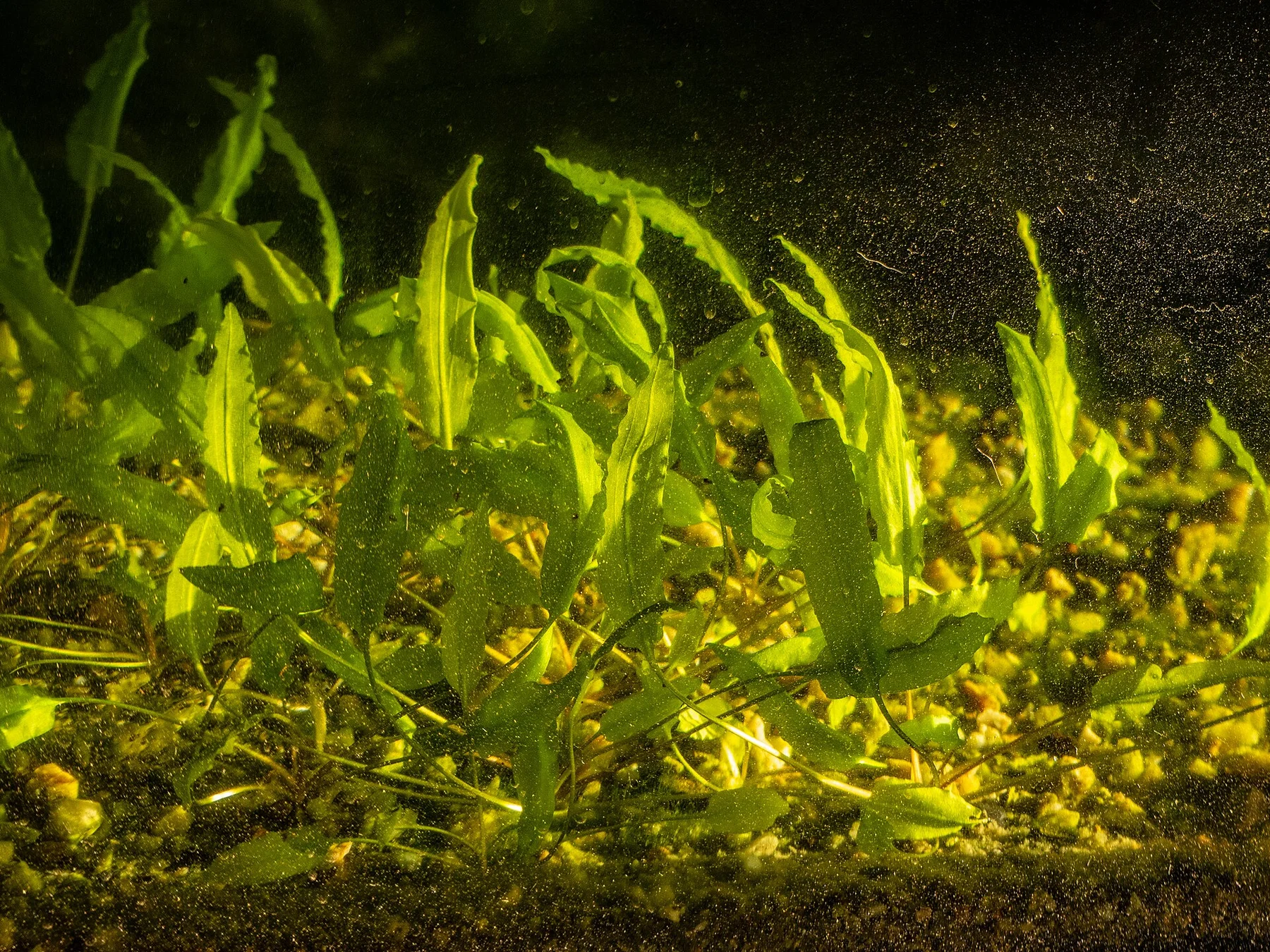
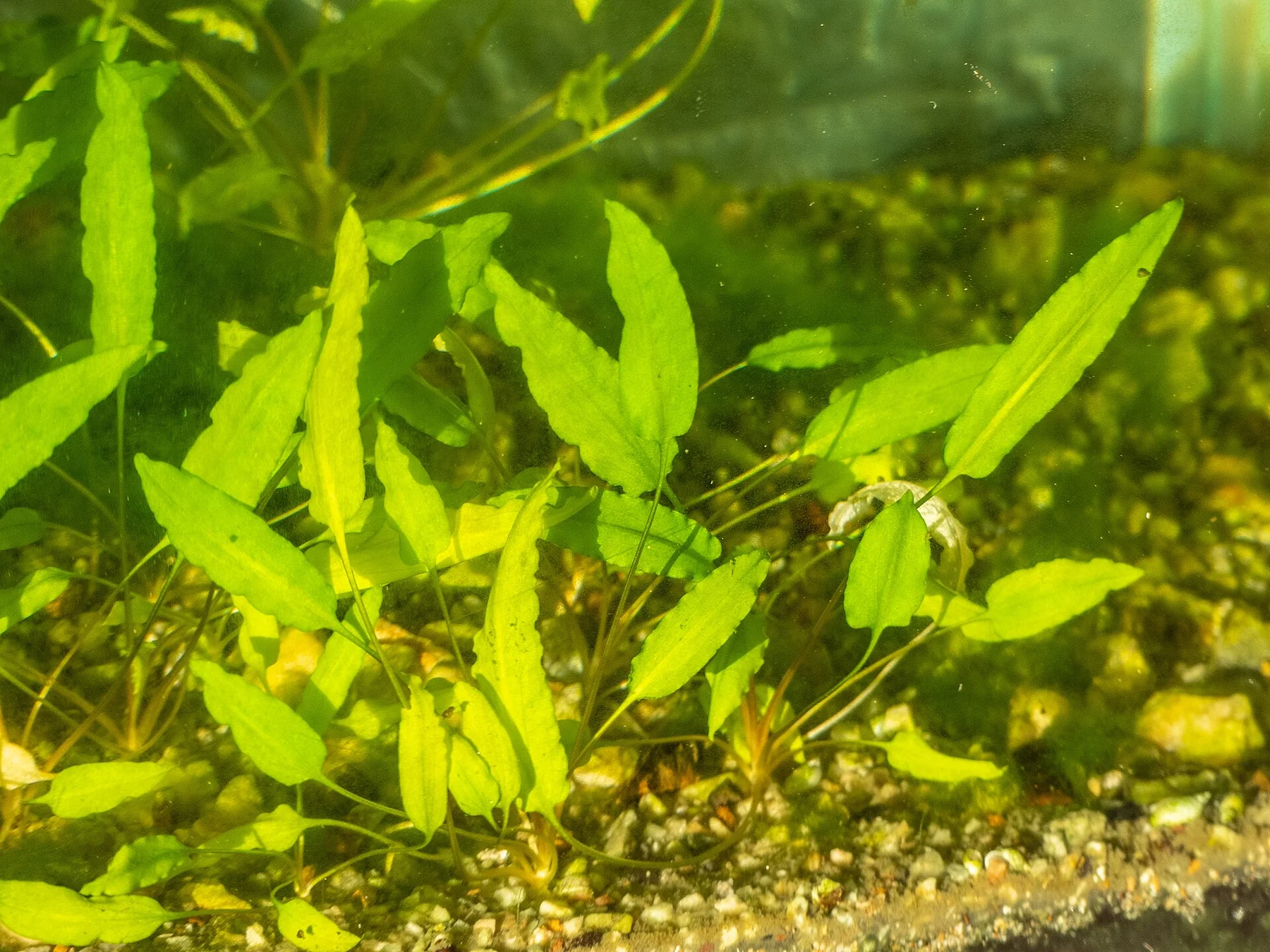
Overview
Sustainable aquarium useFully submerged, Paludarium
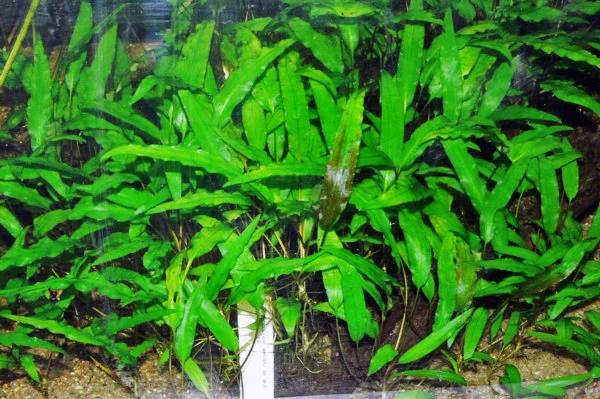
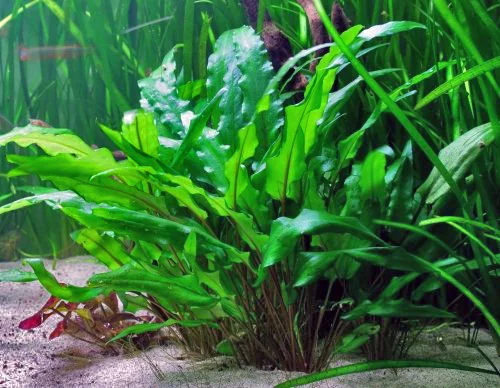
Growth formRosette
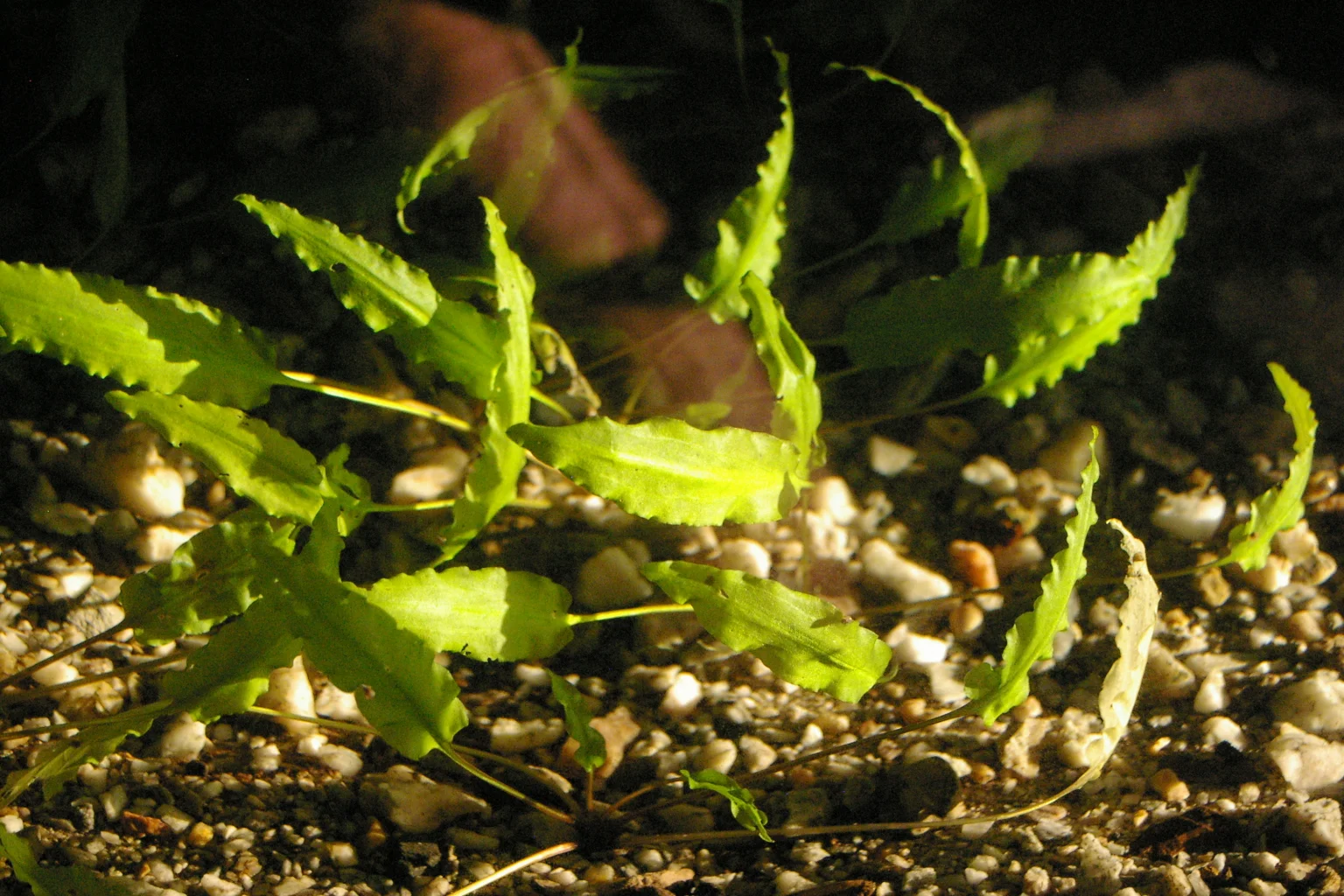
Growth habitRunners
Height10–30 cm
Primary placementMidground
Growth rateMedium
Care
Minimum light levelLow
Recommended light levelLow
CO₂ requirementNot required
Nutrient uptakeRoot
Substrate requirementsNutrient substrate or root feeding
PlantingPlant in nutrient-rich, silted substrate (large river sand with fine gravel or nutrient substrate) at least 5 cm thick. Spread out and fully bury the roots, but keep the growth point (green crown from which the stems emerge) above the substrate surface — burying the crown leads to rot. When planting in new soil, place a clay ball with peat or a root tablet at the base. Separate daughter rosettes from the creeping rhizome after 2–3 leaves form and plant them 2–4 cm apart.
MaintenancePlant in nutrient-rich, silted substrate at least 5 cm thick (robust root system); fertilize with root tablets every 2–3 months. Stable water parameters and regular small water changes are required — sudden changes provoke 'cryptocoryne disease' (leaf dissolution). Remove yellowed, damaged, or dissolved leaves at the base of the rosette. Propagate vegetatively: by creeping root cuttings and dividing the rhizome (daughter rosettes are separated after 2–3 leaves appear).
Compatibility
CompatibilityCryptocoryne wendtii is a peaceful, undemanding plant compatible with most aquarium inhabitants. It coexists well with shrimp (Neocaridina, Caridina), snails, and peaceful fish such as tetras, rasboras, corydoras, guppies, swordtails, angelfish, and other medium-sized cichlids. Thanks to its tough leaves and robust root system, it is resistant to digging fish such as some cichlids and can be used in aquariums with African cichlids (in hard water). It is not recommended to keep with large herbivorous fish (goldfish, some large cichlids, pacus) that nibble and damage the leaves, or with active burrowing species that constantly uproot the plant. The plant does not release toxins and does not require special neighbors; the main requirement is stable water parameters without sharp fluctuations.
Leaf toughnessFirm
Rooting stabilityStrong
Structural fragilityOrdinary
Aquarium toxicity riskCryptocoryne wendtii is not toxic to aquarium fish and invertebrates: it is widely used in general aquariums, including those with shrimp and sensitive fish. As a member of the Araceae family, it contains insoluble calcium oxalate crystals, which can cause irritation if eaten fresh leaves, but no poisoning cases have been recorded in aquarium practice. The main risk is not toxicity but leaf dissolution during water parameter changes ('cryptocoryne disease'), which can degrade water quality.
Disposal warningBeing a member of the Araceae family, it contains oxalates in its cell sap: pruning, dividing, or decomposing leaves ('cryptocoryne disease') can cause skin and mucous membrane irritation, and toxic reactions in sensitive invertebrates (shrimp). Pruning and division should be done outside the aquarium, and plant debris should not be left to decay in the water. Do not dispose of the plant in natural water bodies — it is an alien species in most regions.