Overview
Sustainable aquarium useFully submerged, Paludarium
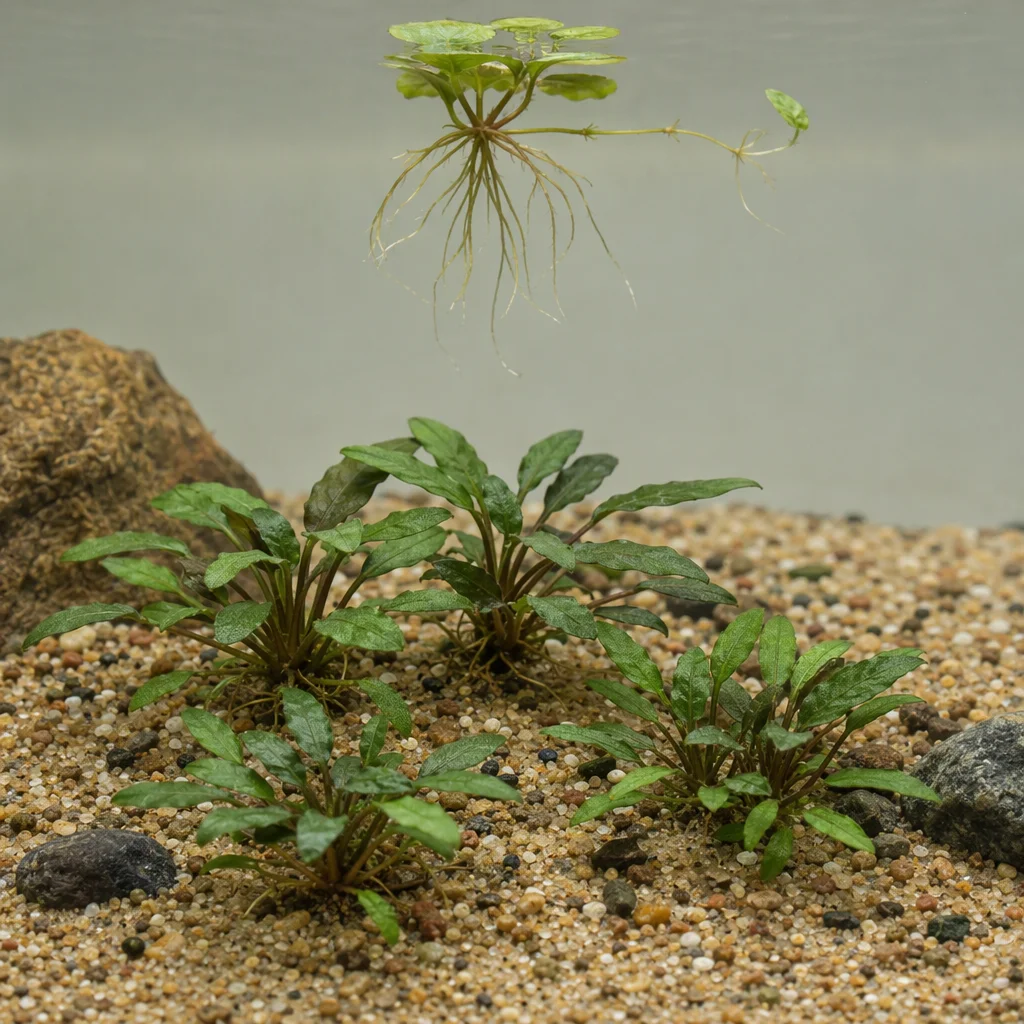
Growth formRosette
Growth habitRunners, Carpeting
Typical submerged height3–8 cm
Typical width or spread5–8 cm
Primary placementForeground
Growth rateSlow
Care
Minimum light levelMedium
Recommended light levelMedium
CO₂ requirementBeneficial
Nutrient uptakeRoot
Substrate requirementsNutrient substrate or root feeding
PlantingThe plant is planted directly into nutrient substrate, burying the roots but leaving the crown above the substrate surface; when planting multiple specimens, they are placed a few centimeters apart to eventually form a low carpet.
MaintenanceThe plant grows very slowly and undergoes a long (up to a month) adaptation period after planting. It requires stable water parameters, nutrient-rich substrate (nutrient substrate or root tablets), and moderate to strong lighting without shading. Periodically, the bushes should be thinned for water circulation and damaged leaves should be pruned; addition of CO₂ and fertilizers (especially iron and potassium) is recommended.
Compatibility
CompatibilitySafe for fish and invertebrates, not eaten by herbivorous species; the main practical risk is being uprooted by large burrowing fish (goldfish, large cichlids) due to small rosettes, so it is better combined with small peaceful fish and shrimp.
Leaf toughnessFirm
Rooting stabilityWeak
Structural fragilityOrdinary
Aquarium toxicity riskCryptocoryne parva, like other Araceae, contains calcium oxalate crystals in its tissues, but there are no recorded cases of poisoning fish, shrimp, or snails in the aquarium; the plant is considered safe for aquarium inhabitants under normal conditions.
 Reference illustration · may contain inaccuracies