Overview
Sustainable aquarium useFully submerged
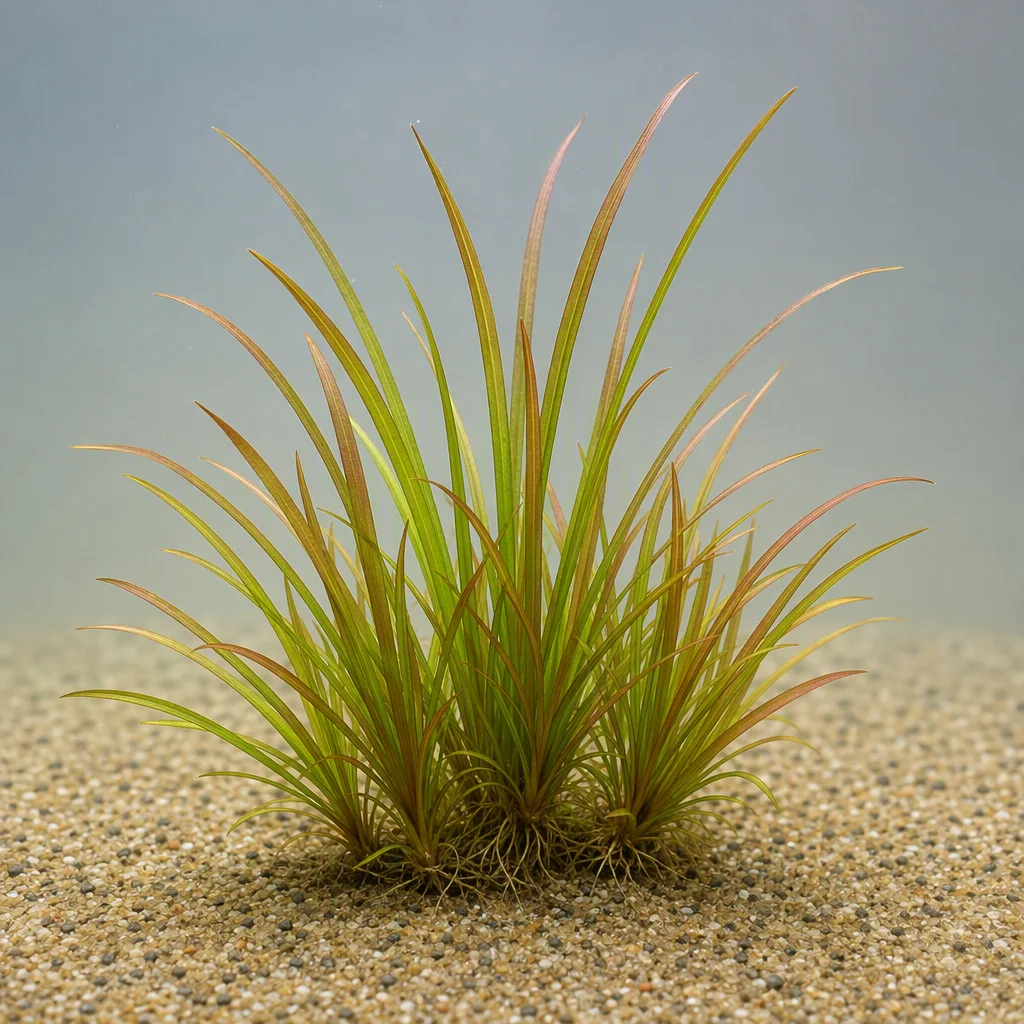
Growth formStem
Growth habitVertical, Branching
Height7–15 cm
Primary placementMidground
Growth rateMedium
Care
Minimum light levelMedium
Recommended light levelHigh
CO₂ requirementBeneficial
Nutrient uptakeMixed
Substrate requirementsNutrient substrate or root feeding
PlantingJapanese Blyxa is planted in nutrient substrate (coarse sand or fine gravel) at least 3–5 cm thick. Side shoots are separated with scissors, roots carefully placed in a hole in the substrate, covered, and the soil gently compacted around the stem, as the plant has high buoyancy and tends to float. Recommended planting density is 2–3 plants per 20 sq. cm. For secure anchoring, plastic pins can be used until rooting. When planting in substrate, it is useful to add a piece of red clay or sapropel under the roots.
MaintenanceJapanese Blyxa is a medium-difficulty plant. Requires soft water (hardness no higher than 10 °dGH, ideally 0–7 °dGH), pH 5.5–7.0, temperature 22–28 °C (acceptable range 16–32 °C). Needs nutrient substrate (preferably sand or fine gravel with a nutrient layer) and regular fertilization, especially iron. CO₂ supplementation is recommended for compact growth and vibrant coloration. Regular water changes of up to 20% of the volume are necessary. It is a light-loving plant: insufficient light causes elongation and loss of reddish hues. As it grows, the stem may become bare at the bottom — requires trimming and replanting. Propagates by side shoots; young plants poorly anchor in substrate due to high buoyancy, so pinning with pins until rooting is advised.
Compatibility
CompatibilityBlyxa japonica is compatible with small and medium peaceful fish and shrimp: neon tetras, guppies, rasboras, cherry shrimp, and Amano shrimp, which use the plant thickets as shelter and do not damage it. It is not recommended to keep the plant with large burrowing fish (e.g., Denison barbs, large cichlids, Synodontis), which dig or uproot it — Blyxa's root system is weak, and the plant easily floats. Also undesirable are fish that nip at tender leaves. In aquascaping, the plant pairs well with low-growing ground covers (Hemianthus callitrichoides, Micranthemum tweediei) and other mid-level plants.
Leaf toughnessSoft
Rooting stabilityMedium
Structural fragilityFragile
Aquarium toxicity riskNo toxicity has been identified. Blyxa japonica is considered safe for aquarium inhabitants. Tropica (the largest aquarium plant producer) guarantees that plants of this species are completely harmless to sensitive shrimp and fish. The plant does not release toxic substances and does not contain poisonous compounds. On the contrary, its dense thickets serve as shelter for shrimp and small fish.
Disposal warningGeneral rules for safe disposal of aquarium plants prohibit releasing into natural water bodies.
 Reference illustration · may contain inaccuracies