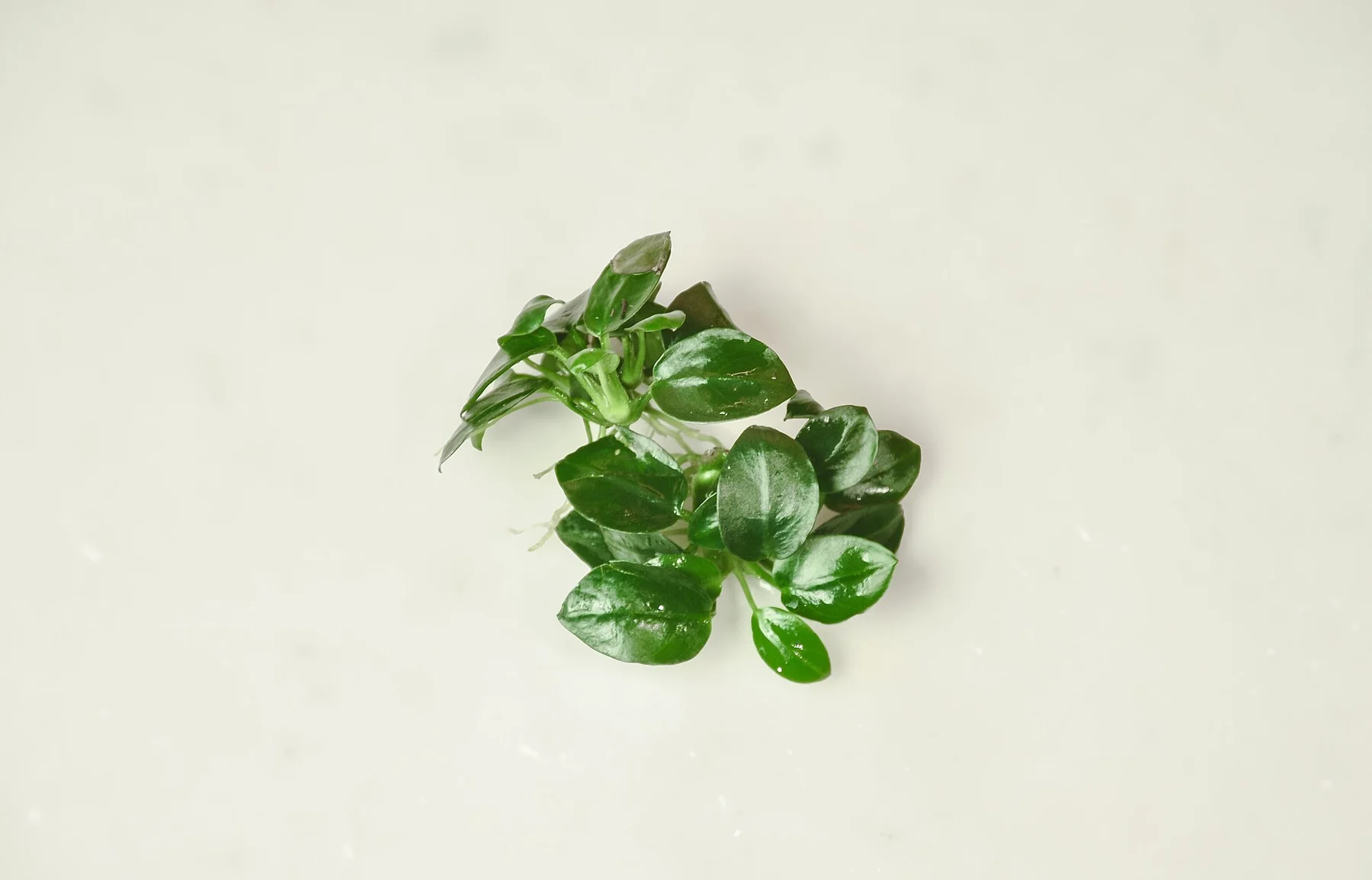
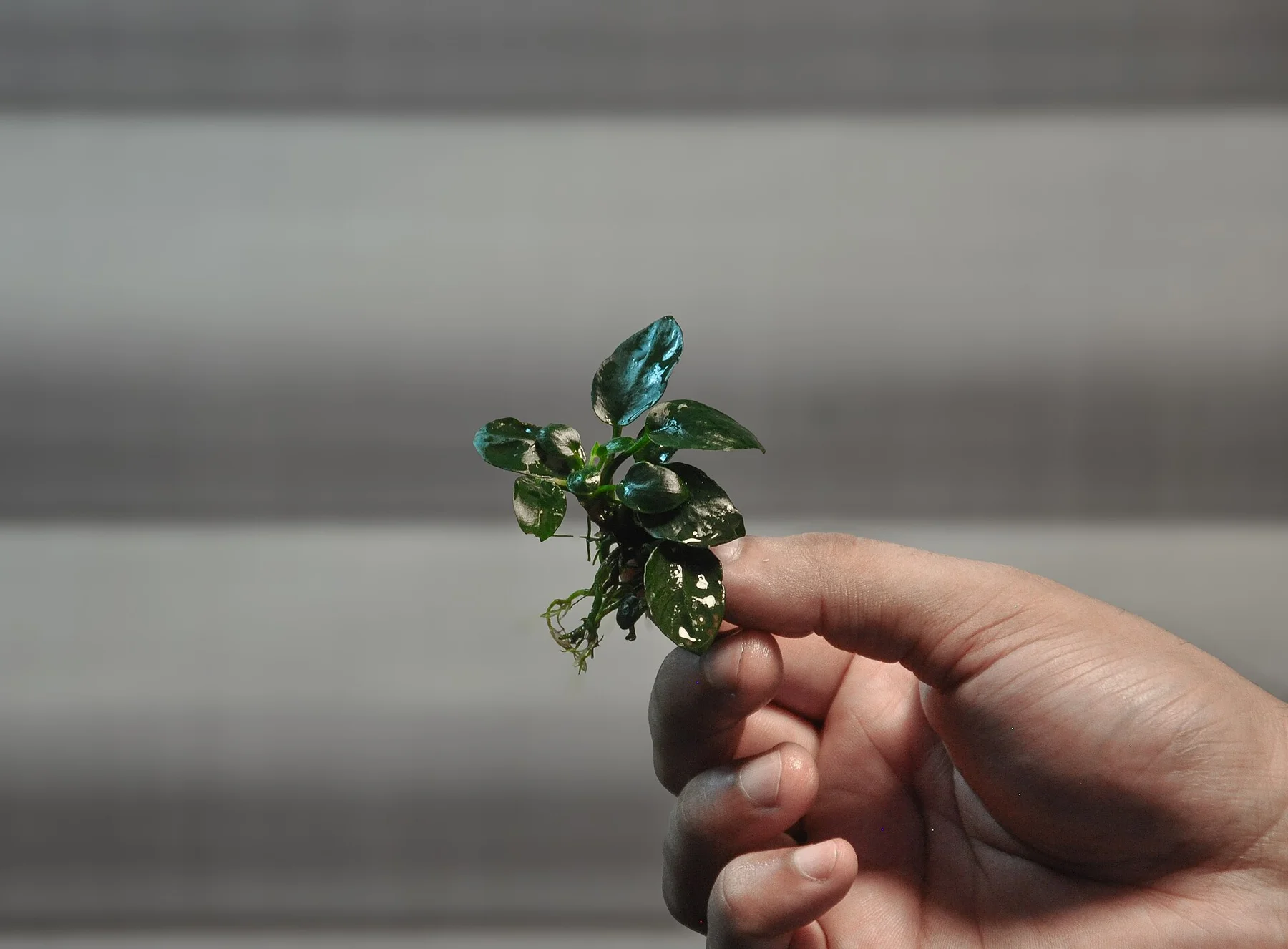
Overview
Sustainable aquarium useFully submerged, Paludarium
Growth formRhizome
Growth habitCreeping
Height2–6 cm
Primary placementForeground
Growth rateSlow
Care
Minimum light levelLow
Recommended light levelLow
CO₂ requirementNot required
Nutrient uptakeWater column
Substrate requirementsAnchoring only
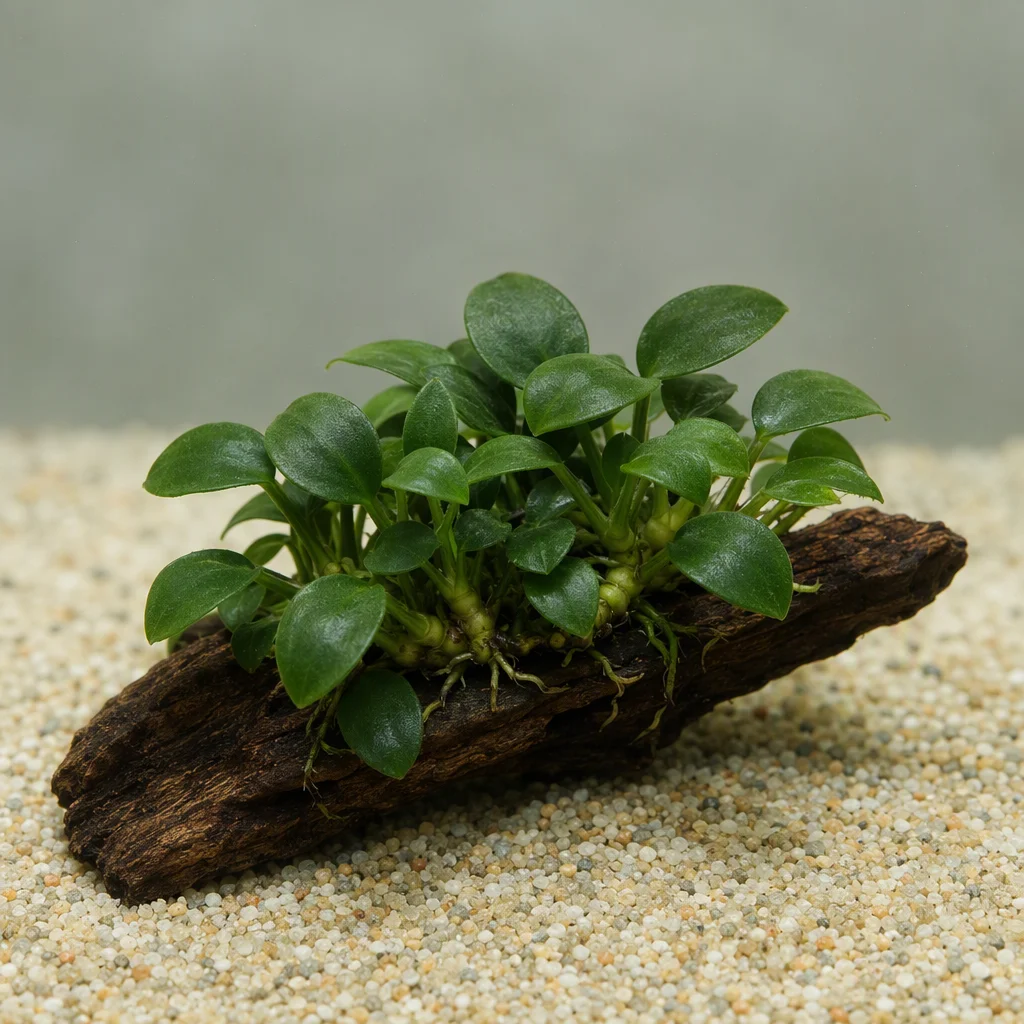
PlantingThe rhizome (rhizome) of this epiphytic plant must not be buried in the substrate — it leads to rot and death. The correct method is to carefully attach the rhizome on top of driftwood or a stone (for example, with cotton or nylon thread, fishing line, or aquarium-safe glue), without damaging it and leaving the growth points on top. After the roots encircle the decor, the thread is removed. It is permissible to place the bush on the substrate, leaving the rhizome above its surface and slightly burying only the roots; if anchoring, a sufficiently thick layer of substrate is needed.
MaintenanceThe plant is extremely undemanding. The rhizome must not be buried in the substrate — it should be anchored to driftwood, a stone, or other decor (with thread, fishing line, or safe glue), otherwise the rhizome will rot. The plant grows slowly and does not require regular pruning. It is necessary to maintain water cleanliness: weekly water changes of 25–30% of the volume, good filtration, and moderate flow, as algae (Xenococcus, black beard) easily colonize the slow-growing leaves. Bright light is unnecessary and promotes algae growth; subdued lighting is optimal. Additional CO₂ supply is not mandatory. Fertilization is usually not required, natural sedimentation suffices; liquid fertilizers can be added in low doses if desired. Propagation is by dividing the rhizome.
Compatibility
CompatibilityGenerally compatible with freshwater aquarium inhabitants; dense leaves are more resistant to accidental grazing than many soft-leaved plants. For secure placement, attach the plant to a stone or driftwood; compatibility in a specific aquarium depends on the species and behavior of its inhabitants.
Leaf toughnessTough
Rooting stabilityMedium
Structural fragilitySturdy
Aquarium toxicity riskIn a healthy, undamaged plant in the aquarium, no confirmed toxicity to fish and invertebrates has been found; the anubias is considered safe and is often recommended as a 'shrimp-safe' plant, its tough leaves are not eaten by inhabitants. The risk is associated with calcium oxalate raphides contained in all Araceae: when cutting or breaking a large amount of fresh rhizome underwater, crystalline needle-like structures may be released into the water, which in rare cases, according to practitioners' reports, can negatively affect sensitive dwarf shrimp. Routine division of the rhizome into 1–2 parts does not cause poisoning. The toxicity noted in ASPCA references (irritation of the mouth when chewing) relates to ingestion by pets/humans, not to toxicity in the water for aquarium inhabitants.
Disposal warningThe general rule for safe disposal of aquarium plants is not to release them into natural water bodies, but to dispose of dried plants with household waste. No specific toxicity or invasive risk has been noted for Anubias nana 'Petite' in sources, so the warning is neutral.
 Reference illustration · may contain inaccuracies