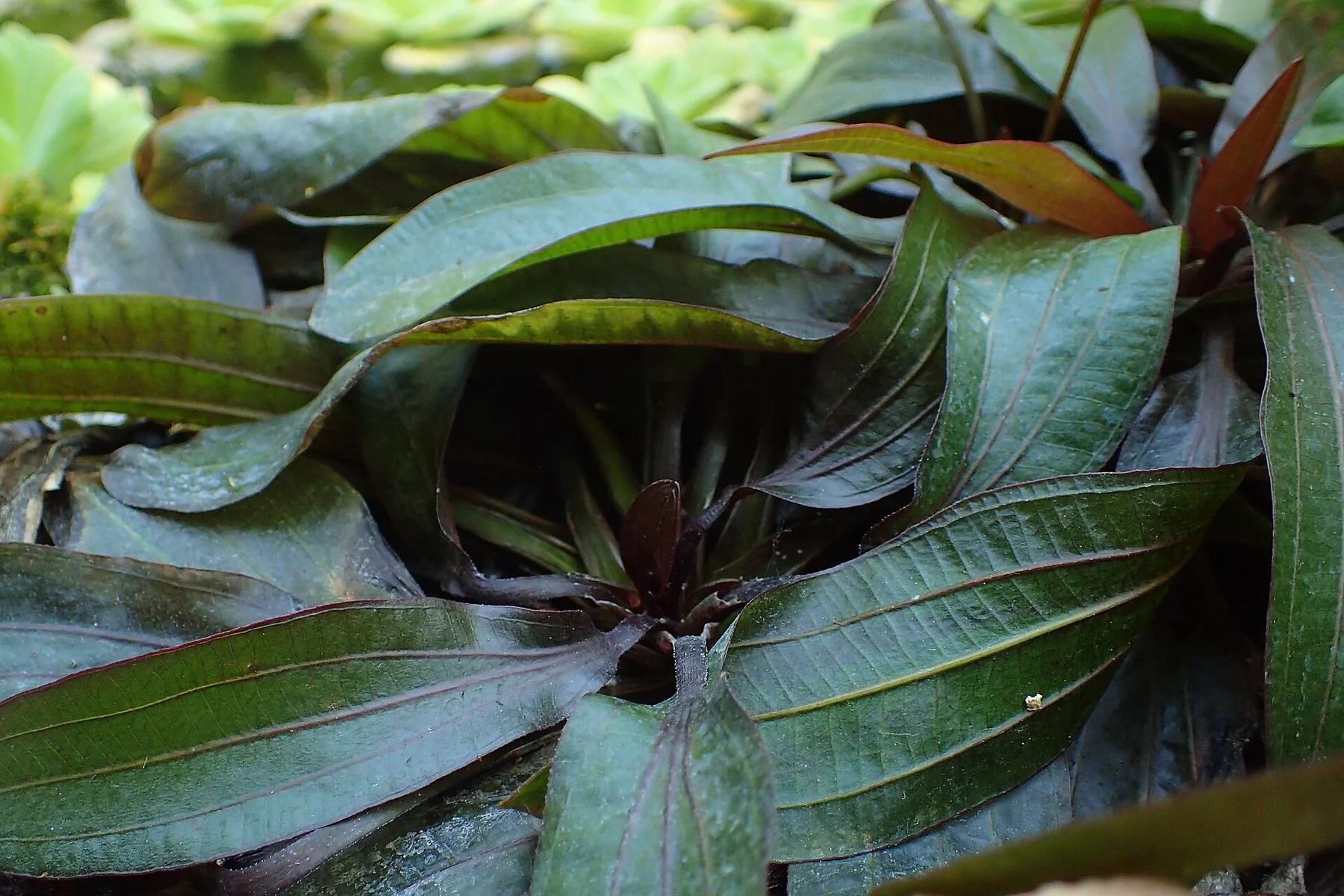
Overview
Sustainable aquarium useFully submerged, Paludarium
Growth formRhizome
Growth habitCreeping
Height10–25 cm
Primary placementMidground
Growth rateSlow
Care
Minimum light levelLow
Recommended light levelLow
CO₂ requirementNot required
Nutrient uptakeMixed
Substrate requirementsAnchoring only
PlantingThe rhizome (rizome) must not be buried in the substrate — this leads to rot and plant death. The bush is fixed to a stone, driftwood, or other hardscape element with fishing line, cotton thread, or special aquarium glue (cyanoacrylate gel); over time, the roots will attach themselves to the surface. Placement in a shallow substrate (grain size 2–5 mm) with only the roots covered is permissible, with the rhizome remaining on the surface. When dividing the rhizome, each part should have at least 3–5 leaves and healthy roots.
MaintenanceThe plant is very undemanding. The rhizome must not be buried in the substrate — it is placed on the surface or attached to driftwood, stones, and other decorations with fishing line, thread, or special glue. Regular water changes (20–30% weekly), moderate lighting (excess light promotes algae growth on leaves) are recommended. Liquid fertilizers with potassium, iron, and microelements are desirable. Damaged or dying leaves are removed at the base without damaging the rhizome. Propagation is by dividing the rhizome.
Compatibility
CompatibilityAnubias coffeefolia is highly compatible with most aquarium inhabitants due to its tough, leathery leaves, which are almost unpalatable to herbivorous fish. The plant is recommended for aquariums with cichlids (including large ones), goldfish, and other fish prone to nibbling on plants. The tough leaves are also resistant to damage from active and digging bottom fish. Wide leaf plates provide natural shelter and resting places for shy catfish (e.g., Ancistrus). The plant is not recommended to be kept with fish that dig the substrate and may damage the root system, but attaching the rhizome to stones or driftwood minimizes this risk. Due to its slow growth, anubias may suffer from algae overgrowth when placed near fast-growing plants under bright lighting; it is best positioned in shaded areas. Suitable neighbors include ferns (Microsorum), Bucephalandra, and Cryptocoryne with similar lighting and water parameter requirements. The plant is toxic to pets (contains calcium oxalate), which should be considered when kept in open paludariums.
Leaf toughnessTough
Rooting stabilityStrong
Structural fragilitySturdy
Aquarium toxicity riskNo specific studies on the toxicity of Anubias coffeefolia to aquarium inhabitants have been found. Like other members of the Araceae family, anubias contain calcium oxalate crystals (raphides), which can be released when tissues are damaged. In aquarium practice, there are isolated cases of shrimp death after mass pruning of anubias, but modern tests with ground plant material have not confirmed harmful effects even at high concentrations. During planned pruning, it is recommended to remove the plant from the aquarium or prune outside the water to prevent cell sap from entering the water.

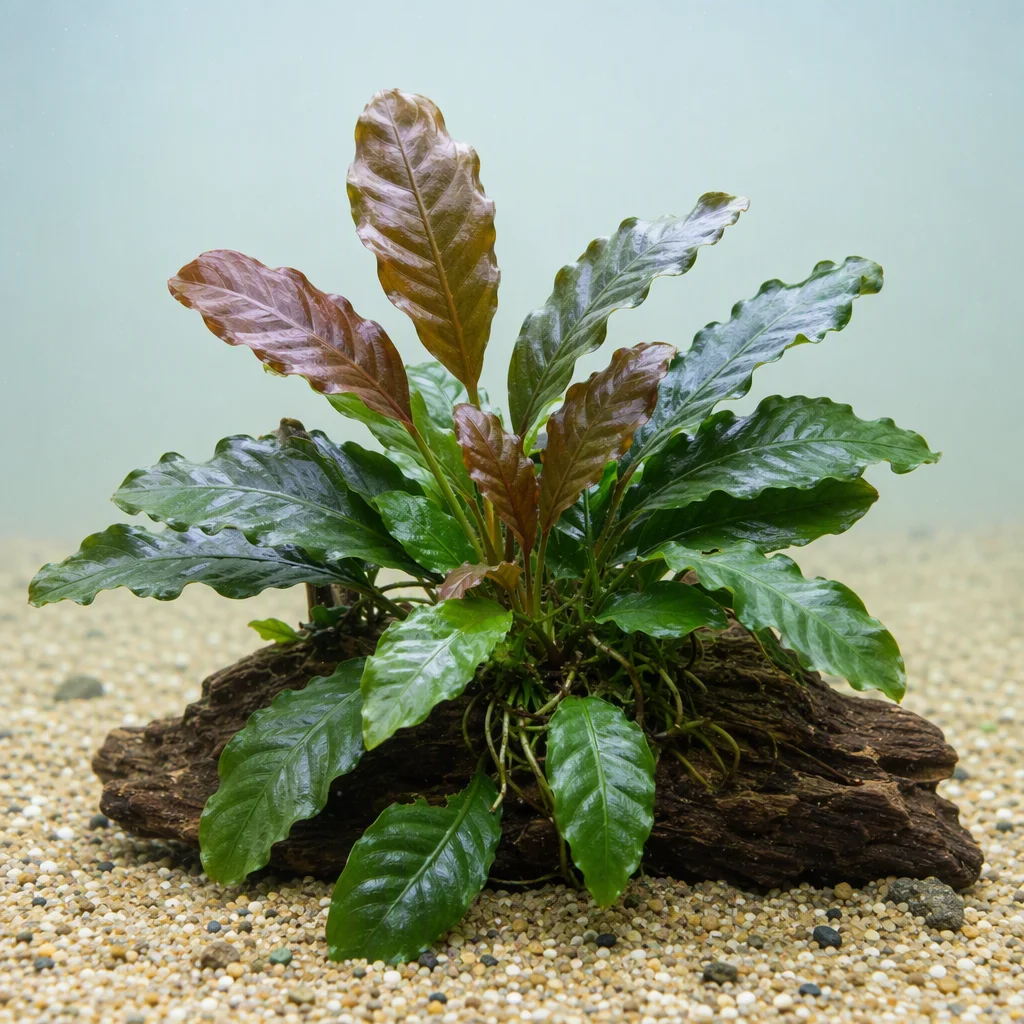 Reference illustration · may contain inaccuracies