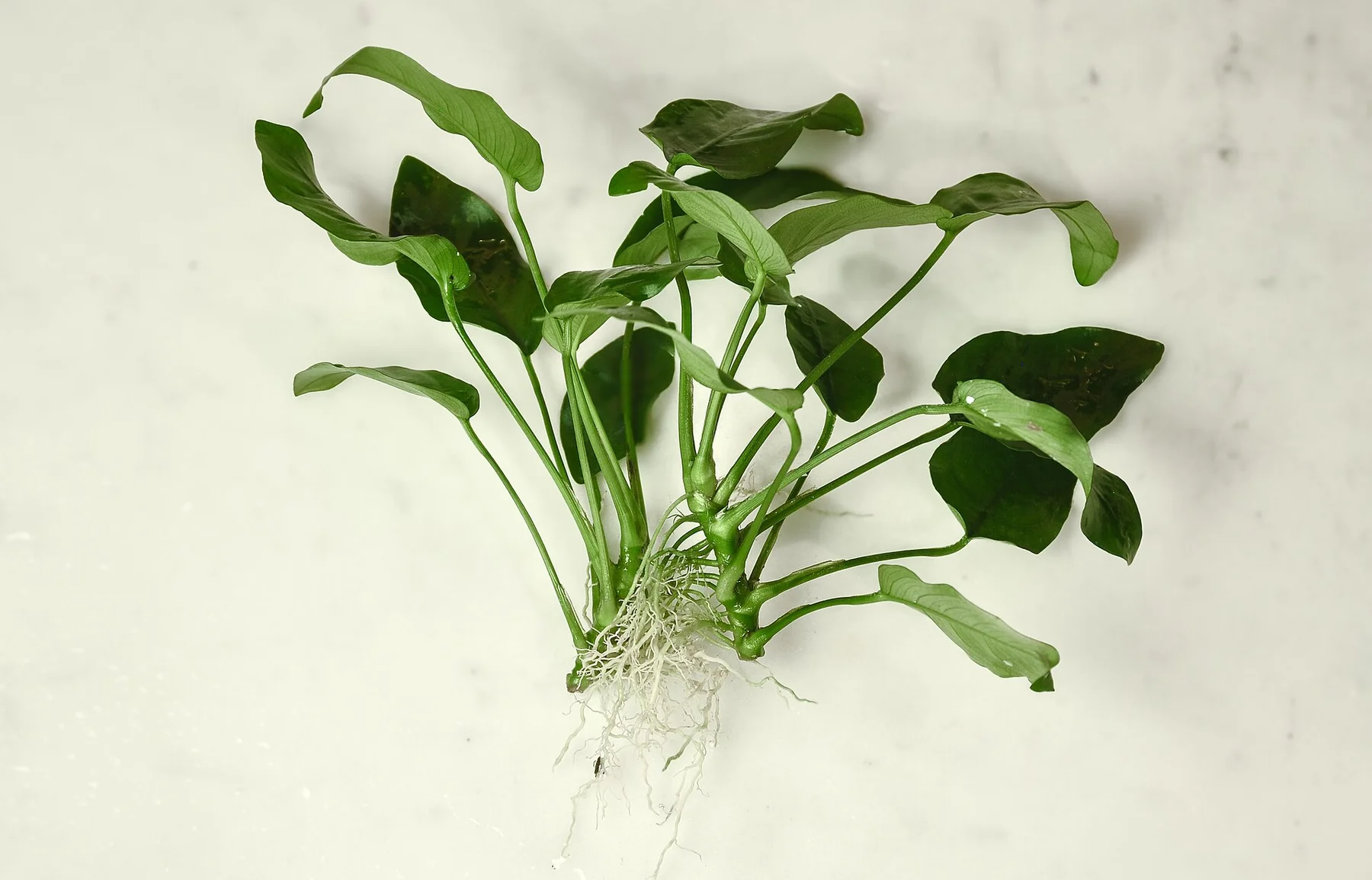
Overview
Sustainable aquarium useFully submerged, Roots in water, Paludarium
Growth formRhizome
Growth habitCreeping, Branching
Height5–10 cm
Primary placementForeground
Growth rateSlow
Care
Minimum light levelLow
Recommended light levelLow
CO₂ requirementNot required
Nutrient uptakeMixed
Substrate requirementsAnchoring only
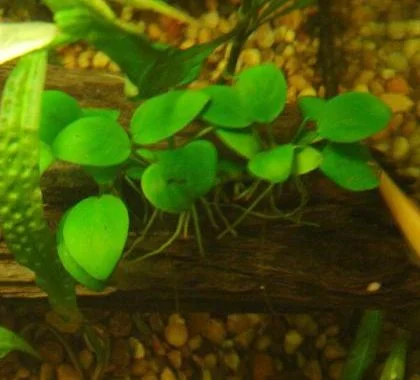
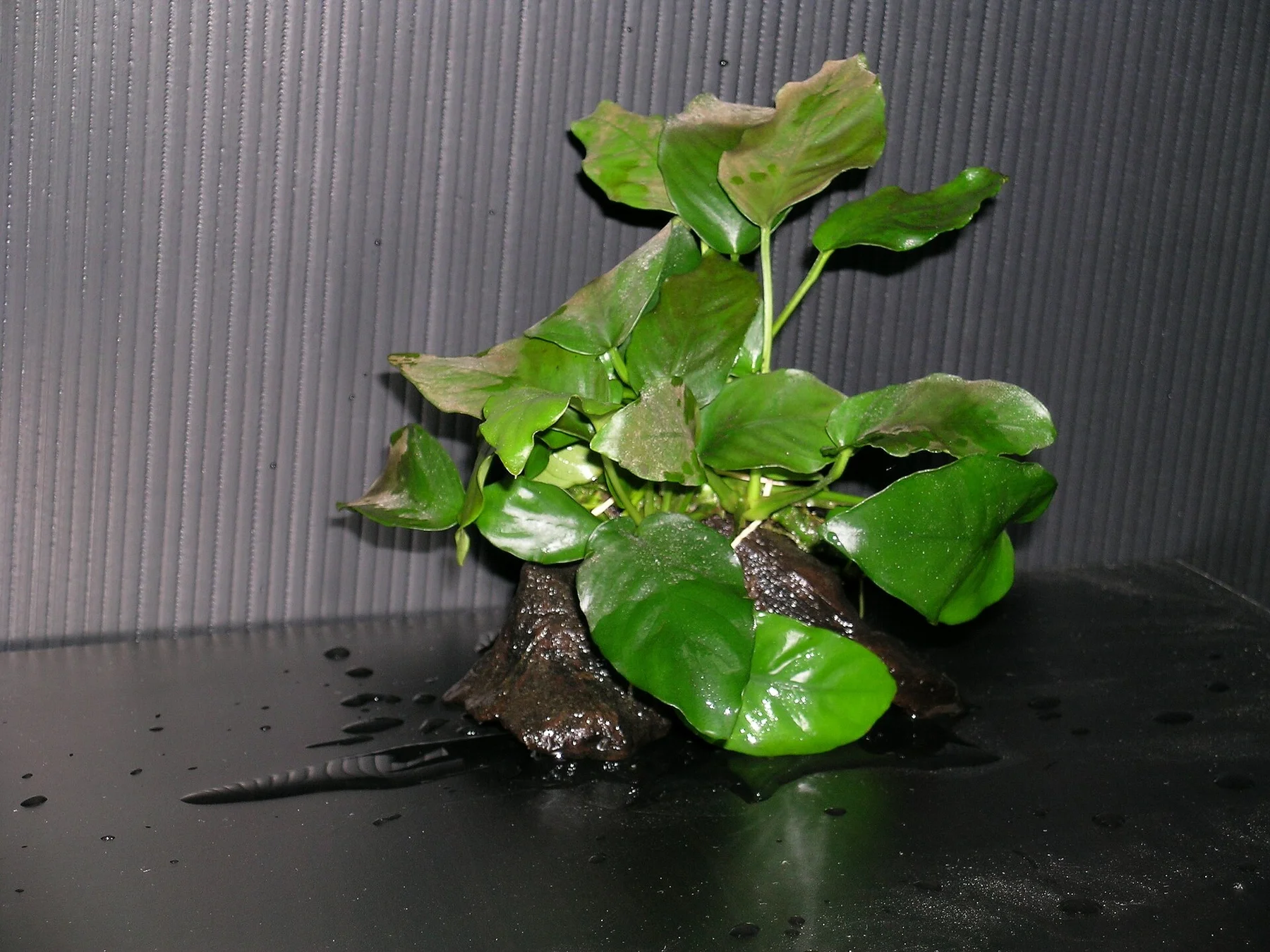
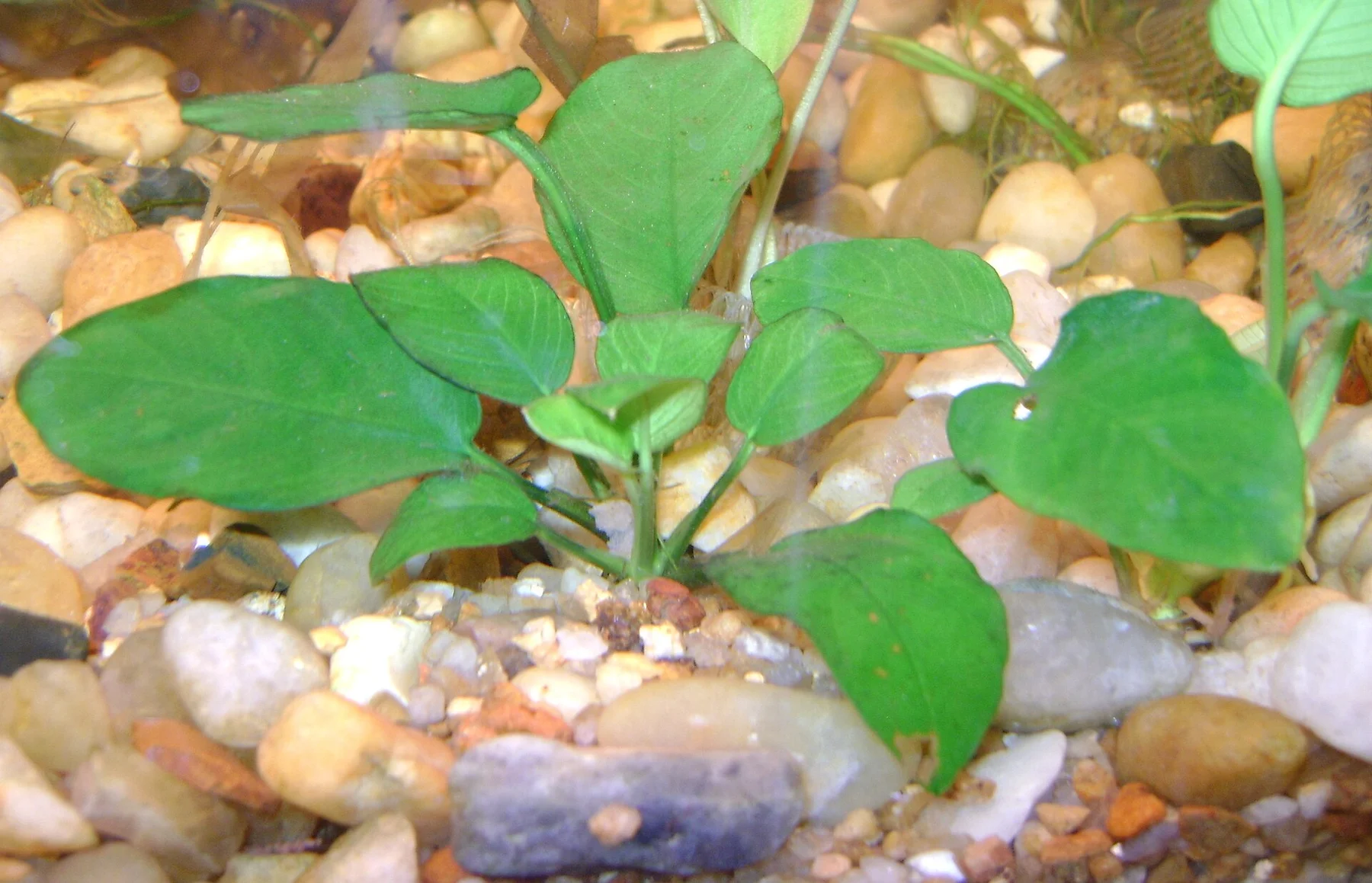
PlantingAnubias nana is epiphytic: the rhizome must not be buried in the substrate, as it will rot. The plant is fixed to driftwood, stone, or other decor with cotton or nylon thread, fishing line, or aquarium-safe glue, leaving the rhizome on the surface. If planting on the bottom, only the roots are buried in the substrate, and the rhizome is simply pressed down with a few stones without covering it; over time, the roots will anchor themselves and lift the plant above the substrate. The thread/glue can be removed after full rooting (the thread dissolves over time).
MaintenanceCare is minimal: the plant grows slowly and is undemanding. The main rule is not to bury the rhizome (rhizome) in the substrate, as it will rot; Anubias is attached to driftwood or rock with thread, string, or aquarium glue. Care involves removing old or algae-affected leaves, cleaning leaves from growths, and maintaining clean water; under bright light, spot algae (Xenococcus) often appear on the leaves, so it is better to place the plant in shaded areas. Propagation is by dividing the rhizome.
Compatibility
CompatibilityAnubias nana is one of the most resilient and safe aquarium plants: its tough, leathery leaves are almost not eaten by herbivorous fish, making it suitable for aquariums with cichlids (including Tanganyika and Malawian), goldfish, catfish, and most peaceful fish communities. The plant is completely safe for shrimp, snails, and other invertebrates, serving as shelter and a source of biofilm. The key restriction is not to bury the rhizome in the substrate (it rots): the plant is attached to driftwood and stones. It pairs well with mosses, other anubias, small crypts, and ferns in planted aquariums.
Leaf toughnessTough
Rooting stabilityStrong
Structural fragilitySturdy
Aquarium toxicity riskFor fish, shrimp, and other inhabitants, Anubias nana is safe under normal conditions: its tough leaves are not eaten and are non-toxic, and leading manufacturers (Tropica and others) recognize the plant as '100% safe'. Like other aroids, it contains raphides — insoluble crystalline needles of calcium oxalate, and according to some aquarium reports, cutting or breaking fresh rhizomes directly in water with sensitive invertebrates (shrimp) can be dangerous for them; this risk is not scientifically confirmed and is disputed by some sources. Practical advice: avoid intensive tissue fragmentation of the plant in aquariums with highly sensitive shrimp.
Disposal warningAlthough Anubias nana is not considered highly invasive in temperate climates, the general rule for safe disposal of aquarium plants is not to release them into natural water bodies. International conservation and invasive species programs recommend disposing of aquarium plants through household waste or compost, not into the natural environment.
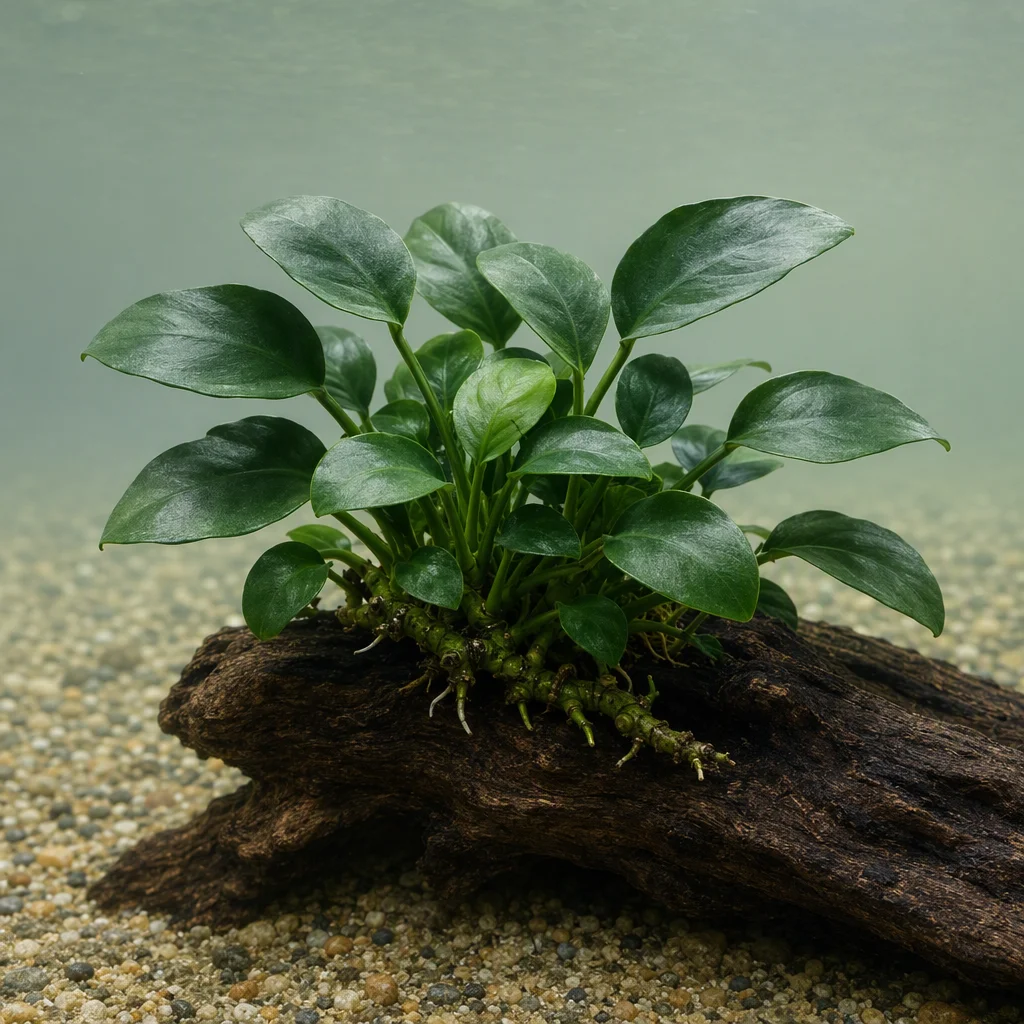 Reference illustration · may contain inaccuracies