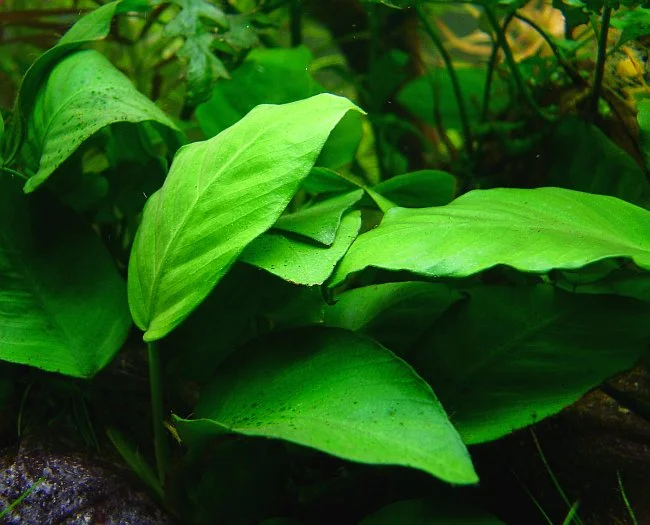
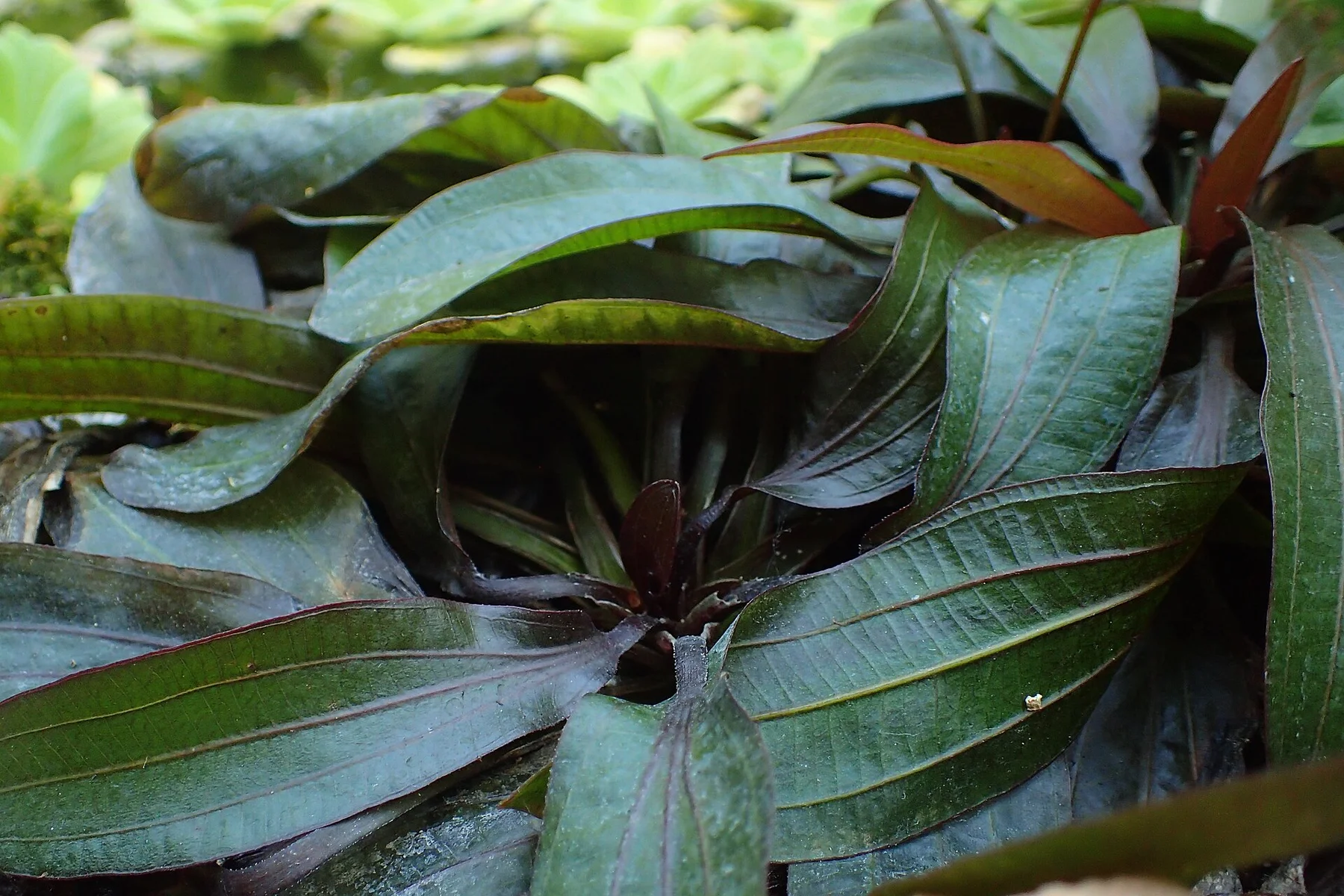
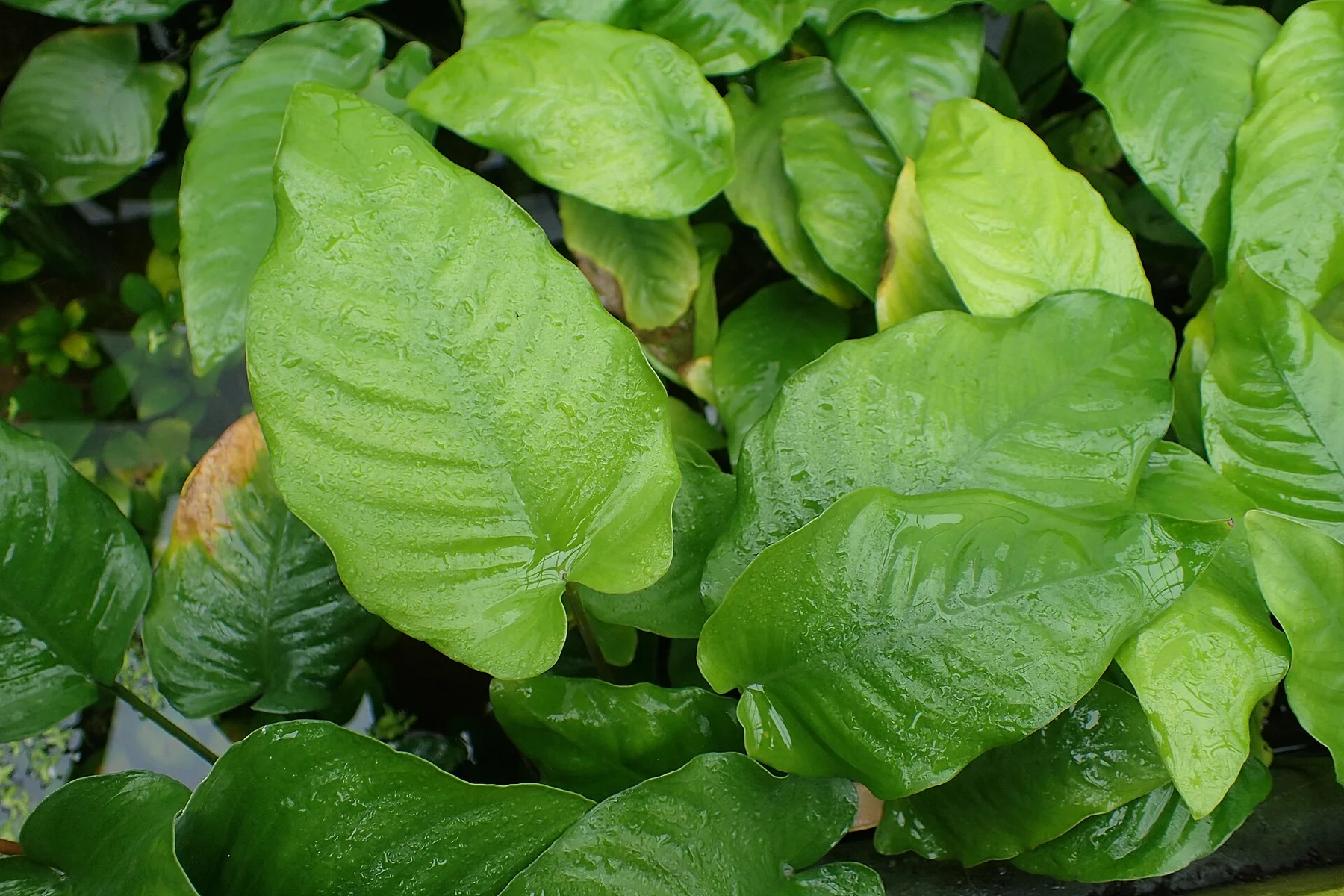
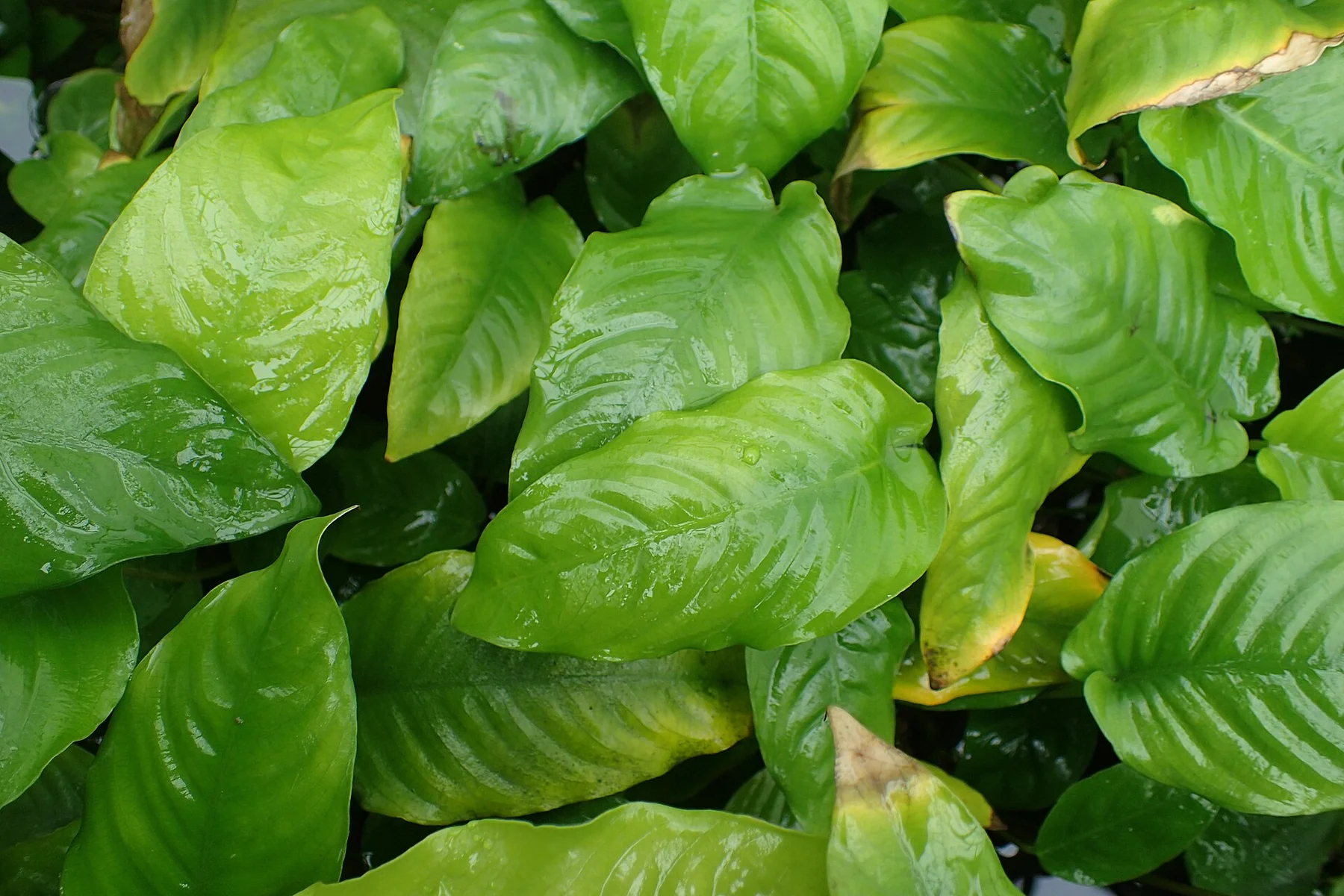
Overview
Sustainable aquarium useFully submerged, Roots in water, Paludarium
Growth formRhizome
Growth habitCreeping, Vertical
Height20–40 cm
Primary placementMidground
Growth rateSlow
Care
Minimum light levelLow
Recommended light levelLow
CO₂ requirementNot required
Nutrient uptakeWater column
Substrate requirementsAnchoring only
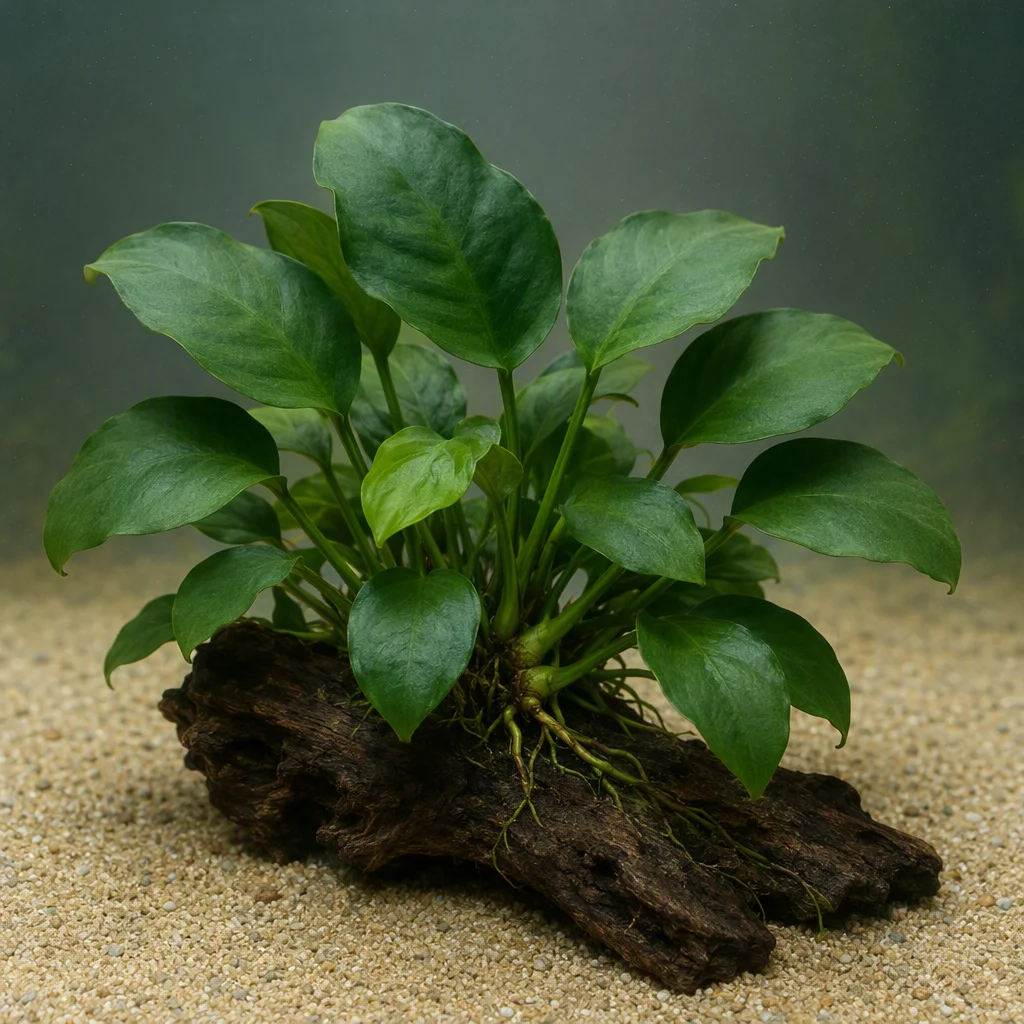
PlantingThe rhizome of Anubias must not be buried in the substrate — this causes rot and plant death. It is best to attach the plant to driftwood, stone, or decor (with fishing line, thread, or aquarium glue, securely, without damaging the rhizome); planting so that only the roots are in the substrate and the rhizome remains exposed on top is acceptable. Small clumps are planted in groups, large ones individually; as the plant grows, it should be thinned and divided.
MaintenanceBasic care: attach the plant to a driftwood, stone, or other decor (with fishing line, thread, or glue), without burying the rhizome in the substrate — burying causes rot and plant death; when planting in substrate, only lightly cover the roots with coarse sand or small gravel. The light should be subdued and diffuse (floating plants can provide shade), with a photoperiod of no more than 12 hours, as bright light promotes algae growth on the slow-growing leaves. Weekly water changes of about 20% are recommended to prevent phosphate and nitrate buildup. Additional CO₂ supply is not necessary; regular liquid fertilization with microelements (potassium, iron) is beneficial. Propagation is by dividing the rhizome into parts with 3–8 leaves.
Compatibility
CompatibilityAnubias barteri is compatible with most peaceful aquarium fish, shrimp, and snails. Its tough, dense leaves are generally not damaged by herbivorous fish, making it suitable even for aquariums with some cichlids and other species prone to nibbling on delicate plants. The dense growth provides shelter for shrimp and fry, and the leaf surfaces serve as grazing areas for small invertebrates. It should be noted that large burrowing fish may mechanically damage or detach the plant; it is best to secure Anubias to rocks or driftwood without burying the rhizome.
Leaf toughnessTough
Rooting stabilityStrong
Structural fragilitySturdy
Aquarium toxicity riskIn typical aquarium conditions, Anubias Barteri is considered safe for fish and invertebrates: claims of shrimp death during pruning are unsubstantiated myths, and fish generally do not nibble on the tough leaves. The plant belongs to the Araceae family and contains calcium oxalate crystals (raphides) in its tissues, so mechanical damage or chewing can cause local irritation; this is mainly relevant for pets and herbivorous, gnawing fish, not for typical aquarium inhabitants.
Disposal warningAnubias Barteri should not be discarded into natural water bodies, streams, or other aquatic ecosystems, as aquarium plants can potentially carry unwanted organisms and pathogens. Unwanted plants and cuttings should be dried or placed in a sealed bag and disposed of with household waste; they can also be composted away from natural water bodies. Do not drain or throw water and substrate from the aquarium directly into natural water bodies.
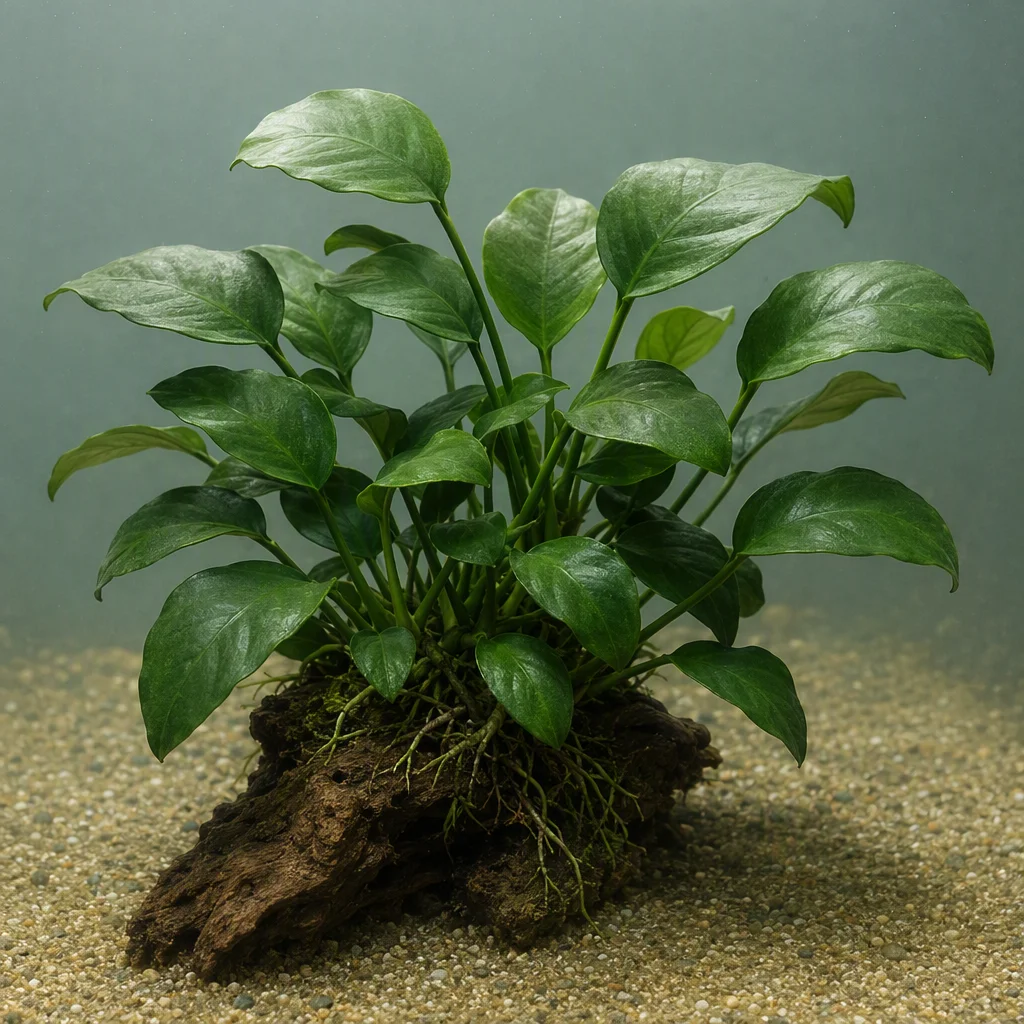 Reference illustration · may contain inaccuracies