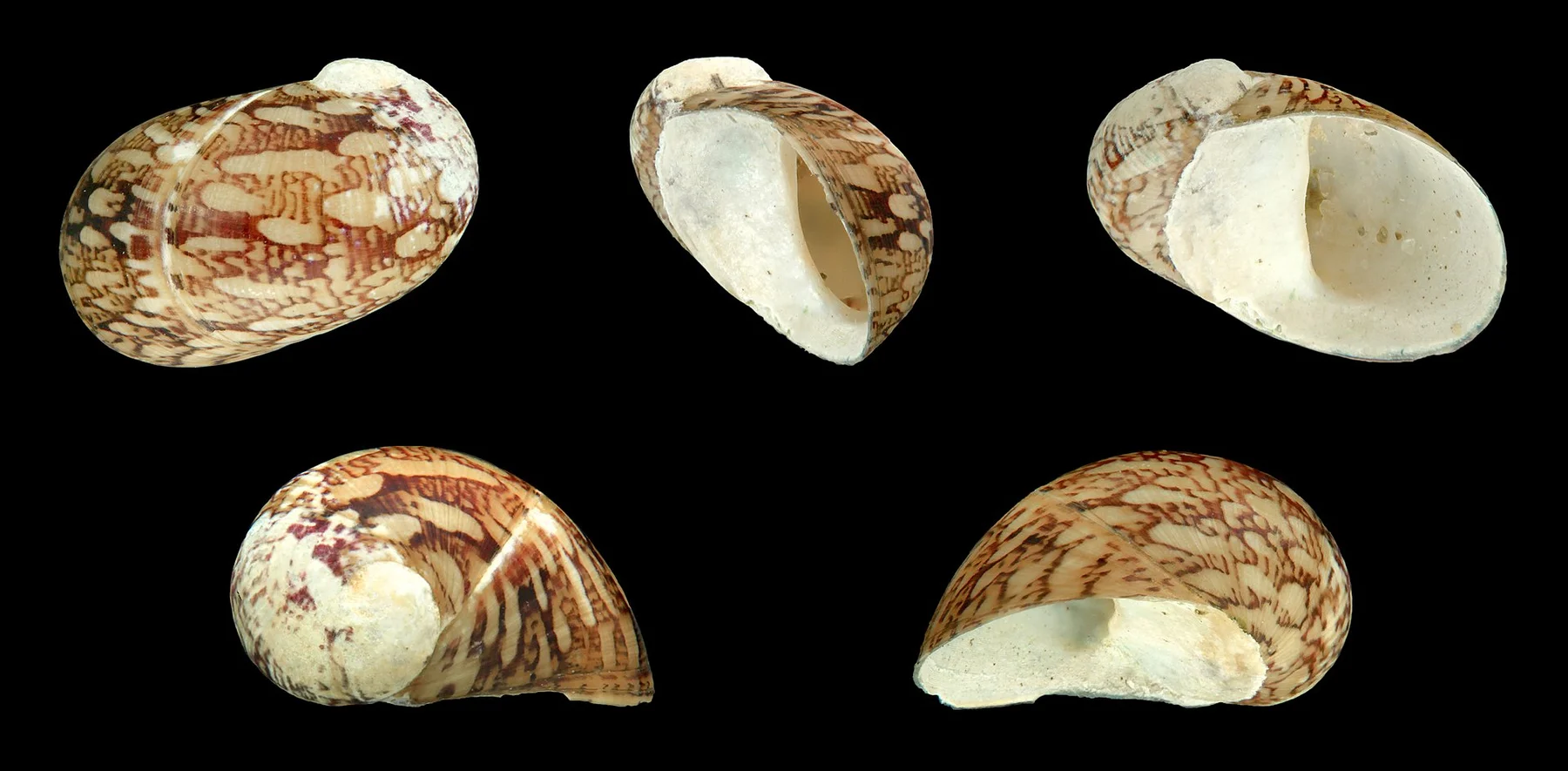
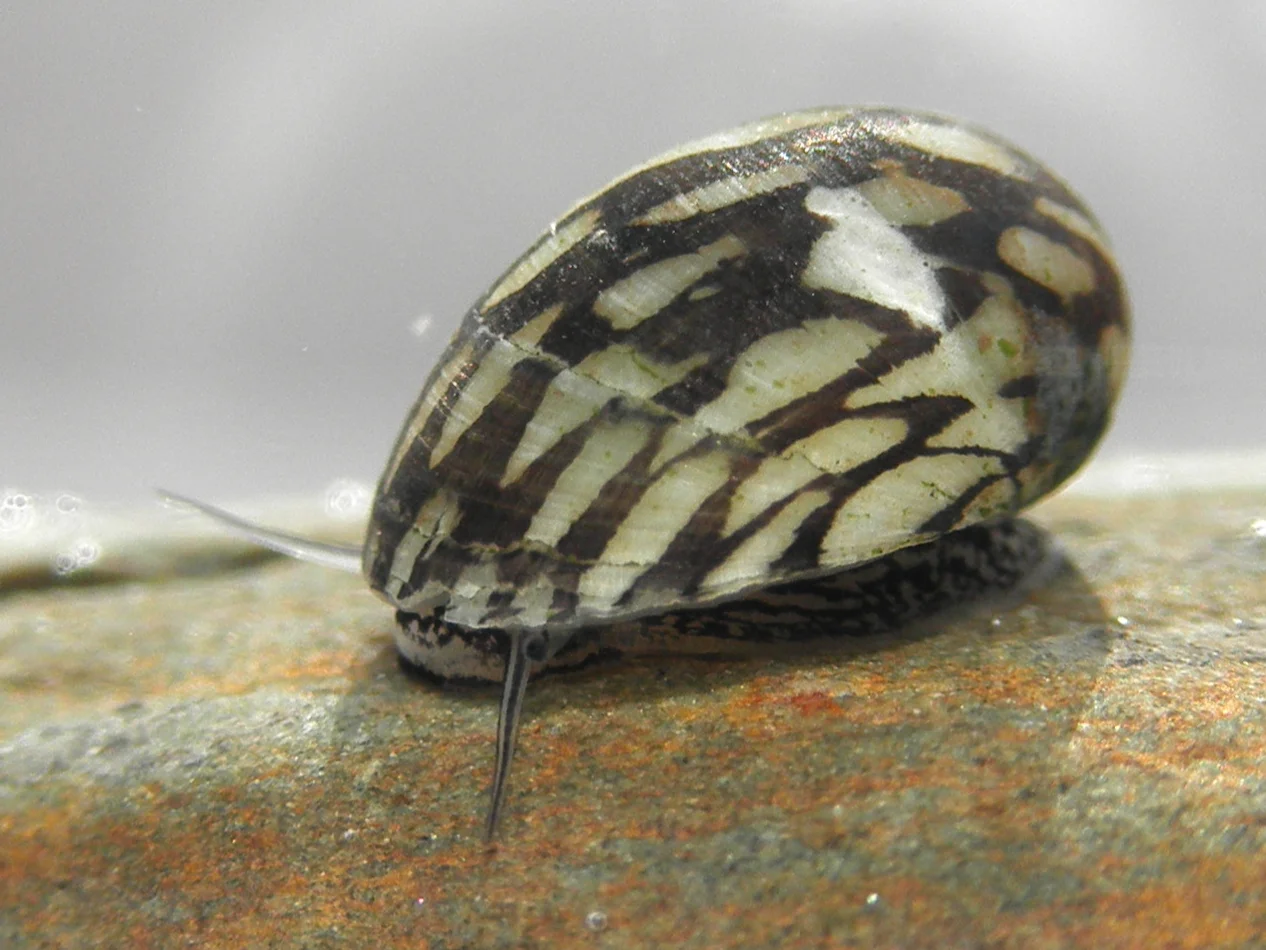
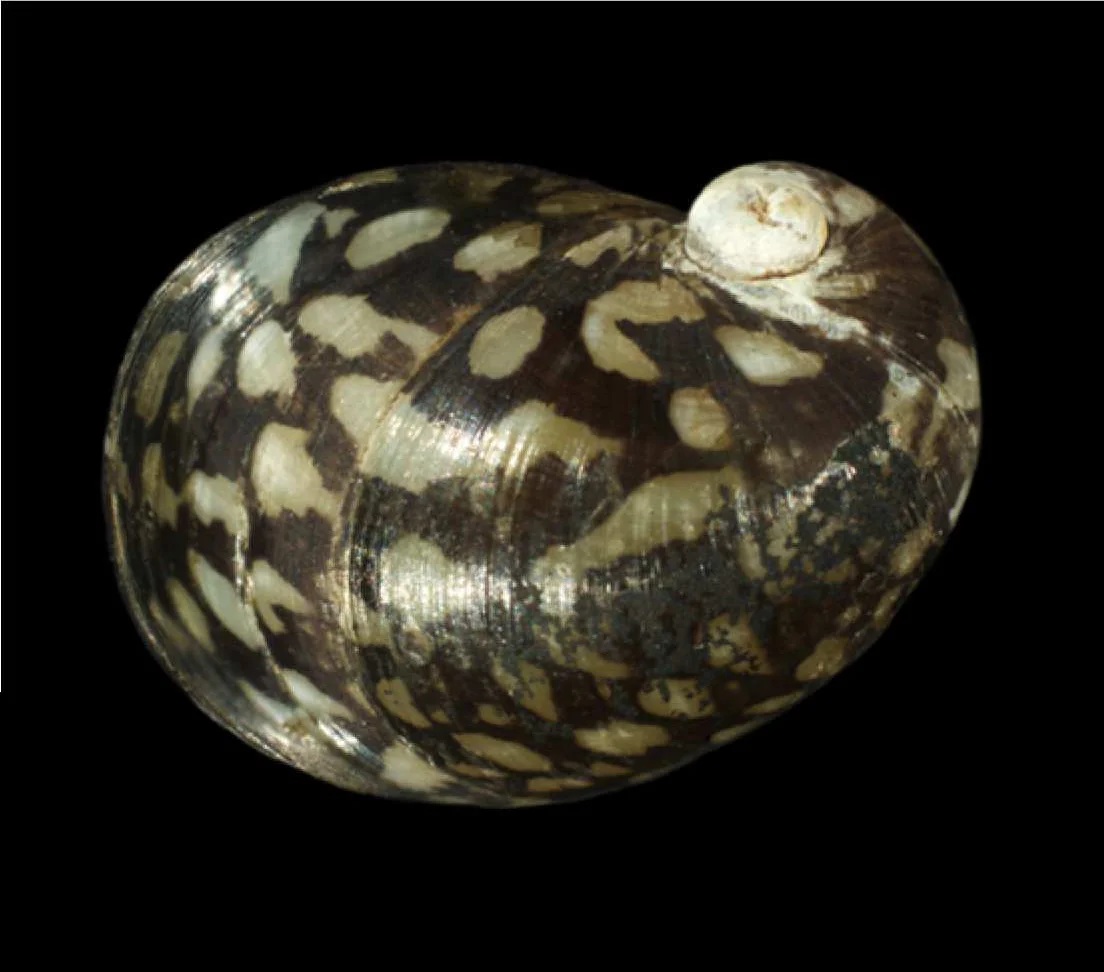
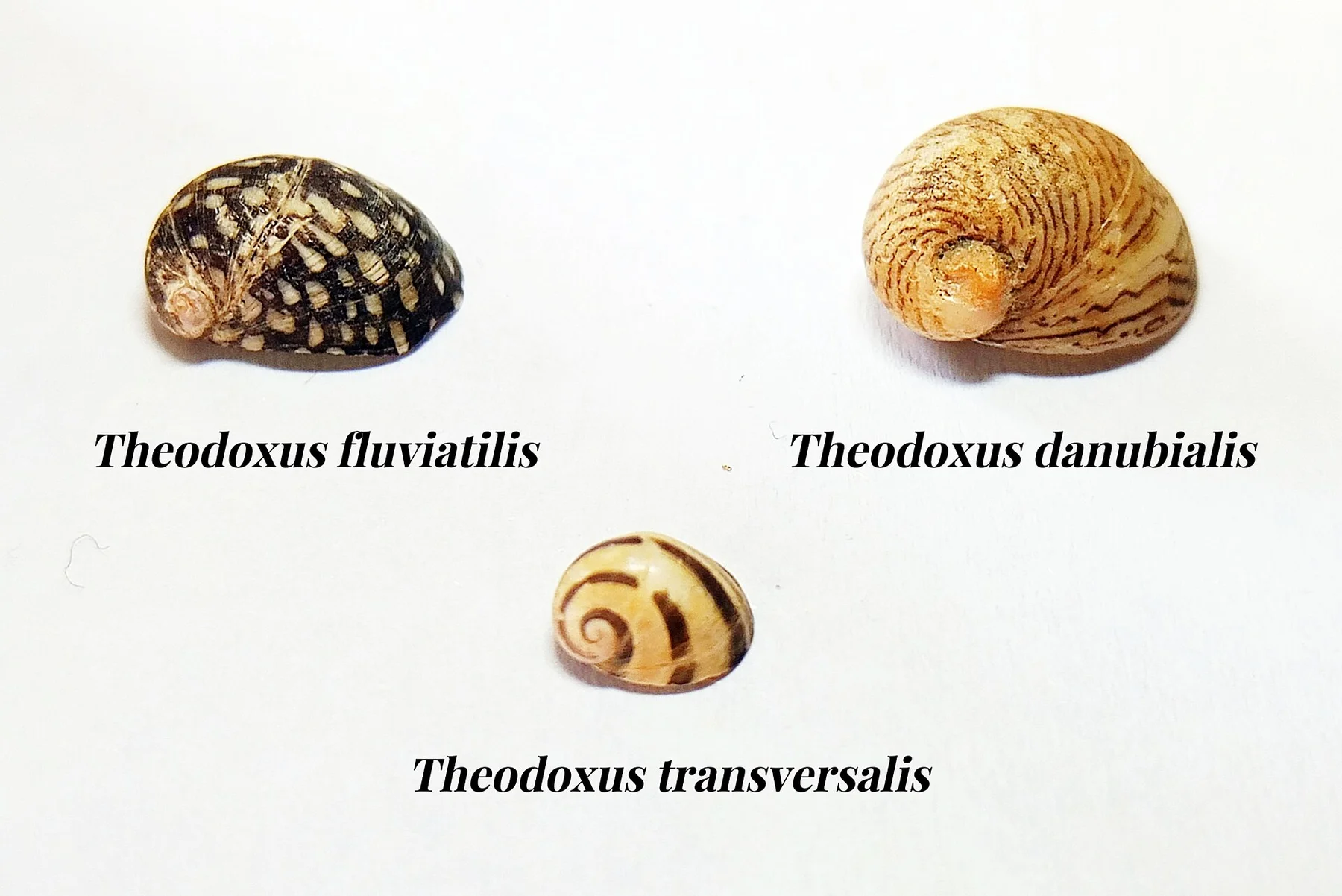
CompatibilityTheodoxus fluviatilis is a peaceful, highly specialized algae eater, safe for higher plants and other invertebrates. Compatible with small peaceful fish (small characins, killifish, rasboras, small algae-eating catfish), shrimp, and other non-aggressive snails given sufficient food base (algal growths). Coexistence with snail-eating fish (loaches, puffers, large cichlids, labyrinth fish) and with predatory assassin snails is unacceptable. The species does not damage plants, does not cause overpopulation (reproduction is slow), requires hard substrates (stones, driftwood) and areas with algal film. Keeping in a group of 5-6 individuals is recommended; a tight lid is mandatory, as snails can crawl out of the aquarium.
TemperamentPeaceful
Interaction with plantsTheodoxus does not damage higher aquarium plants: it scrapes off algal and organic film from leaf surfaces without consuming the plant tissues themselves. Even fine-leaved mosses remain intact after cleaning. In nature, the species feeds primarily on diatoms and bacterial films; it lacks cellulases, so green algae with dense cellulose walls and higher plants are not digested.
Predation vulnerabilityTheodoxus fluviatilis is vulnerable to fish and crustaceans capable of crushing or breaking its sturdy calcareous shell. Natural predators include perch (Perca fluviatilis), roach (Rutilus rutilus), and crayfish (Orconectes limosus, Astacus astacus). In the aquarium, it is threatened by snail-eating fish such as tetras (e.g., Tetra species), cichlids (e.g., cichlids), macrognathus, and some large cichlids. Small peaceful fish (danios, tetras, guppies, neon tetras) are safe. The strong shell with operculum provides some protection but does not prevent specialized predators.
Population growth riskLow
Responsible disposalTheodoxus fluviatilis is a native European species, threatened with extinction in some regions (Czech Republic, Switzerland, Germany). Snails or their offspring should not be released into natural water bodies: this can disrupt local populations and ecosystems. If it is necessary to dispose of excess individuals, they should be given to other aquarists, pet stores, or humanely euthanized; discarding live mollusks into the sewer or outdoors is unacceptable.
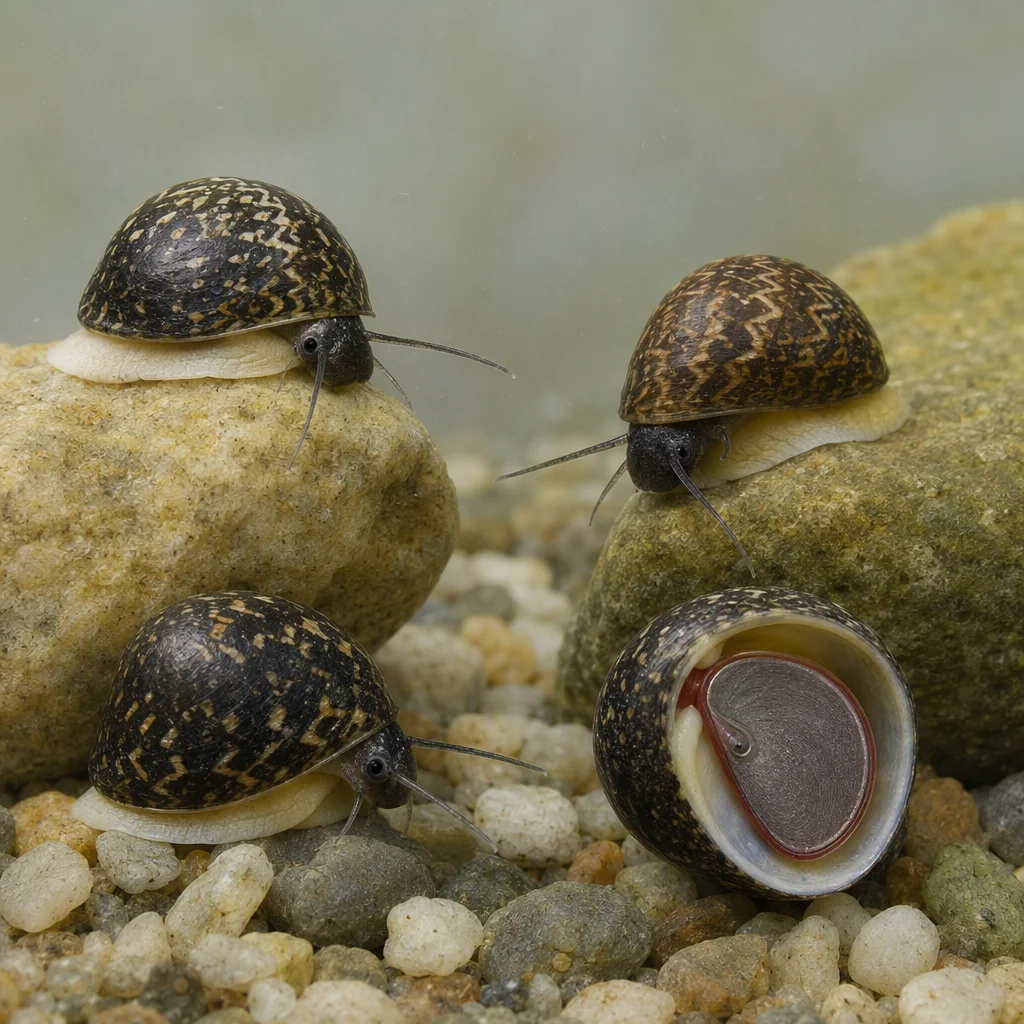 Reference illustration · may contain inaccuracies