CompatibilityPeaceful and non-territorial snail, safe for live plants, shrimp, and small peaceful fish (tetras, guppies, danios, rainbowfish, Corydoras, livebearers). Dangerous tank mates include fish that eat snails: bettas, pufferfish, large cichlids, and predatory snails like Helena. Do not keep with aggressive species or crabs. Sensitive to copper and medications, so isolate during fish treatment. May escape from the aquarium; a secure lid is required.
TemperamentPeaceful
Interaction with plantsSafe for live aquarium plants: primarily feeds on algae growths, diatom and soft green algae, biofilm, and detritus, without damaging healthy leaves. May scrape algae from broad-leaved plants (e.g., Anubias), without injuring the leaves themselves. In aquariums with a lack of natural food, additional feeding with blanched vegetables and spirulina tablets is possible.
Predation vulnerabilityThe snail is vulnerable to fish and invertebrates that prey on mollusks. Threats include: tetraodon (pufferfish), bettas (clown, yoyo, zebra), snails (assassin snails), large cichlids, goldfish, and crabs. Small peaceful fish (tetras, rasboras, danios, corydoras, otocinclus), shrimps, and other neritins are safe. The snail's only defenses are its thick shell and operculum, which can close tightly in danger; when kept with snail-eating fish, it will be eaten or die from stress.
Population growth riskLow
Responsible disposalDo not release the snail, its eggs, or offspring into natural water bodies. Neritina pulligera and related species (including Neritina knorri) are introduced species in some regions and can disrupt local ecosystems. If necessary, dispose of the animal by passing it to other aquarists, a pet store, or a veterinary clinic for humane disposal. Do not drain the aquarium contents into natural water bodies or the sewage system.
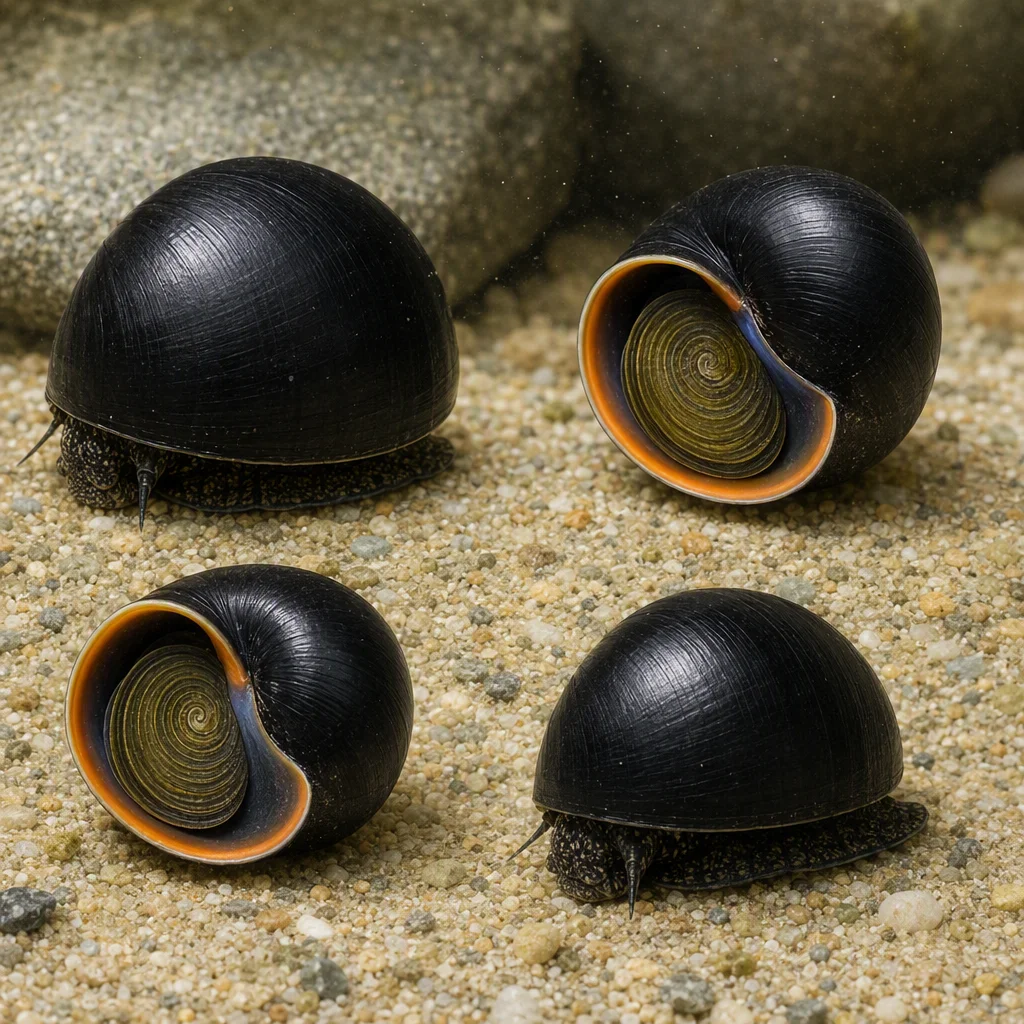 Reference illustration · may contain inaccuracies