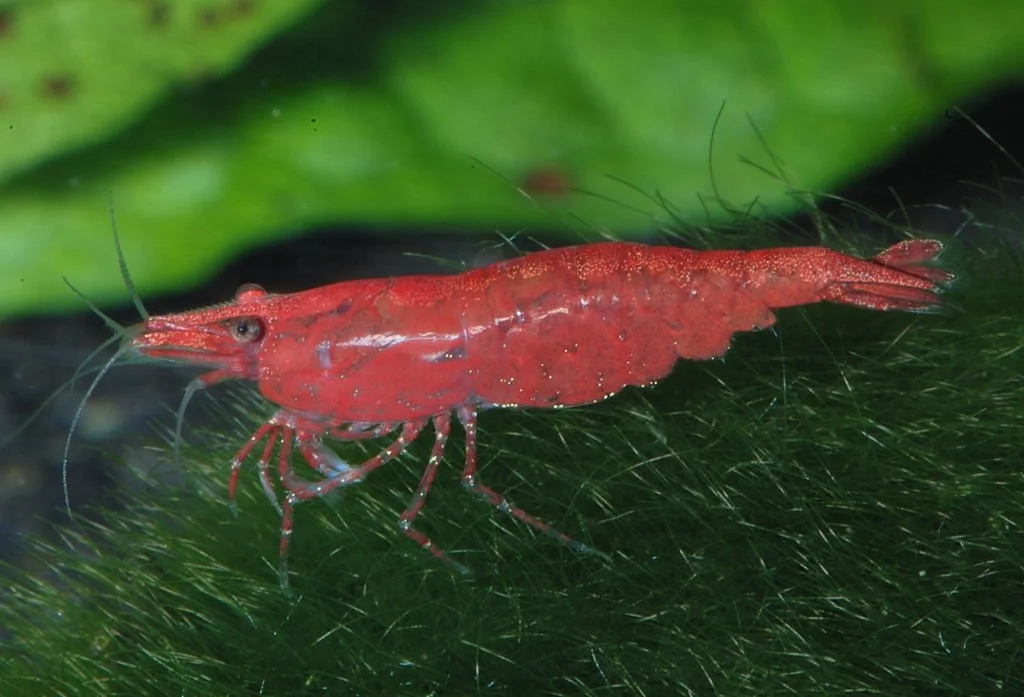
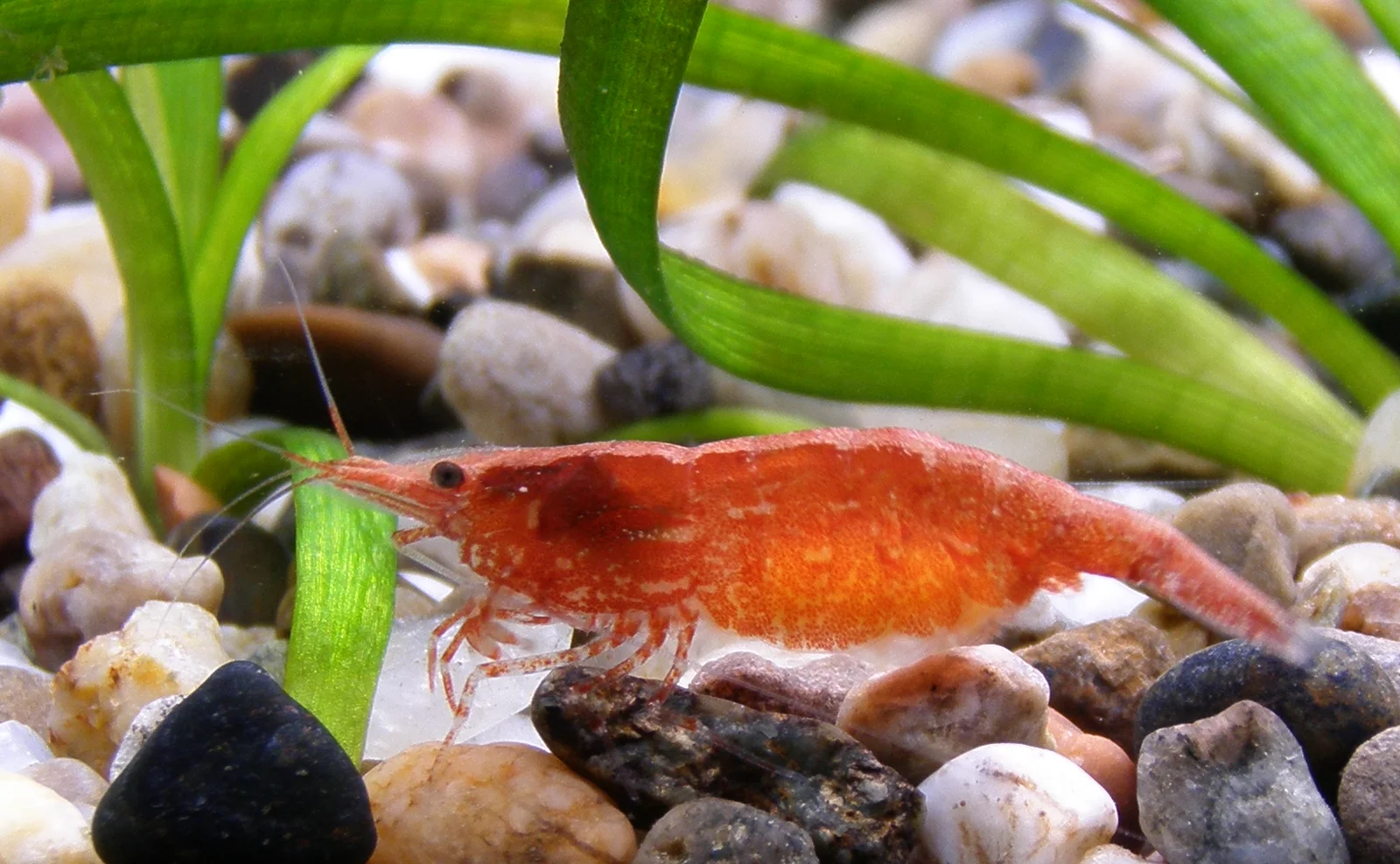
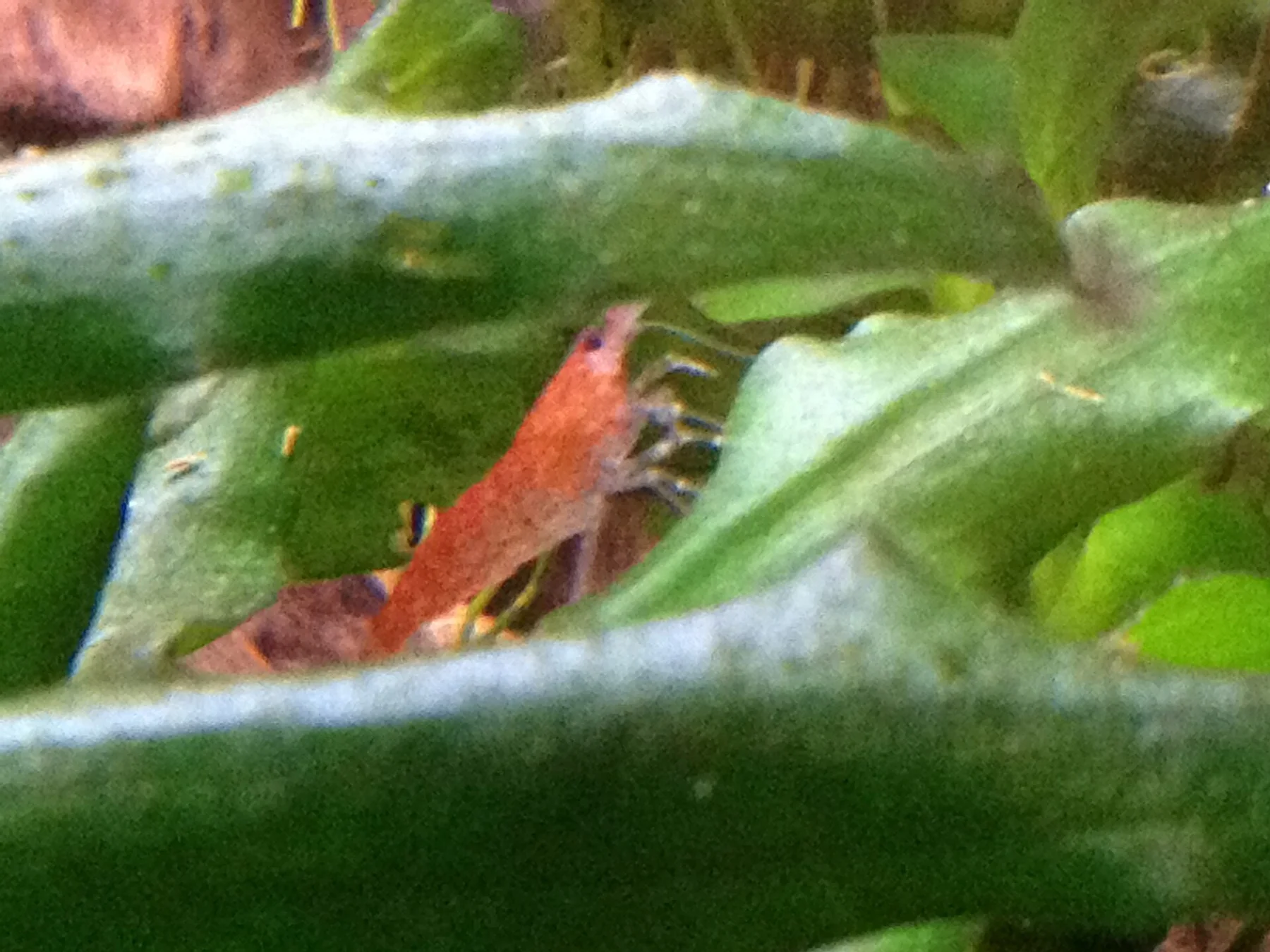
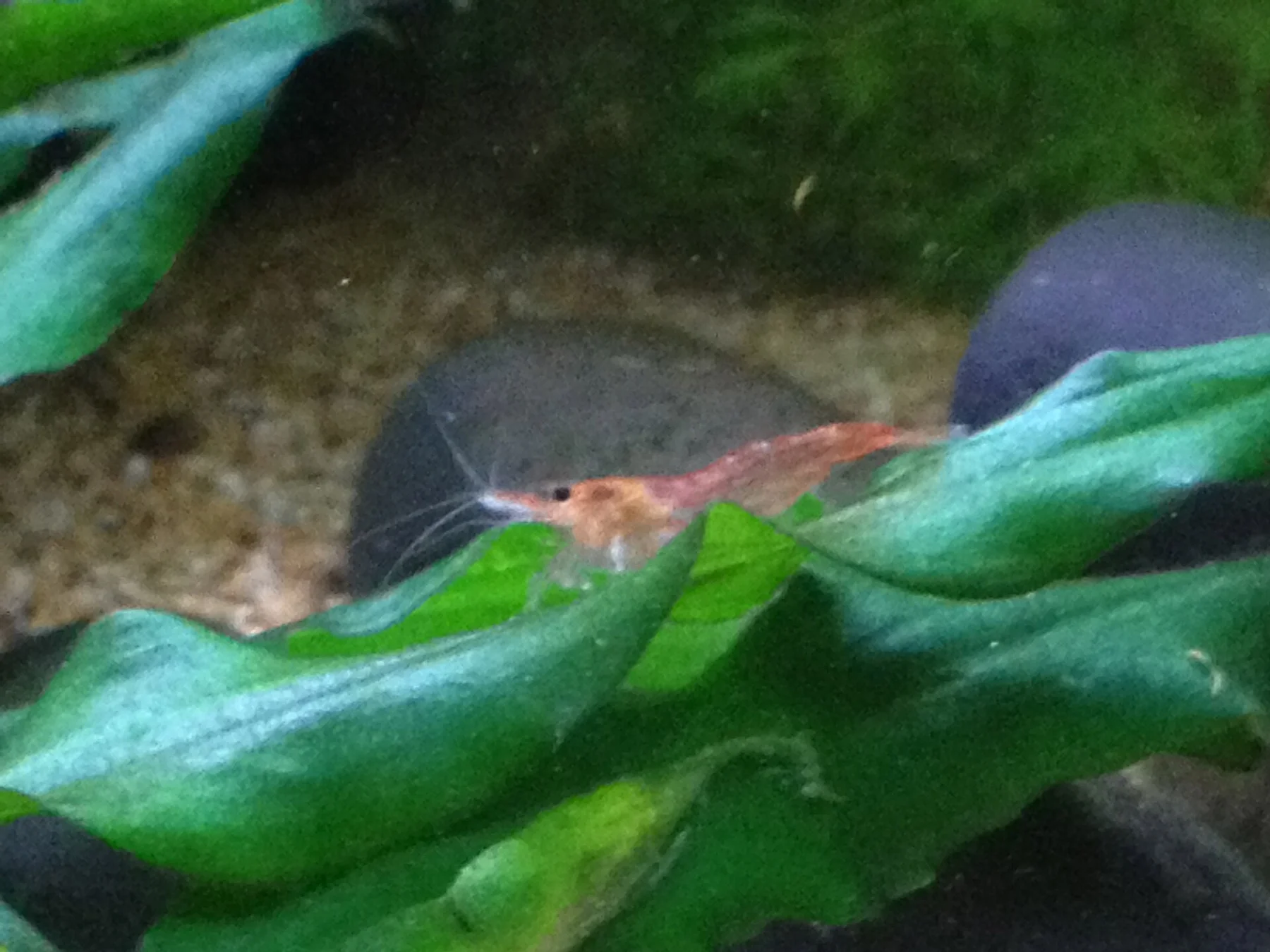
CompatibilityCherry red shrimp are peaceful schooling invertebrates, safe for plants, small fish, and other invertebrates. They coexist well with small peaceful fish (neon tetras, rasboras, guppies, danios, otocinclus, corydoras, dwarf gouramis) and peaceful snails; for maximum reproduction and color preservation, they are best kept in a species-only shrimp tank with dense vegetation and shelters. Co-habitation with cichlids (including dwarf cichlids), angelfish, large gouramis, barbs, bettas, and other predatory fish capable of hunting shrimp is not recommended; predatory snails and planarians are also dangerous, especially for juveniles. Copper-based medications and molluscicides are lethal.
TemperamentPeaceful
Interaction with plantsInteraction is friendly: Cherry Shrimp are safe for live aquatic plants and do not damage healthy tissue. They only feed on soft algae, bacterial film, and dead leaf parts, helping keep plants clean (they do not parasitize large leaves). Dense planting of small-leaved plants and mosses (Java moss, Christmas moss), Riccia, Cladophora, and ferns is recommended: in their growth, shrimp find shelter (especially during molting) and food sources. They also enjoy floating plants.
Predation vulnerabilityThe shrimp are highly vulnerable to predatory and even semi-peaceful fish: any fish capable of swallowing daphnia will eat juveniles, and adults are prey for angelfish, cichlids, large tetras, bettas, and other fish for which shrimp are natural prey. Even small fish (guppies, neons) with insufficient cover may pick off juveniles. In a fish tank, shrimp survive only with dense moss (Java moss), Riccia, and other shelters. For guaranteed breeding, a species-only tank without fish is recommended. Threats also include planarians and hydras hunting juveniles.
Population growth riskHigh
Responsible disposalNeocaridina davidi (including the red form) is an invasive species: if it enters natural water bodies (including through accidental release of aquarium inhabitants), it successfully establishes and reproduces, displacing native shrimp species and impacting natural communities. Red cherry shrimp and their offspring must never be released into natural water bodies. If you no longer keep them or have excess offspring, transfer the individuals to other aquarists, pet stores, or dispose of them humanely without releasing animals into open ecosystems.
 Reference illustration · may contain inaccuracies