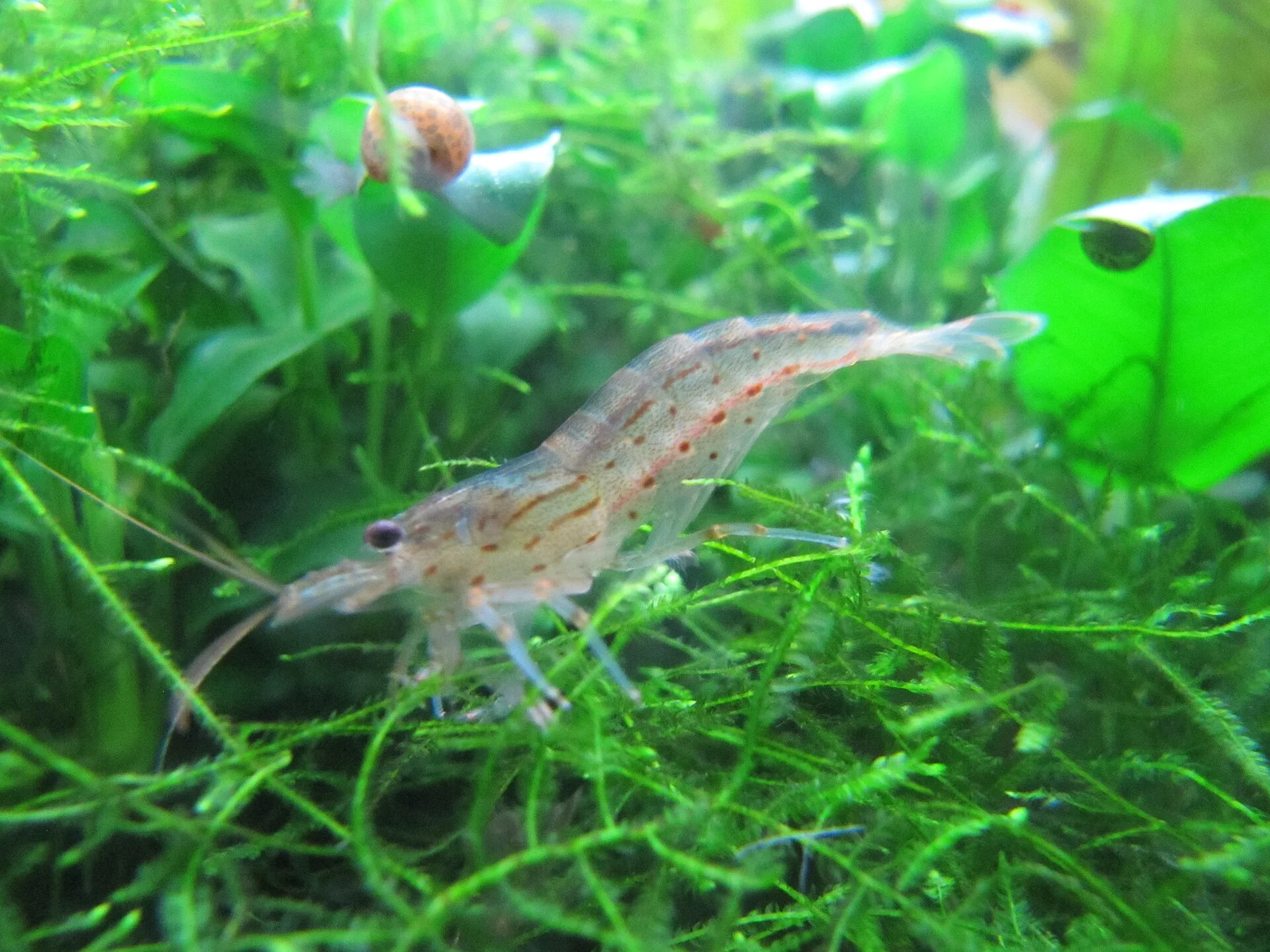
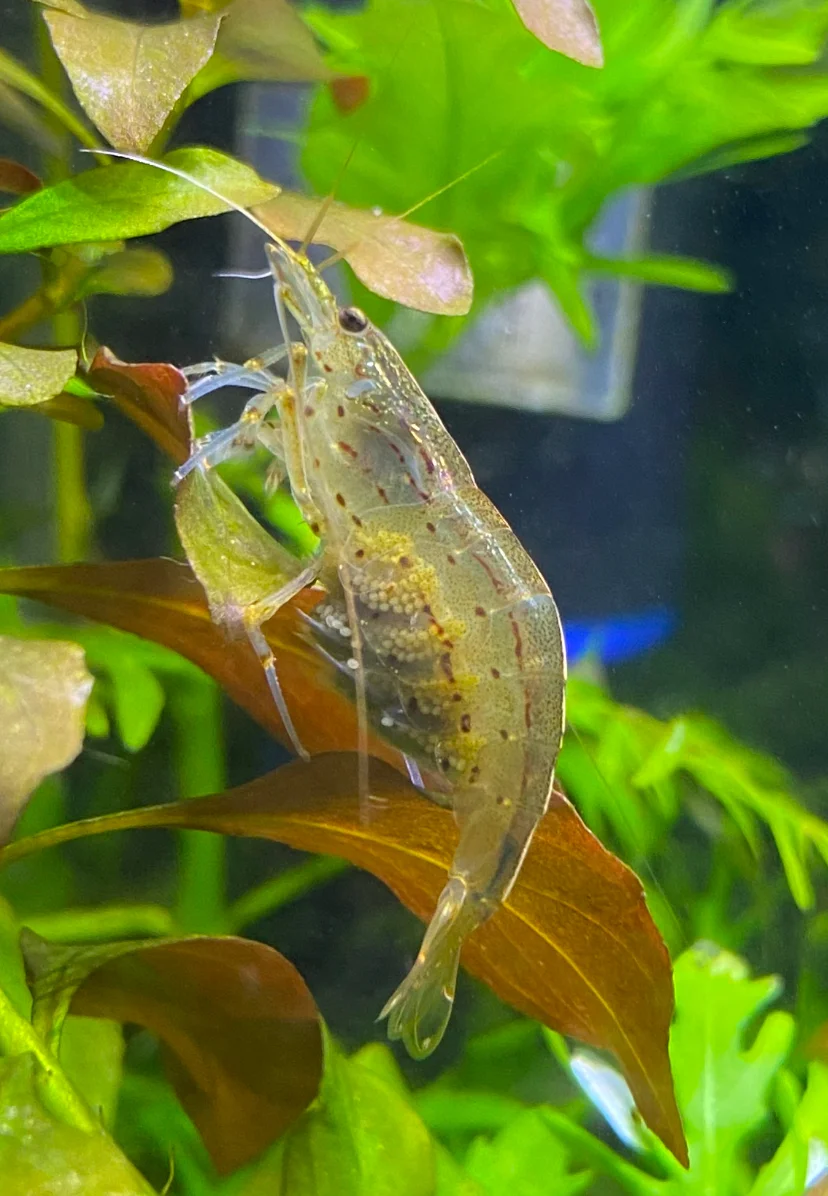
CompatibilityAmano shrimp are peaceful, social species, well suited for general community tanks. They coexist well with small peaceful fish (neon tetras, rasboras, corydoras, guppies, otocinclus), other shrimp (Neocaridina, Crystal shrimp), and snails (Nerite, Malaysian trumpet snails, apple snails). They are strictly incompatible with large, aggressive, or territorial fish (cichlids, large barbs, bettas, angelfish), which may see shrimp as food. It is recommended to keep them in groups of 6–10 individuals.
TemperamentPeaceful
Interaction with plantsAmano shrimp are safe for aquarium plants and do not damage them when well-fed. They actively eat algae from leaves, mosses, and decorations, cleaning plants from filamentous algae and other growths. However, when food is scarce (algae and organic matter), shrimp may start nibbling on young tender leaves of soft-leaved plants, such as Java moss or Ambulia. It is recommended to keep shrimp in dense thickets of small-leaved plants, which serve as shelter and additional food source.
Predation vulnerabilityThe Amano Shrimp is vulnerable to large and predatory fish. Angelfish, cichlids, large barbs, loaches, pufferfish, and other fish capable of swallowing a shrimp pose a direct threat. Juveniles and shrimp immediately after molting, when the shell is soft, are especially vulnerable. Even relatively calm angelfish readily consume shrimp. When kept with active fish (e.g., barbs), shrimp begin to hide and feed predominantly at night. It is recommended to keep them only with small, peaceful fish (neons, rasboras, corydoras, otocinclus).
Population growth riskLow
Responsible disposalDo not release Amano shrimp, their offspring, or eggs into natural water bodies. Caridina multidentata is an amphidromous species native to Japan and Taiwan, but cases of this species being found in the wild in Europe (in warm waters of Hungary) have been recorded as a result of escape from the aquarium trade. If you need to dispose of animals, pass them on to other aquarists, a pet store, or humanely euthanize. Do not drain water from an aquarium with larvae or eggs into natural water bodies.
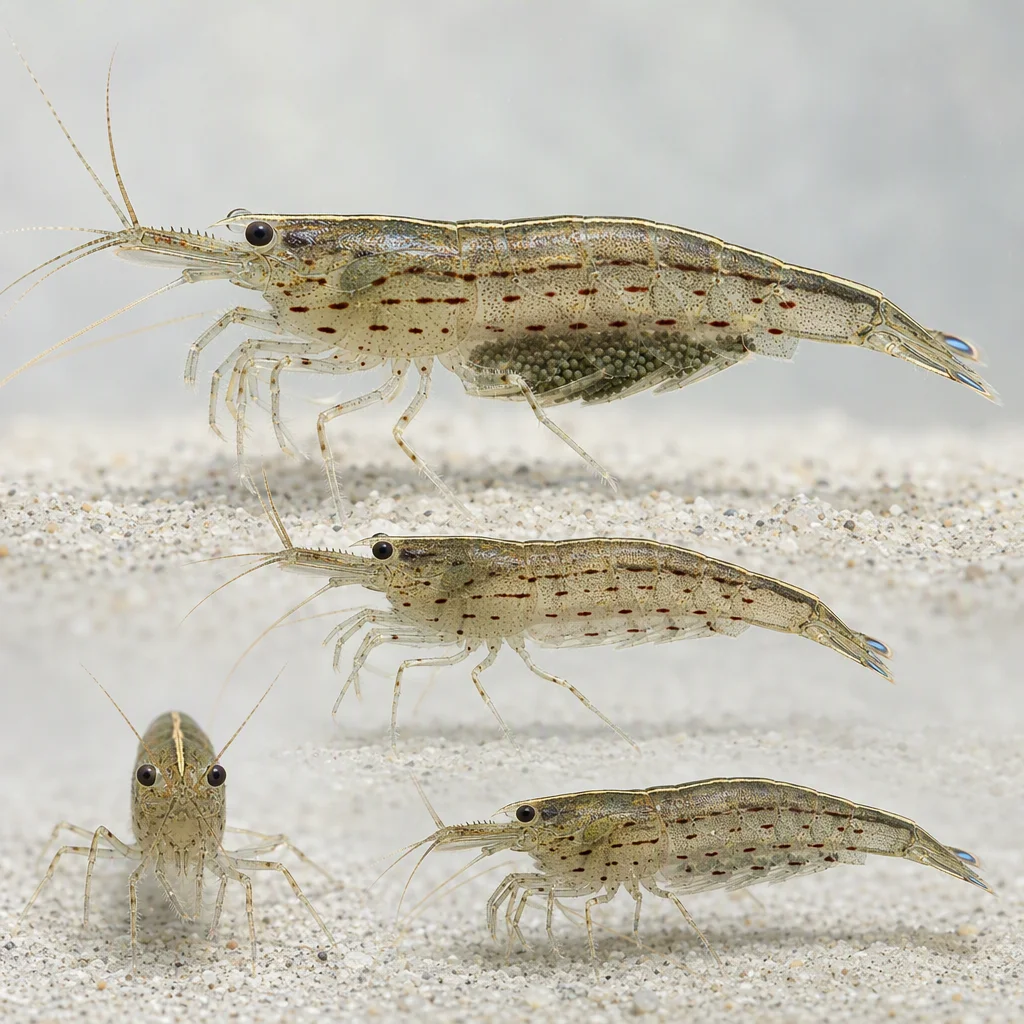 Reference illustration · may contain inaccuracies