Overview
ProfileGastropod mollusk
Aquarium rolesPredator, Scavenger, Decorative
Adult size1.5–2.8 cm
Social modelGroup
Minimum addition quantity2
DietPredator, Scavenger
Care
Minimum aquarium volume20–100 L (allowed 5–300 L)
Suitable aquarium proportionsStandard
Water temperature22–27 °C (allowed 18–28 °C)
pH7–8 (allowed 6–8)
General hardness8–15 °dGH (allowed 5–25 °dGH)
Shell-safe pH7–8
Shell-safe general hardness8–15 °dGH (allowed 5–25 °dGH)
Required dietHelena is an obligate carnivore: for normal nutrition, it requires protein food, primarily other snails, as well as frozen protein feeds (bloodworms, tubifex, Artemia) and sinking protein granules/tablets for predatory snails.
Compatibility
CompatibilityHelena snail is a predatory mollusk that actively hunts other snails (ramshorn, physid, melanoids, and even weakened large species), so it is not suitable for keeping with decorative snails; however, it is peaceful towards most fish, healthy shrimps, and plants, but should not be kept with snail-eating fish (bettas, tetraodons).
TemperamentConditionally peaceful
Interaction with plantsAnentome helena is a predatory species and does not feed on live plant tissues. It may lay egg capsules on leaves and stems of plants but does not damage them. Plants are safe to keep together.
Predation vulnerabilityVulnerable to molluscivorous fish: discus (including clown and yoyos), tetraodons (especially dwarf species), large cichlids, as well as crabs and goldfish; generally safe with peaceful fish and shrimps.
Population growth riskLow
Responsible disposalScientific publications record cases of unintentional or intentional release of A. helena into natural ecosystems with subsequent colonization and invasion; specialized resources explicitly warn against releasing it into the wild.

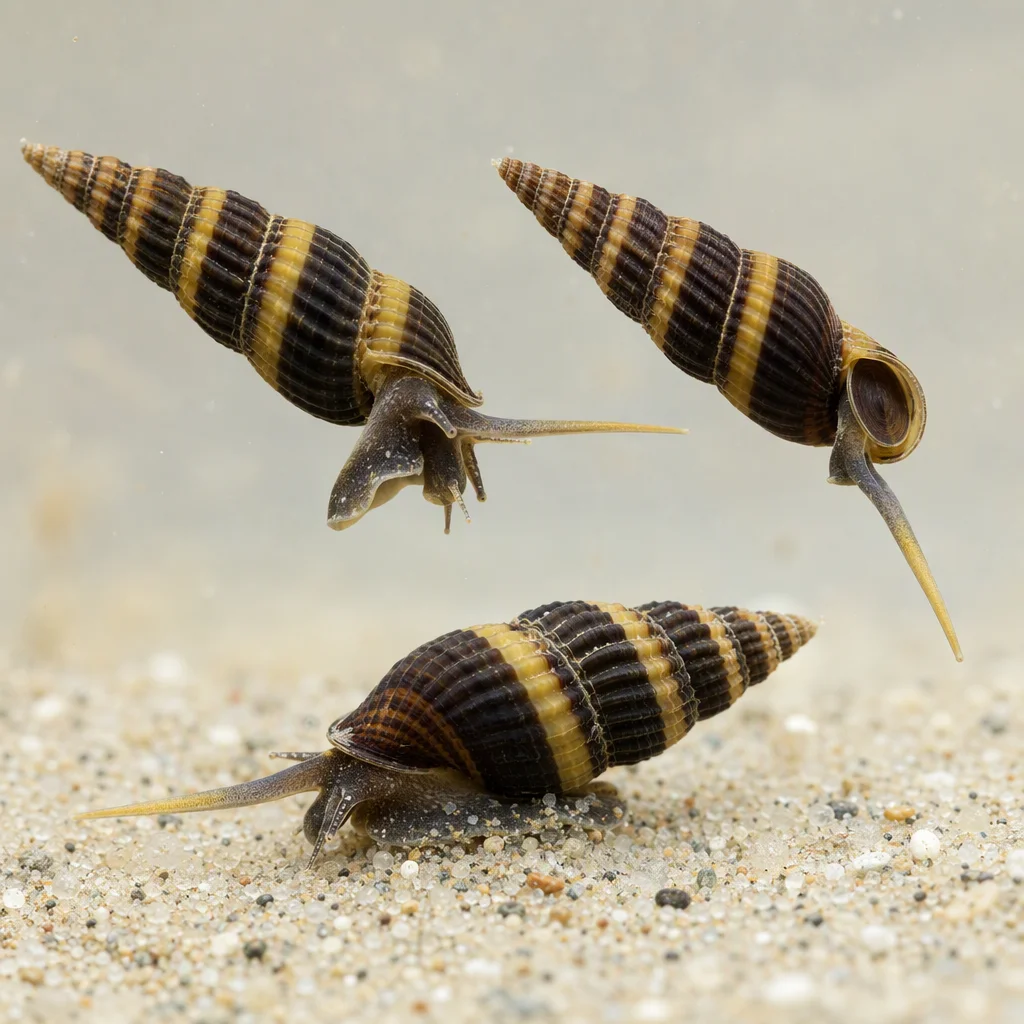 Reference illustration · may contain inaccuracies