Overview
ProfileGastropod mollusk
Aquarium rolesDecorative, Algae grazer, Biofilm grazer, Detritus processor, Scavenger
Adult size4.5–6.5 cm
Social modelFlexible
Minimum addition quantity4
DietOmnivore, Detritivore, Grazer, Scavenger
Care
Minimum aquarium volume40–80 L (allowed 10–150 L)
Suitable aquarium proportionsStandard, Wide
Water temperature22–26 °C (allowed 18–28 °C)
pH7–8 (allowed 6.5–8.5)
General hardness8–18 °dGH (allowed 6–25 °dGH)
Shell-safe pH7.5–8.5 (allowed 7–8.5)
Shell-safe general hardness8–18 °dGH (allowed 6–25 °dGH)
Required dietAmpullariids are omnivorous mollusks. In the aquarium, they need to be provided with plant-based foods (scalded lettuce, cabbage, cucumber, zucchini, spinach), as well as animal foods (bloodworms, tubifex, dried foods with spirulina). Calcium must be present in the water for shell building. Lack of food can lead to shell damage and damage to live plants.
Compatibility
CompatibilityAmpullaria is a peaceful and slow-moving mollusk compatible with most small, non-aggressive fish and invertebrates. It is not recommended to keep with mollusk-eating fish (pufferfish, baddis, large cichlids) or predatory Helena snails, which may attack Ampullaria. It coexists with other peaceful snails (nerite, thiarids, turban snails), but competition for food may occur. Ampullaria may eat fish eggs and eggs of other snails. Plants with delicate leaves may be damaged; hardy-leaved species are preferred.
TemperamentPeaceful
Interaction with plantsTaxonomy is ambiguous: according to databases, Ampullaria cuprina (Reeve, 1856) is a synonym of Pomacea glauca — a species that actively eats almost all soft-leaved aquarium plants (exceptions include Java fern and others), hardly eats green algae, and is suitable only for tanks without valuable vegetation. Meanwhile, snails sold in Russian-speaking trade under the name 'Yellow Ampullaria / Ampullaria cuprina' are more often related to the plant-safe 'mystery' snails (Pomacea diffusa/bridgesii line), which mainly eat leftover food, algae film, and dead leaves, but can damage delicate leaves when starving, especially small floating plants (duckweed). In summary: the card should specify which form is meant; when kept, consider the risk of plant damage.
Predation vulnerabilityAdult ampullariids are primarily vulnerable to large predatory fish (cichlids, large labyrinth fish, tetraodon, arowanas) that hunt mollusks, tear off their tentacles, and can completely eradicate snails. Juveniles and clutches are vulnerable to predatory snails (e.g., Anentome helena) and many fish. In nature, Pomacea glauca serves as prey for birds, fish, reptiles, and turtles; it has evolved a response to chemical signals from predators. Defense mechanisms include the operculum, burying in silt, and laying eggs above water.
Population growth riskModerate
Responsible disposalThe genus Pomacea (to which Ampullaria cuprina = P. glauca is considered a synonym) is regarded as invasive and regulated in Europe/Asia; release from aquariums is the main dispersal pathway. A warning not to release into the wild is given.

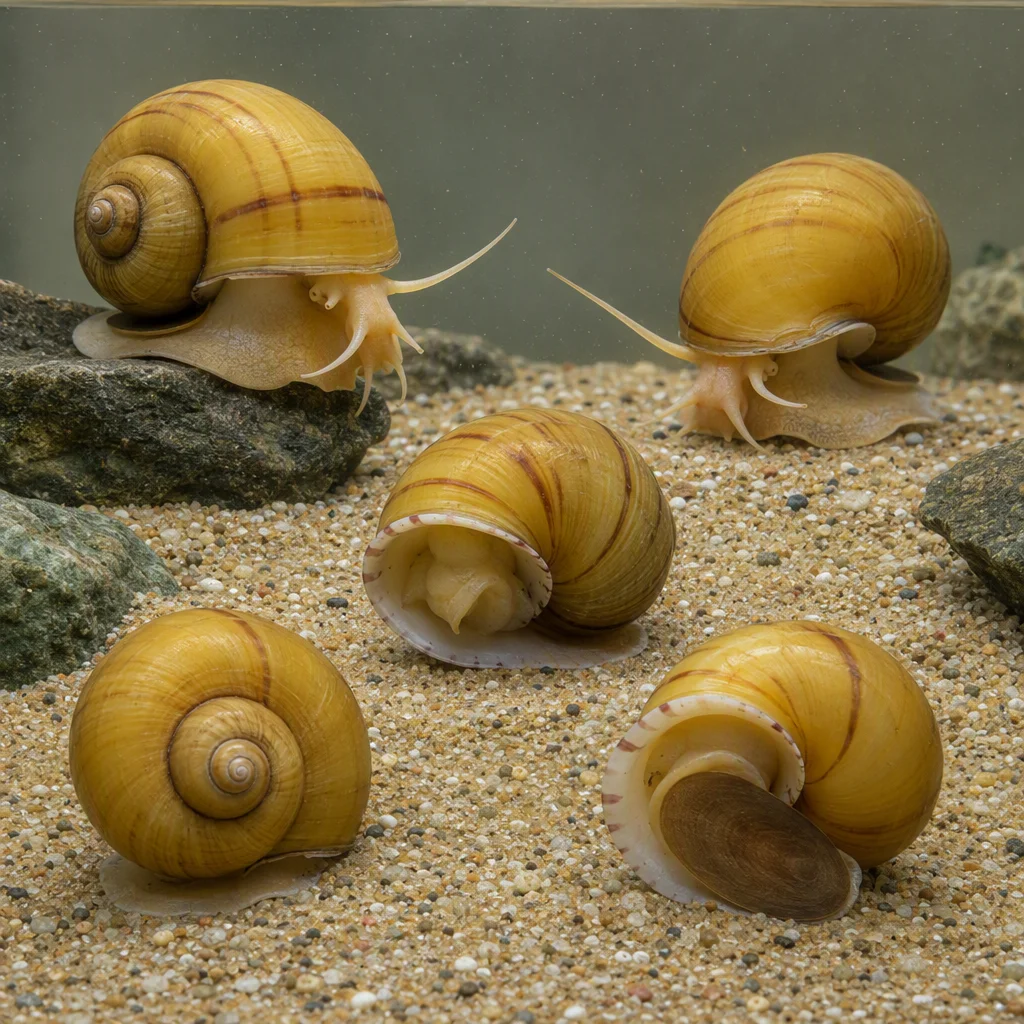 Reference illustration · may contain inaccuracies