Overview
TemperamentConditionally peaceful
Social modelHarem
Minimum group size3
Adult size8–15 cm
Primary swimming zoneUpper
DietOmnivore
Care
Minimum aquarium volume80–150 L (allowed 50–200 L)
Suitable aquarium proportionsLong
Water temperature22–27 °C (allowed 20–28 °C)
pH7–8 (allowed 7–8.5)
General hardness10–20 °dGH (allowed 6–30 °dGH)
Oxygen demandElevated
FeedingSwordtails are omnivorous fish. In nature, their diet consists of aquatic and terrestrial invertebrates, organic detritus, algae, and other plant material. In the aquarium, they accept all quality foods: flakes, pellets, tablets (including plant-based and spirulina), as well as live/frozen food (daphnia, Artemia, bloodworms, glassworms). A regular plant component is important: blanched spinach, zucchini, algae wafers. Feed 1–2 times a day in small portions; swordtails are prone to overeating.
Compatibility
CompatibilitySwordtails are peaceful, active livebearer fish suitable for a community aquarium. Good tankmates: platies, mollies, guppies, Corydoras catfish, small tetras, rasboras, danios, peaceful gouramis. Should not be kept with small fish they may perceive as prey (including fry), with aggressive cichlids, and fin-nipping fish (Tiger barbs, bettas). Male swordtails compete with each other — a ratio of 1 male : 3–4 females or a group of 5–6 males with a surplus of females is recommended. Keeping fancy guppies with swordtails is risky — fin-nipping may occur. They do not damage plants.
Plant safetySafe
Interaction with invertebratesSwordtails may eat small shrimp and fry, while adult dwarf shrimp usually remain safe. This is typical omnivorous poeciliid behavior.
Incompatible groupsSwordtails are not suitable for: 1) small and very sensitive fish (may be stressed by swordtail activity); 2) species prone to fin-nipping (e.g., tiger barbs, bettas); 3) slow-moving fish with veil fins (goldfish), as swordtails may nip them; 4) large aggressive cichlids (Arowanas, Acaras); 5) fish that prefer soft, acidic water (Tetra tintas, etc.), as swordtails need hard, slightly alkaline water.
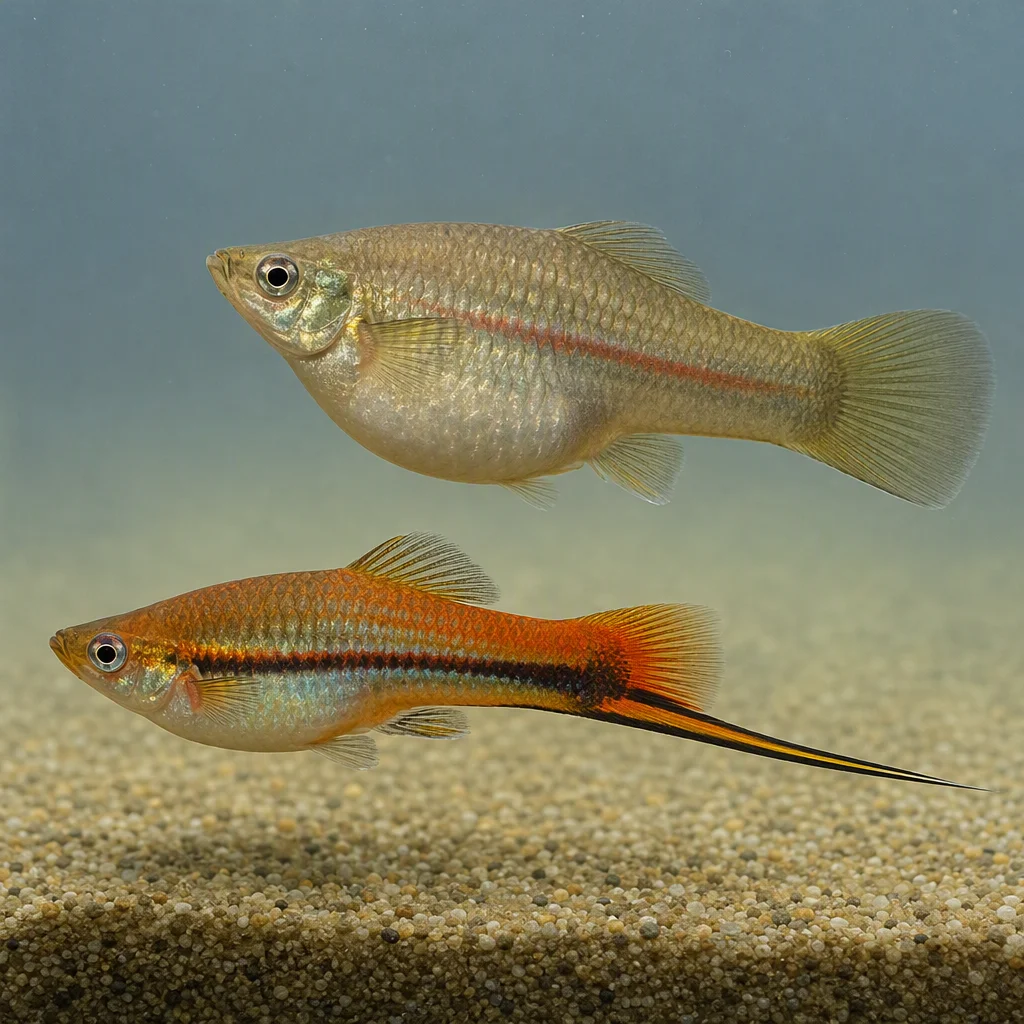 Reference illustration · may contain inaccuracies