Overview
TemperamentPeaceful
Social modelGroup
Minimum group size5
Adult size2.1–4 cm
Primary swimming zoneUpper
DietOmnivore
Care
Minimum aquarium volume30–60 L (allowed 20–100 L)
Suitable aquarium proportionsLong, Standard
Water temperature18–22 °C (allowed 14–25 °C)
pH6.5–7.5 (allowed 6–8.5)
General hardness5–19 °dGH (allowed 5–25 °dGH)
Oxygen demandElevated
FeedingThe White Cloud Mountain Minnow is an omnivorous fish with a small mouth, feeding on zooplankton, small insects, and detritus in nature. In the aquarium, it accepts any small foods: quality dry flakes and small pellets, frozen foods (daphnia, cyclops, small bloodworms, brine shrimp), live foods. The mouth is superior, adapted for capturing food from the water surface, so floating flakes and chips are preferable. Feed 2–3 times a day in small portions consumed within a few minutes. A varied diet (combination of dry, live, and frozen foods) promotes better coloration and health.
Compatibility
CompatibilityThe White Cloud Mountain Minnow is a peaceful schooling fish, excellently suited for a community aquarium with other small, peaceful species. Recommended tankmates: danios, black skirt tetras, guppies, flame tetras, celestial pearl danios, corydoras, small rasboras, cherry shrimp. It is important to select fish with a similar temperature range (18–22°C). It is categorically not recommended to keep them with large predatory fish (large goldfish, cichlids, large barbs) that may perceive the minnow as food. Aggressive and fast species that can stress the minnows should also be avoided. They must be kept in a school of at least 6–8 individuals, optimally from 10.
Plant safetySafe
Plant-eating behaviourCardinal fish are micro-predators: in nature, they feed on small insects, worms, crustaceans, and zooplankton. Plant matter makes up only a small part of their diet; in aquariums, they may nibble on soft algae and microfauna but do not damage higher aquatic plants. It is recommended to include plant-based foods in their diet.
Interaction with invertebratesCardinal tetras peacefully coexist with adult dwarf shrimp and snails, but may eat juvenile shrimp and small invertebrates. In nature, they feed on zooplankton, detritus, and insect larvae. Large peaceful invertebrates (e.g., large shrimp) are safe. Keeping with small crustaceans is possible with caution.
Incompatible groupsAvoid keeping with large predatory or aggressive fish that may see cardinal fish as prey: large cichlids, large barbs, arowanas, large catfish. Not recommended to keep with goldfish, despite similar temperature preferences, as goldfish may swallow small cardinals. Also unsuitable are warm-loving tropical species requiring temperatures above 24–25 °C, as constant warm water reduces their lifespan.
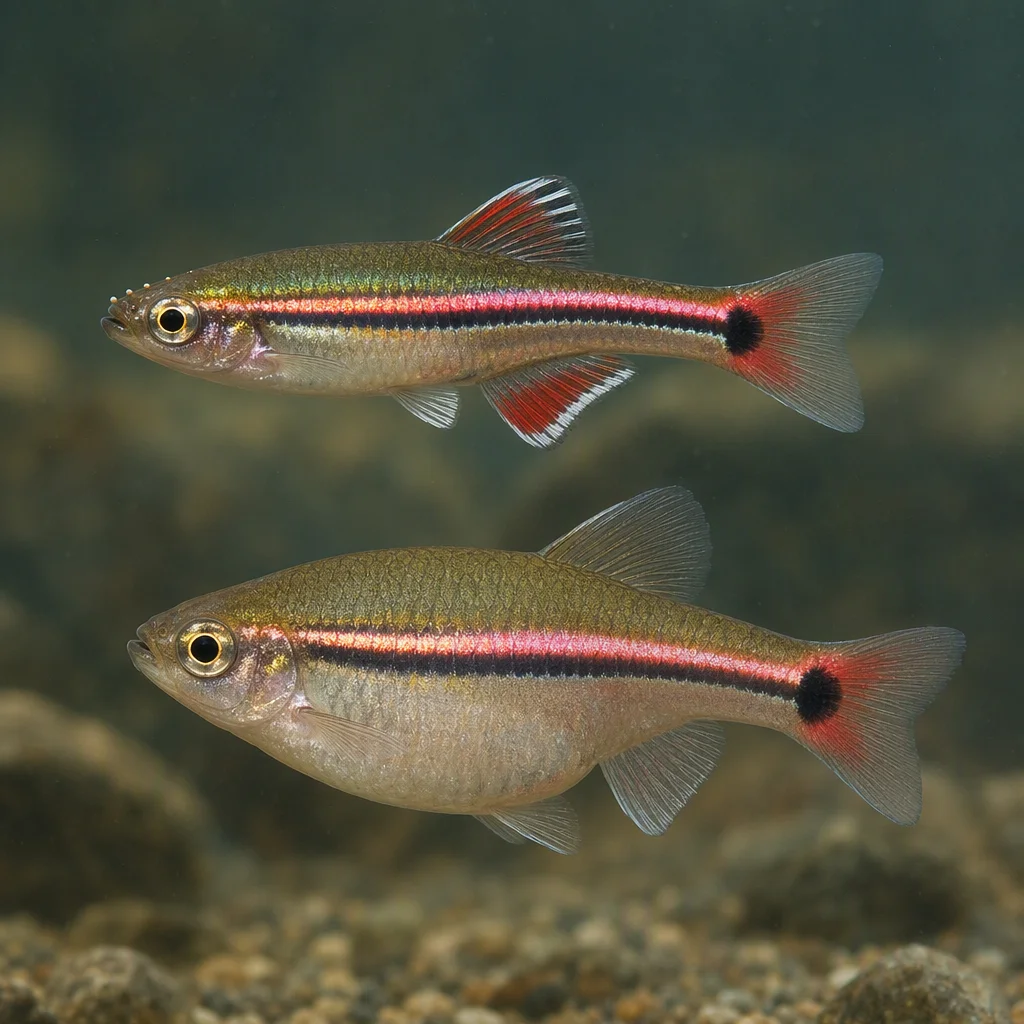 Reference illustration · may contain inaccuracies