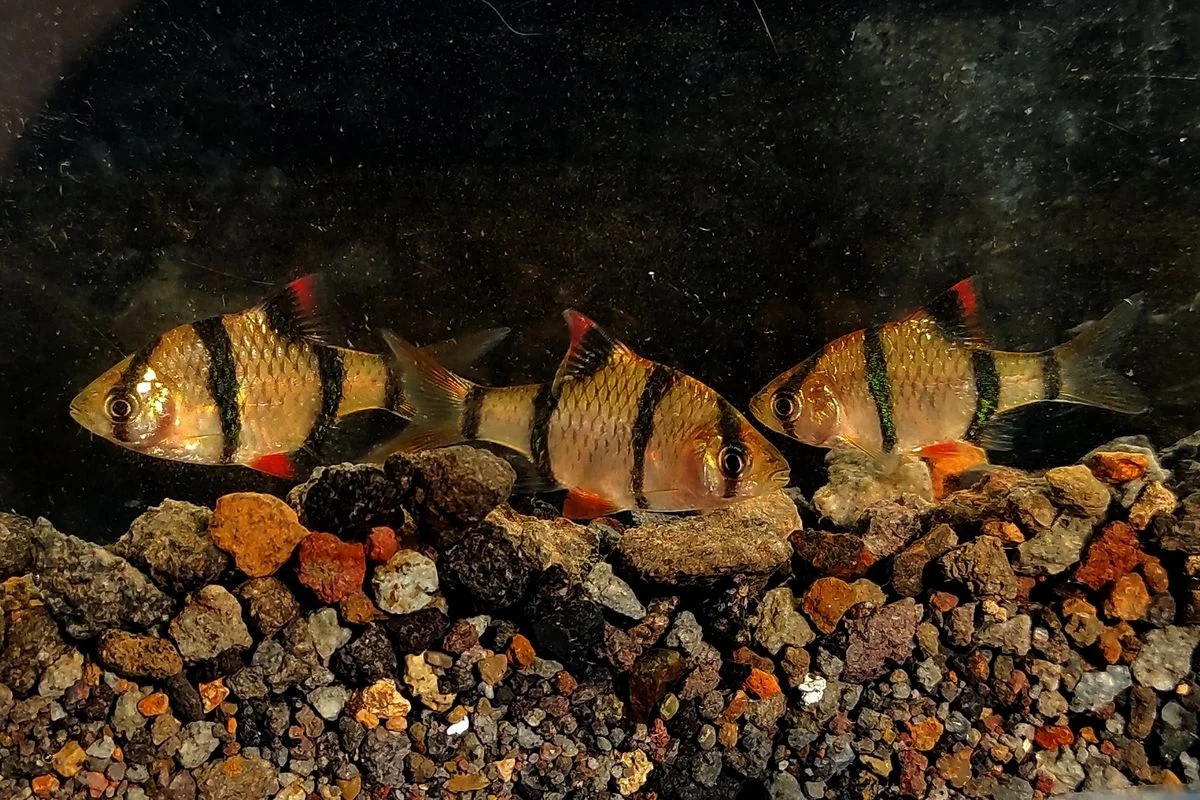
Overview
TemperamentConditionally peaceful
Social modelGroup
Minimum group size6
Adult size5–7 cm
Primary swimming zoneMid
DietOmnivore
Care
Minimum aquarium volume80–100 L (allowed 60–120 L)
Suitable aquarium proportionsStandard, Long
Water temperature22–26 °C (allowed 20–26 °C)
pH6–7.5 (allowed 6–8)
General hardness5–15 °dGH (allowed 5–19 °dGH)
Oxygen demandOrdinary
FeedingThe Sumatran barb is an omnivorous fish, naturally feeding on aquatic and terrestrial invertebrates, worms, small crustaceans, and plant matter. In the aquarium, it readily accepts high-quality dry flakes and pellets, preferably with plant components. For optimal health and coloration, supplement the diet with small live and frozen foods: brine shrimp ( Artemia nauplii), daphnia, and moina. Feed in small portions that the fish consumes within a few minutes, always including plant-based components (spirulina, blanched vegetables).
Compatibility
CompatibilityThe Sumatran barb is a lively, semi-aggressive schooling fish that must be kept in groups of 8–10 or more; a large school disperses intra-species aggression. Suitable tank mates are active, similarly sized fish: carpids, rainbowfish, large tetras, bottom loaches, and catfish. Unsuitable tank mates are slow, shy, and long-finned species (bettas, gouramis, goldfish, veiled livebearers), whose fins barbels tend to nip.
Plant safetyMay damage
Plant-eating behaviourOmnivorous: in nature, it feeds on worms, small crustaceans, and plant matter. In the aquarium, if plant components are lacking in the diet, it may nibble soft shoots and leaves of plants; it is recommended to include feeds with plant additives and to feed blanched leaves of lettuce, nettles, dandelions, and riccia.
Interaction with invertebratesMay eat small shrimp and their fry; larger and peaceful invertebrates are suitable neighbors, and in nature, the species feeds on small crustaceans.
Incompatible groupsSlow, shy, and long-finned species (especially veil types): angelfish, gouramis, bettas, guppies, goldfish, and other long-finned fish — Sumatran barbs tend to bite their fins. Small shrimp and fry may also be harmed. When kept in groups of fewer than 8–10 individuals, aggression is redirected to neighbors.

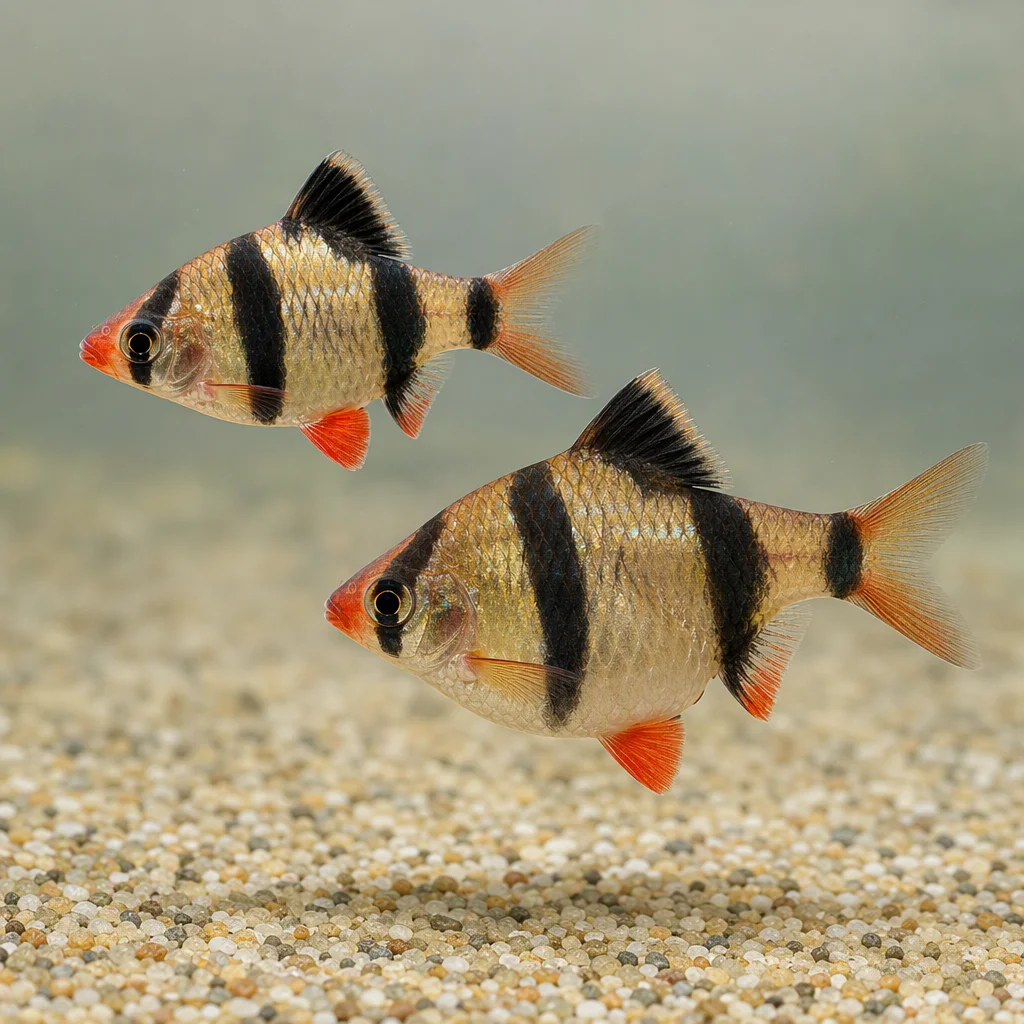 Reference illustration · may contain inaccuracies