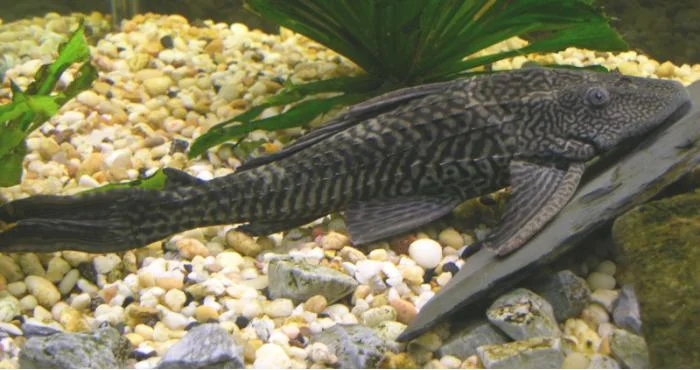
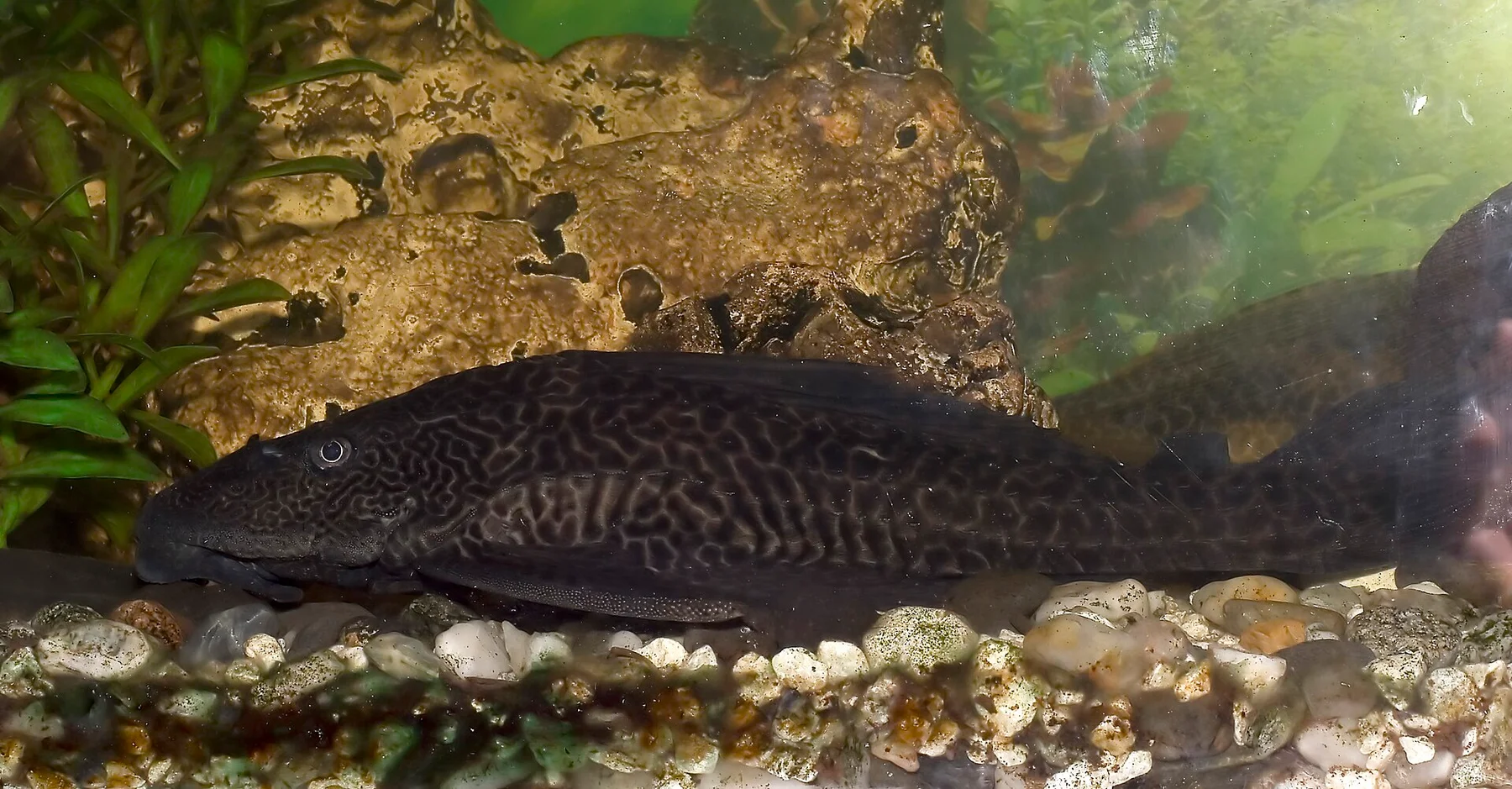
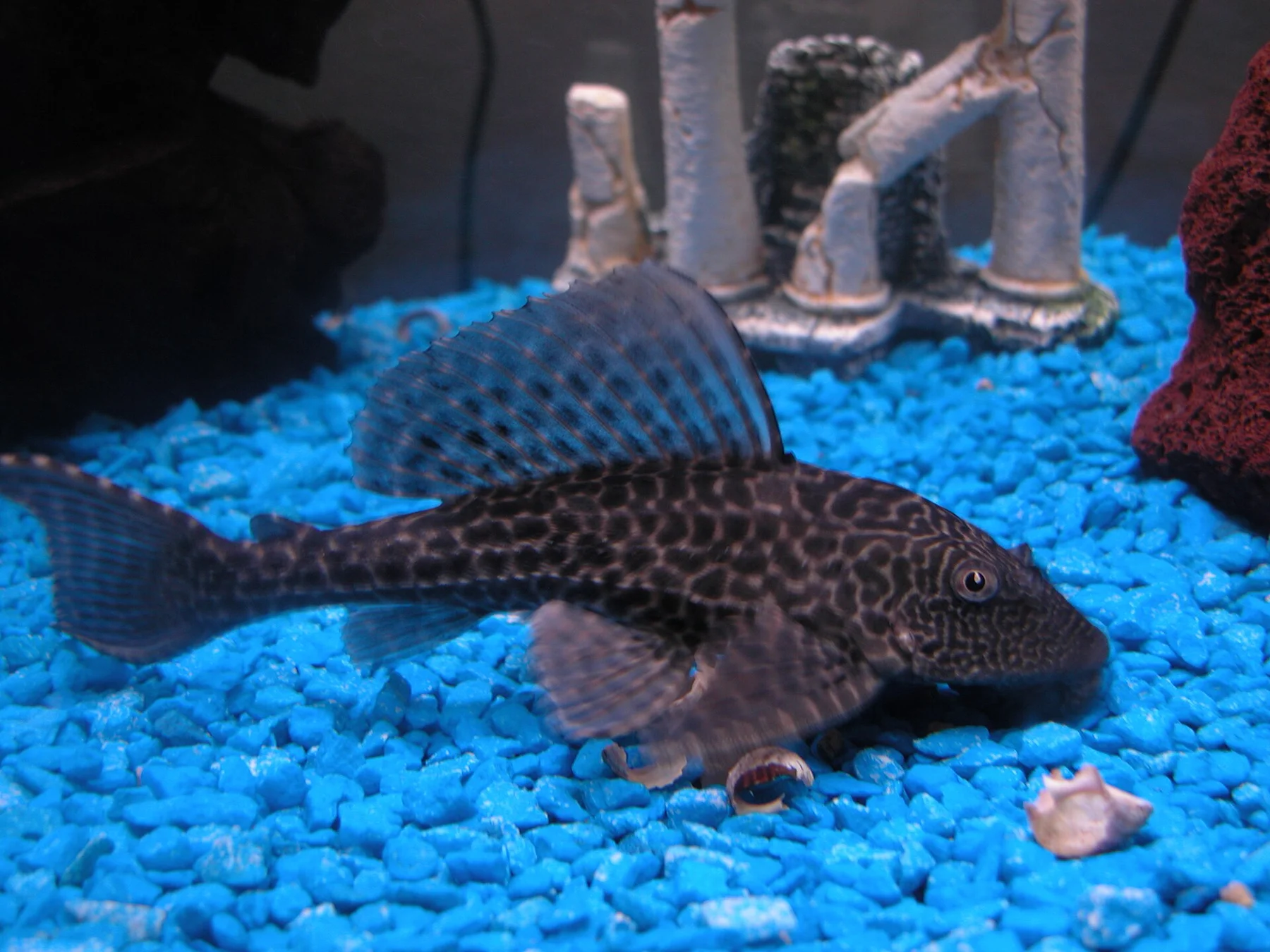
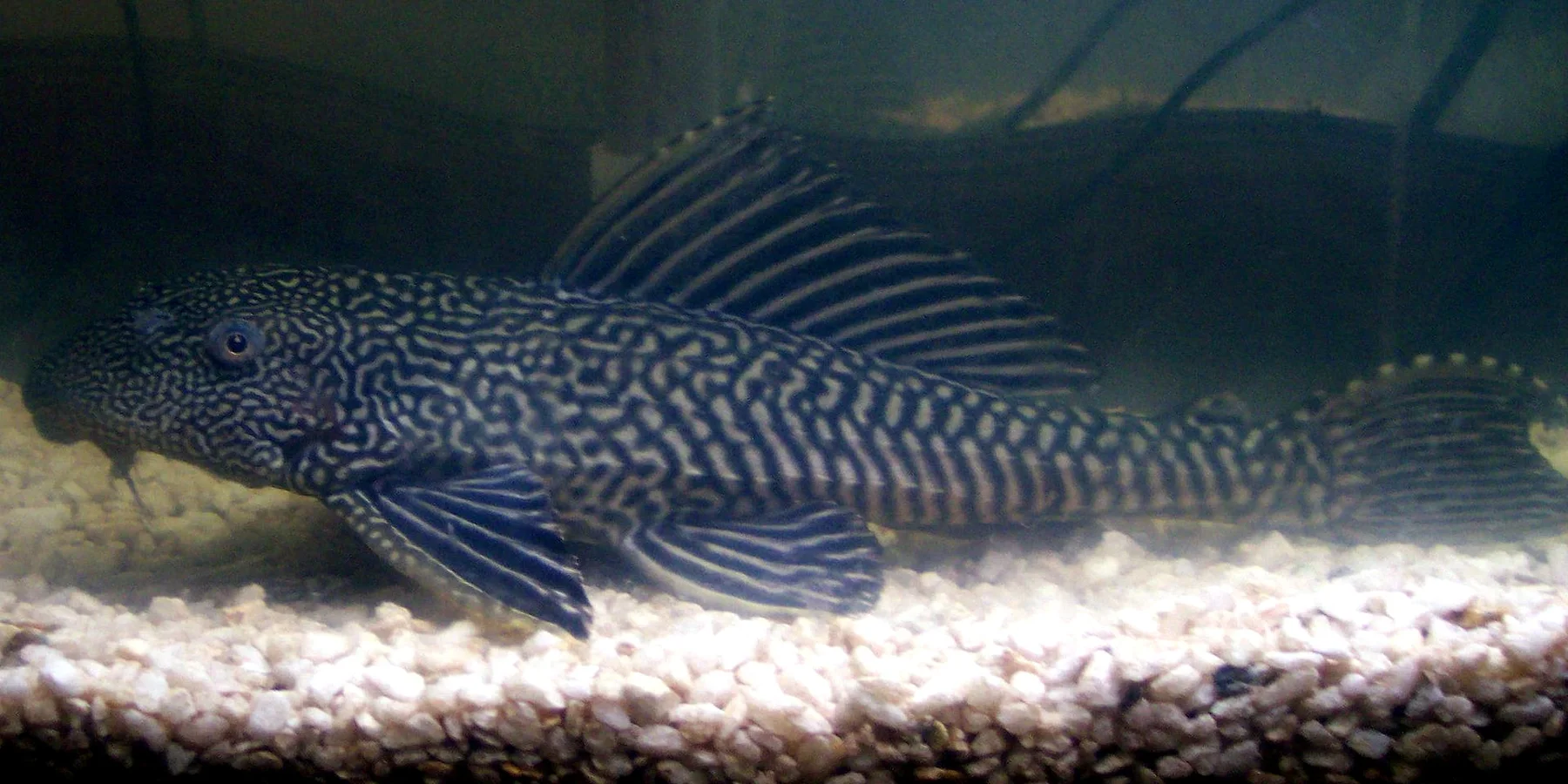
Overview
TemperamentConditionally peaceful
Social modelSolitary
Minimum group size1
Adult size40–50 cm
Primary swimming zoneBottom
DietHerbivore
Care
Minimum aquarium volume300–500 L (allowed 250–600 L)
Suitable aquarium proportionsLong
Water temperature24–28 °C (allowed 23–30 °C)
pH6.5–7.5 (allowed 5.5–8)
General hardness10–20 °dGH (allowed 4–25 °dGH)
Oxygen demandOrdinary
FeedingThe diet of the marbled pleco should mainly consist of plant-based foods: sinking tablets with spirulina and algae, blanched vegetables (zucchini, cucumber, spinach, carrot). Live foods (bloodworms, tubifex, shrimp) are acceptable as a small supplement about 20% of the diet. Natural driftwood is essential — by scraping it, the catfish obtains cellulose necessary for digestion. It is best to feed after lights are off, as the species is active at night, and ensure more active neighbors do not steal the food.
Compatibility
CompatibilityThe marbled pleco is generally peaceful towards other fish species and, thanks to its armor, can be kept with large aggressive cichlids, polypterids, and giant gouramis. Main conflicts arise with conspecifics and similarly colored catfish (e.g., ancestrus, geryonichthys) due to territoriality, especially when space and shelters are limited. Small fish should not be introduced as they may become accidental prey for the large catfish.
Plant safetyMay damage
Plant-eating behaviourIn nature, the species feeds mainly on detritus, filamentous algae, and benthic microalgae (Bacillariophyta, Chlorophyta, Cyanophyta), making it herbivorous/detritivorous. In the aquarium, large individuals regularly uproot plants due to their size and strength, potentially clearing the entire aquarium, so live plants are practically incompatible.
Interaction with invertebratesAdult large invertebrates (e.g., large shrimps and snails) are usually ignored by Pterygoplichthys and can be kept together. However, large adults may eat small invertebrates and, being mainly herbivorous with additional detritus and invertebrate feeding, are not suitable for aquariums with small specialized shrimps, which they may accidentally eat.
Incompatible groupsLarge and territorial adults can be aggressive towards other bottom catfish, especially of similar coloration, and can seriously injure bottom neighbors; lack of space sharply increases conflict. Some individuals may nibble mucus and coverings of slow or flat fish, causing wounds, so slow-moving and vulnerable species are not recommended as neighbors.
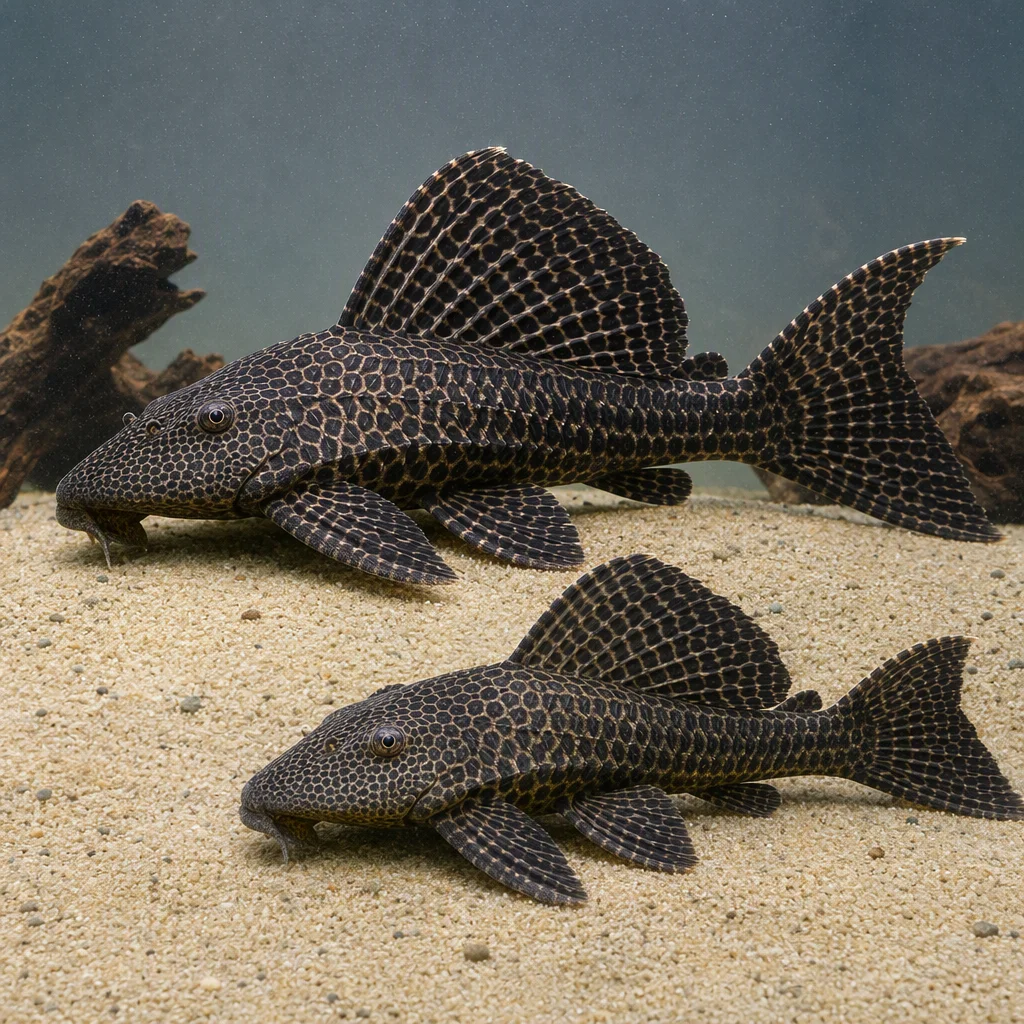 Reference illustration · may contain inaccuracies