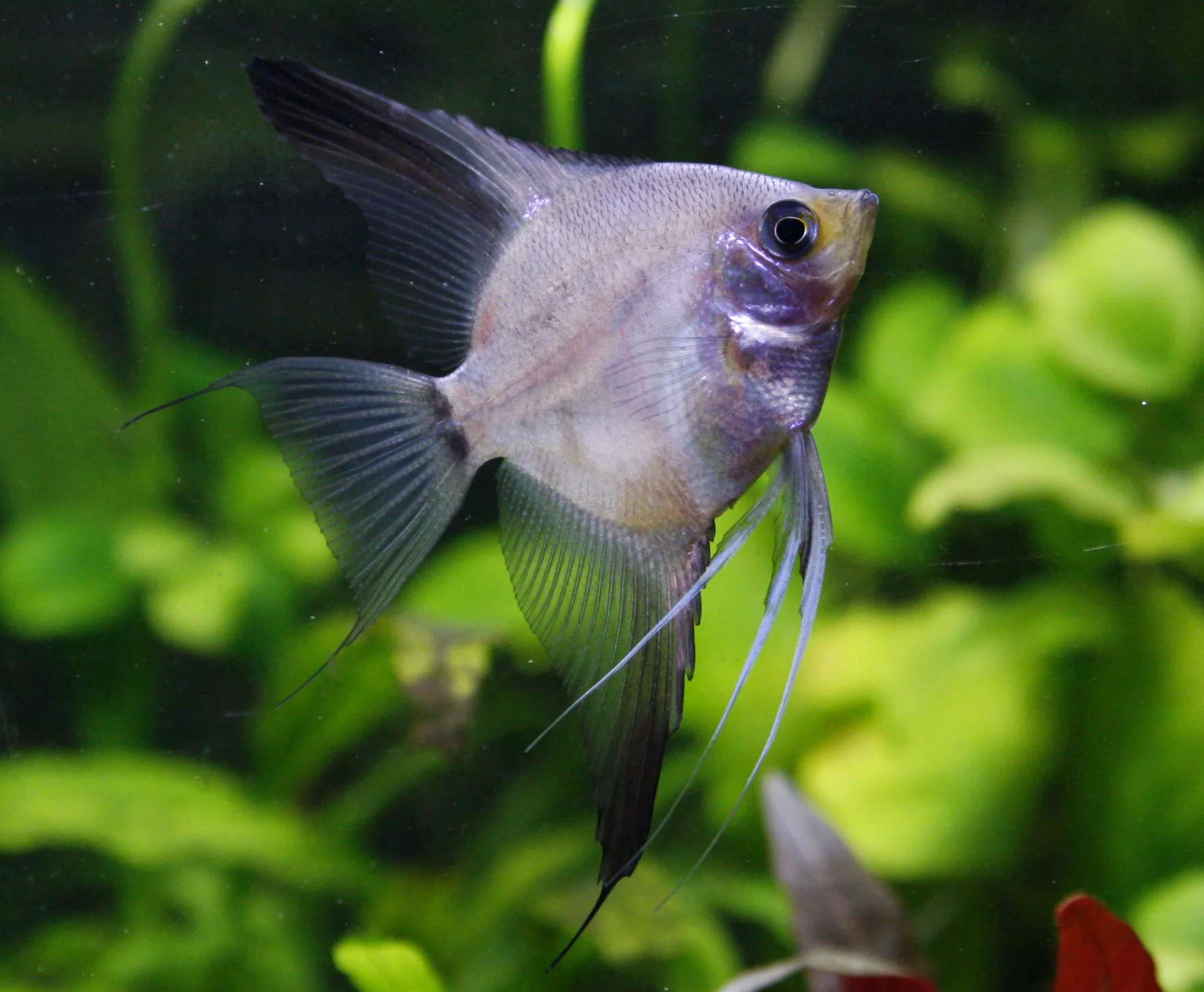
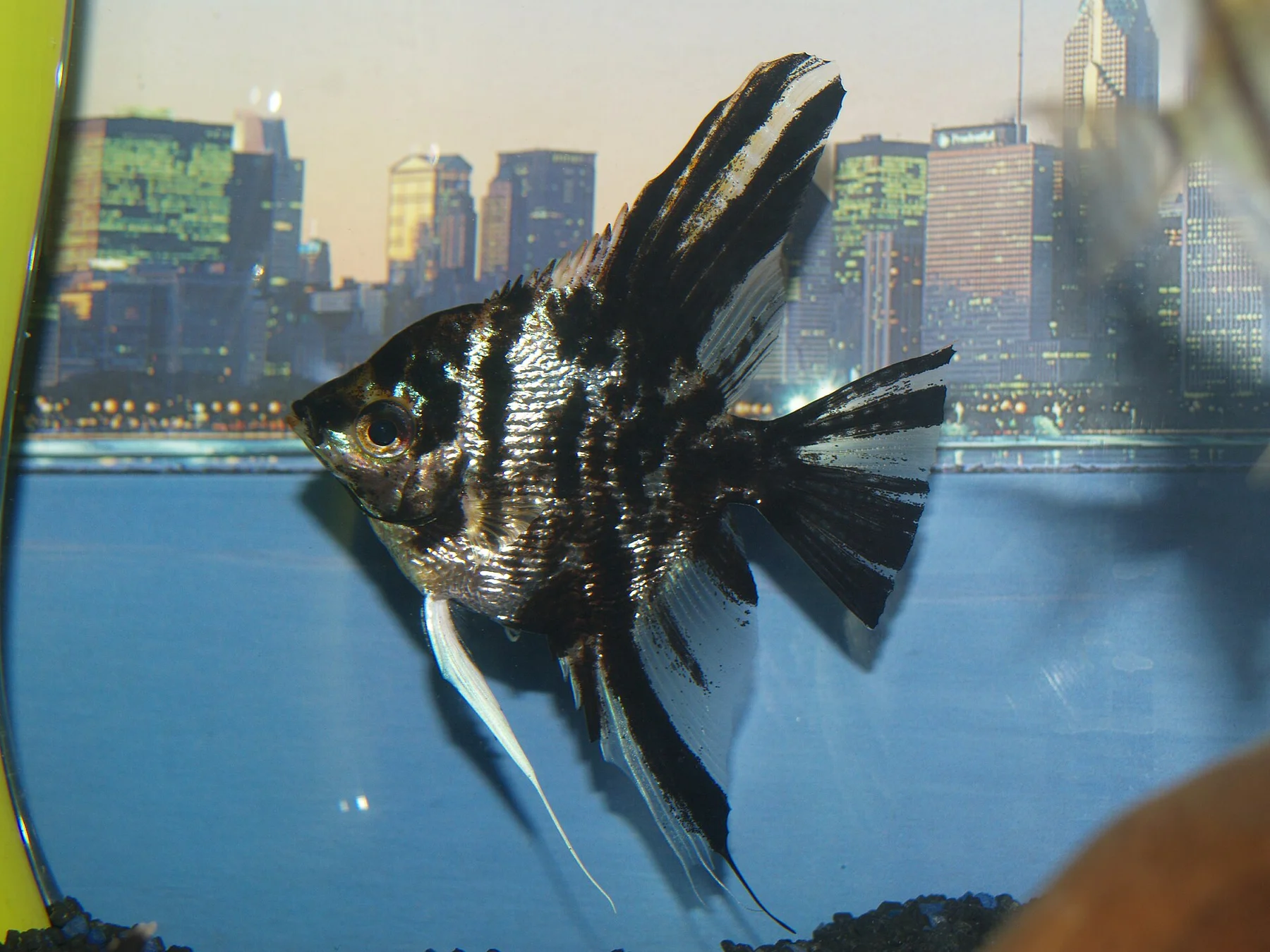
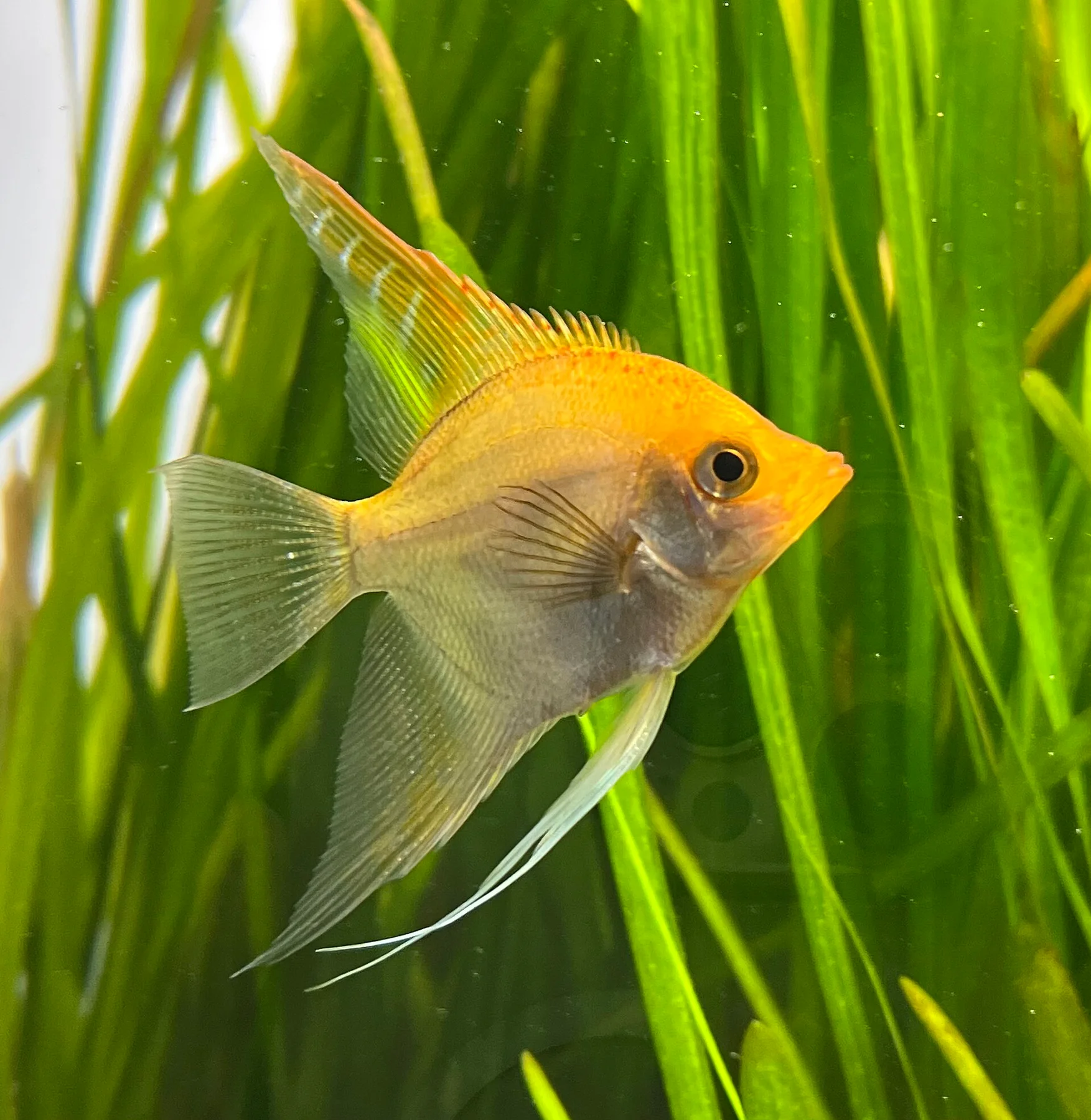
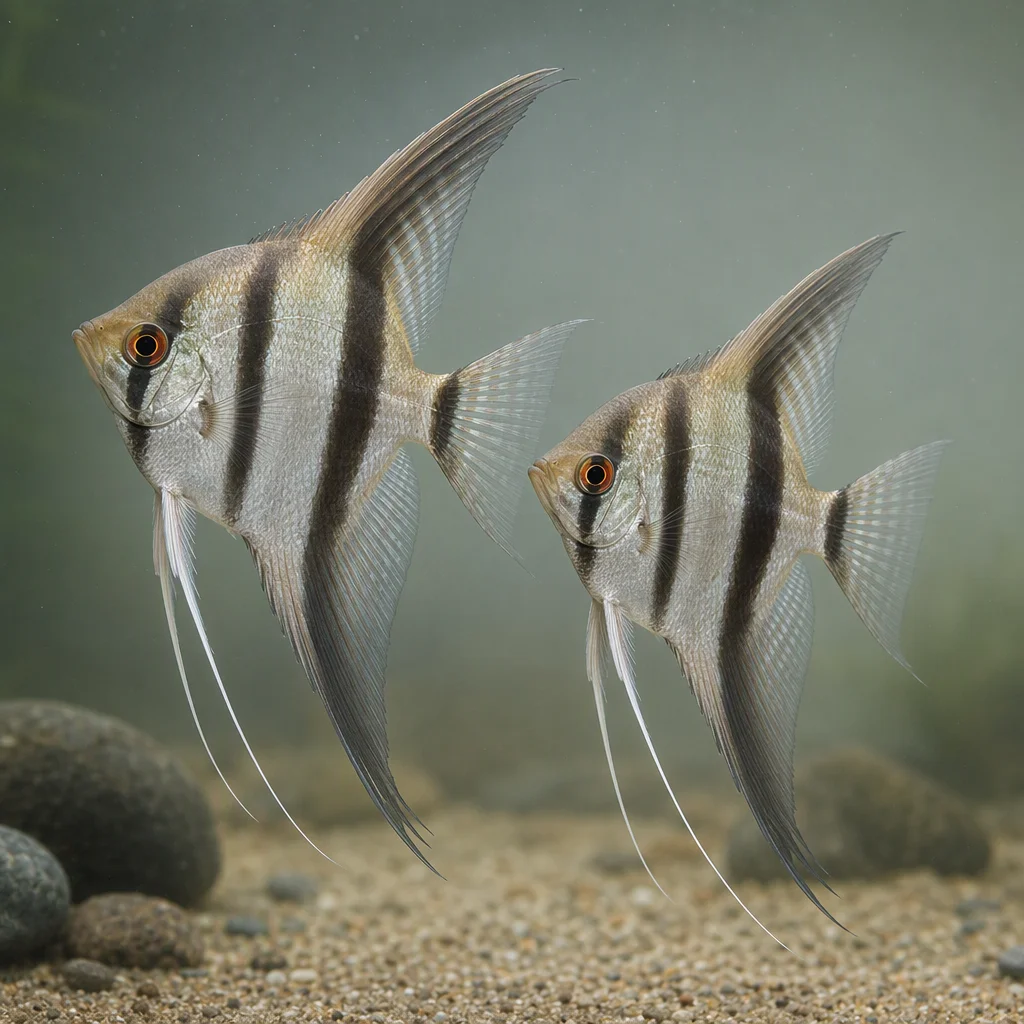
Overview
TemperamentConditionally peaceful
Social modelPair
Minimum group size5
Adult size10.5–15 cm
Primary swimming zoneMid
DietOmnivore
Care
Minimum aquarium volume200–300 L (allowed 75–400 L)
Suitable aquarium proportionsTall
Water temperature24–28 °C (allowed 24–30 °C)
pH6–7.4 (allowed 6–8)
General hardness2–15 °dGH (allowed 0–19 °dGH)
Oxygen demandOrdinary
FeedingAdult angelfish are fed high-quality dry foods (flakes, pellets), as well as live and frozen foods — bloodworms, Artemia, Daphnia; a high protein level in the diet is important for full growth and spawning.
Compatibility
CompatibilityAngelfish are compatible with similarly sized peaceful fish such as rainbowfish, large tetras, catfish, hatchetfish, and dwarf cichlids; they should not be kept with very small species that could be eaten, or with active fin-nippers like Sumatran barbs.
Plant safetySafe
Plant-eating behaviourAngelfish are omnivorous with a strong tendency towards animal food; they generally do not nibble or uproot plants, making them suitable for planted tanks with broadleaf species.
Interaction with invertebratesAngelfish actively prey on small invertebrates, including shrimp (especially juveniles and small species like cherry shrimp); cohabitation is possible only with large filter-feeding shrimp with plenty of hiding places, but the risk remains.
Incompatible groupsAngelfish are incompatible with very small fish (neon, guppies, small tetras) which adults may prey upon, and with active, aggressive species that nip fins (e.g., Sumatran barbs); incompatible with fish requiring significantly different temperatures, such as goldfish.
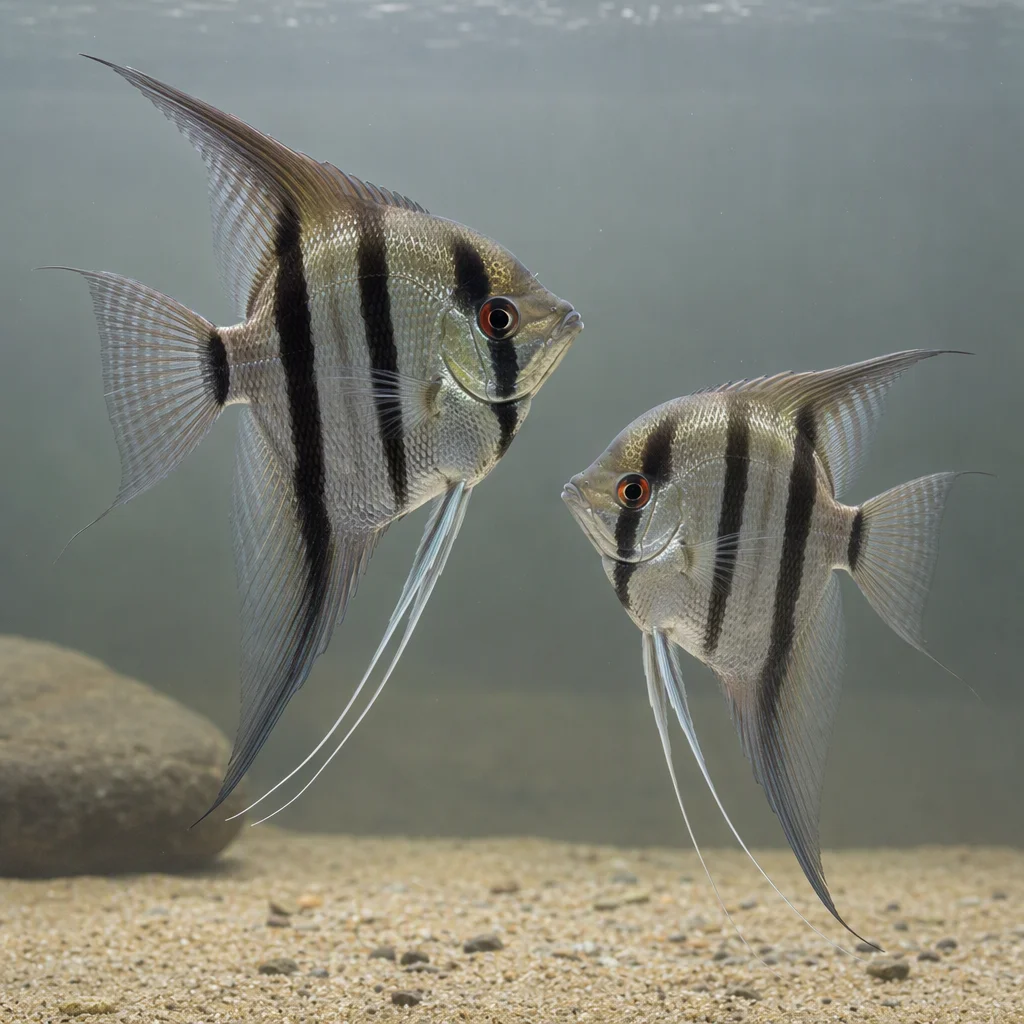 Reference illustration · may contain inaccuracies