Care
Minimum aquarium volume60–100 L (allowed 40–300 L)
Suitable aquarium proportionsStandard, Long
Water temperature21–28 °C (allowed 18–30 °C)
pH7–8.5
General hardness15–30 °dGH (allowed 11–30 °dGH)
Oxygen demandOrdinary
FeedingOmnivorous species requiring a significant amount of plant-based food in their diet: quality flakes with plant components, blanched spinach, spirulina, and algae, supplemented with protein foods such as brine shrimp, daphnia, and Artemia; they readily eat green algae and accept dry foods.
Compatibility
CompatibilityPeaceful and suitable for community tanks, but only with species that tolerate hard and alkaline water; good tank mates include other livebearers, guppies, mollies, Corydoras catfish, and peaceful barbs and tetras that tolerate hard water, while aggressive or fin-nipping species, very small fish, and shrimp should be avoided.
Plant safetyMay damage
Plant-eating behaviourIn nature and in aquariums, it readily scrapes green algae and consumes plant food; it usually does not damage live higher plants but requires a significant portion of plant matter in its diet.
Interaction with invertebratesMollies peacefully coexist with large shrimp (e.g., Amano) and dwarf crayfish, as well as snails, but they readily eat small invertebrates and young shrimp; keeping with large aggressive crayfish is dangerous, as crayfish may catch and eat mollies.
Incompatible groupsAggressive and territorial species, as well as fin-nipping fish (e.g., many cichlids and large barbs), are unsuitable because mollies are peaceful and slow-moving; also undesirable are tank mates requiring soft and acidic water, as Poecilia sphenops needs hard, alkaline water.
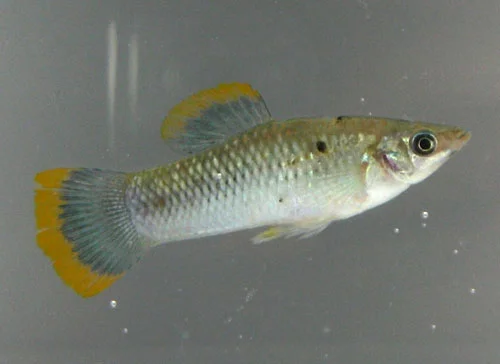
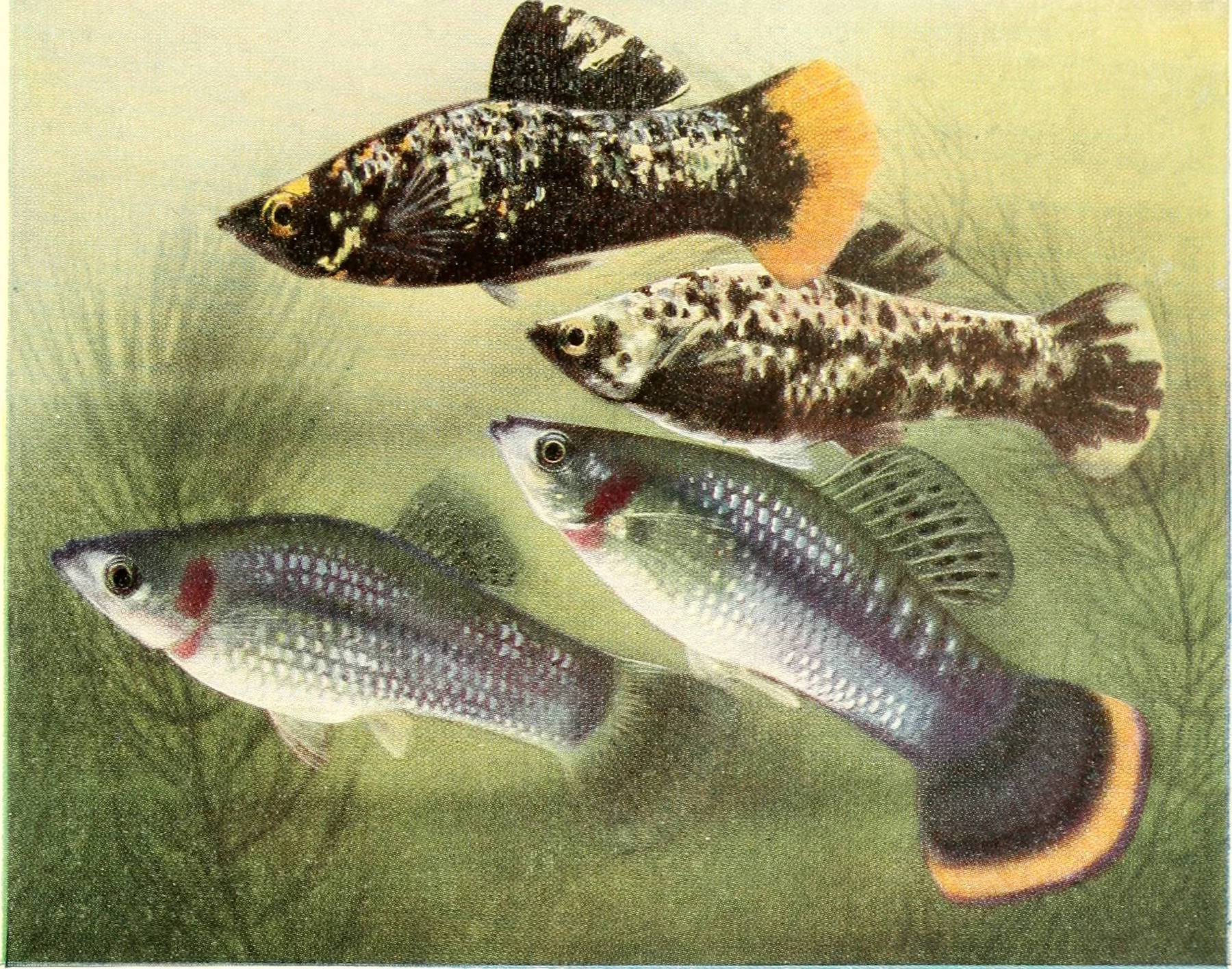
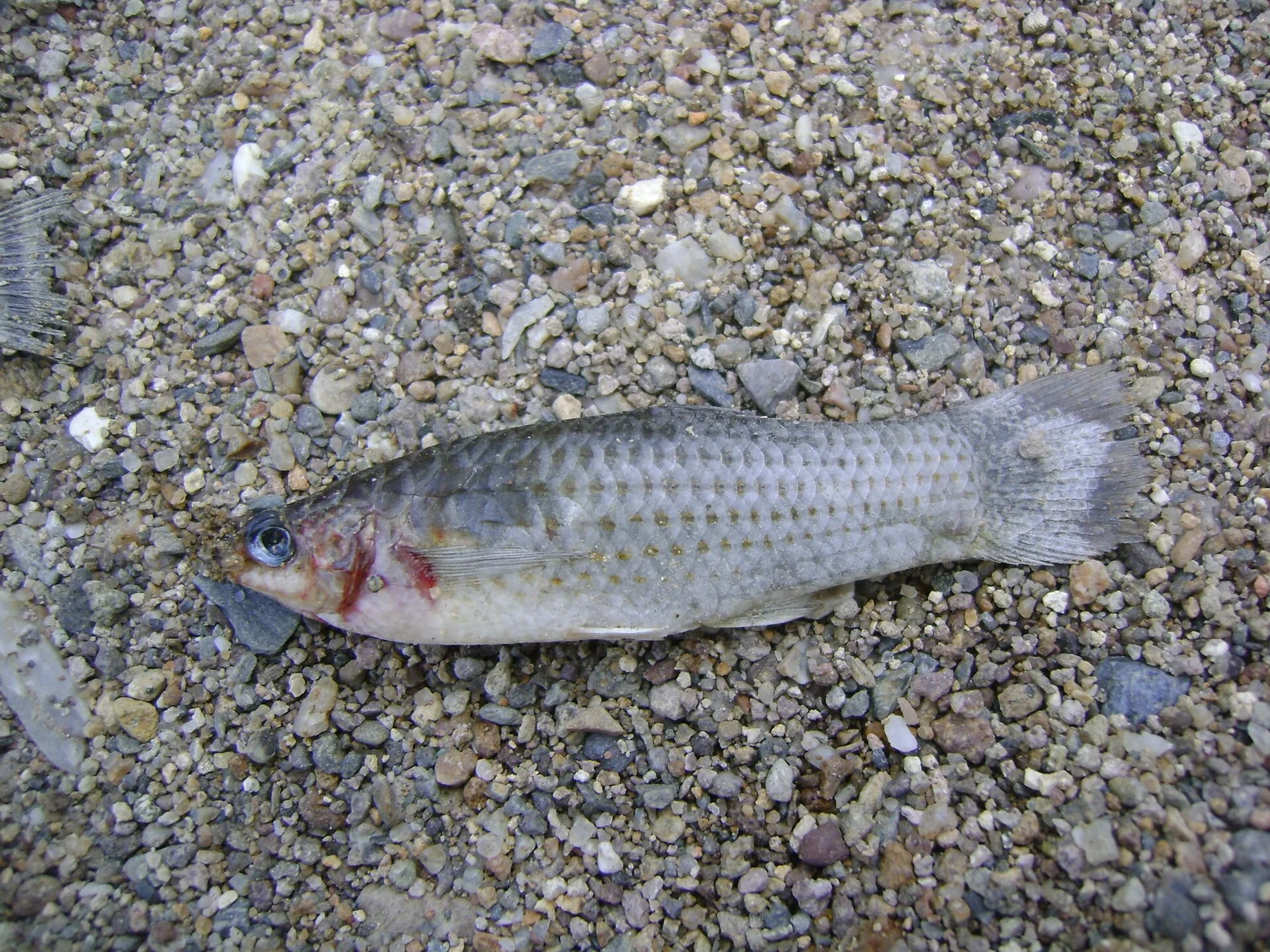
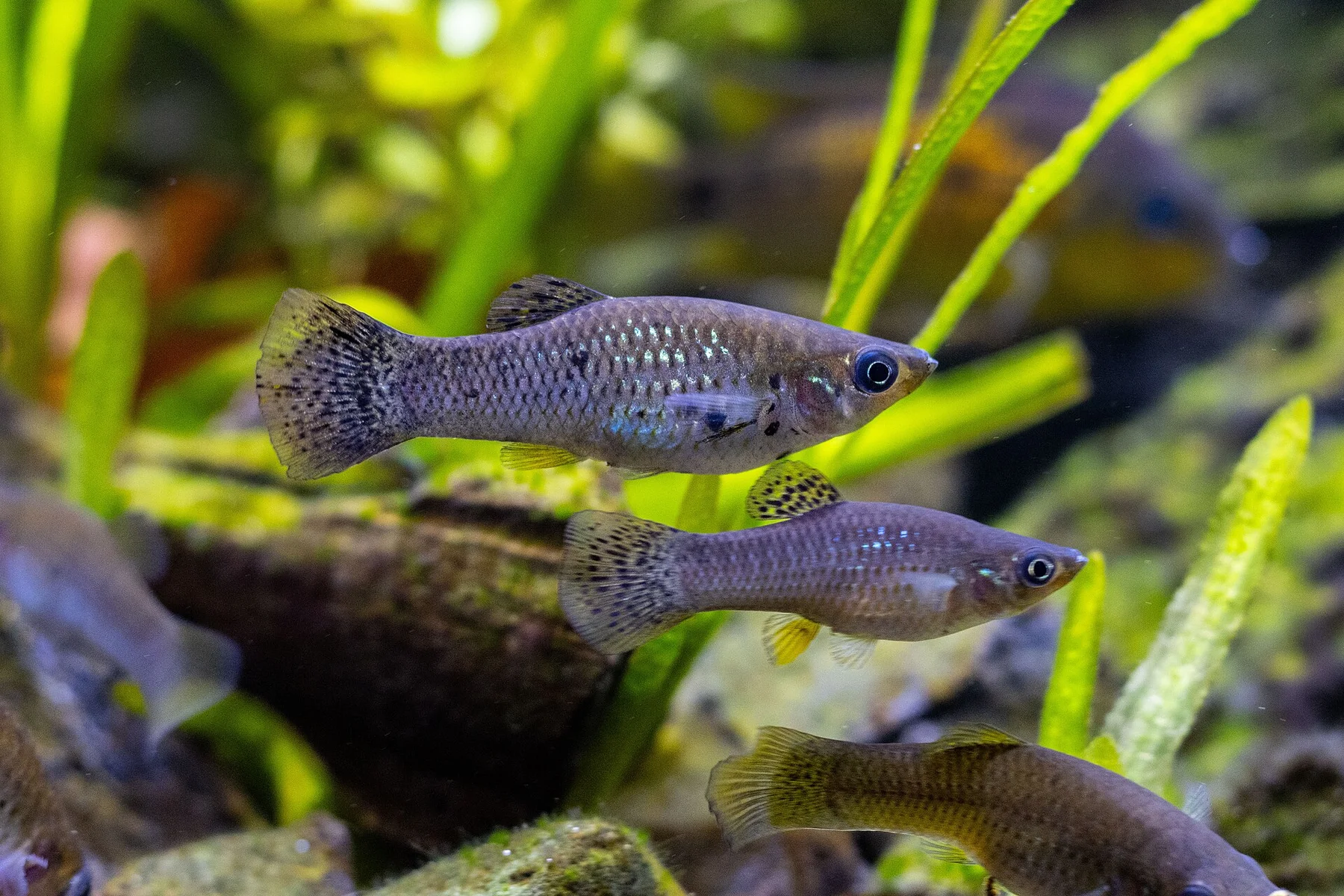
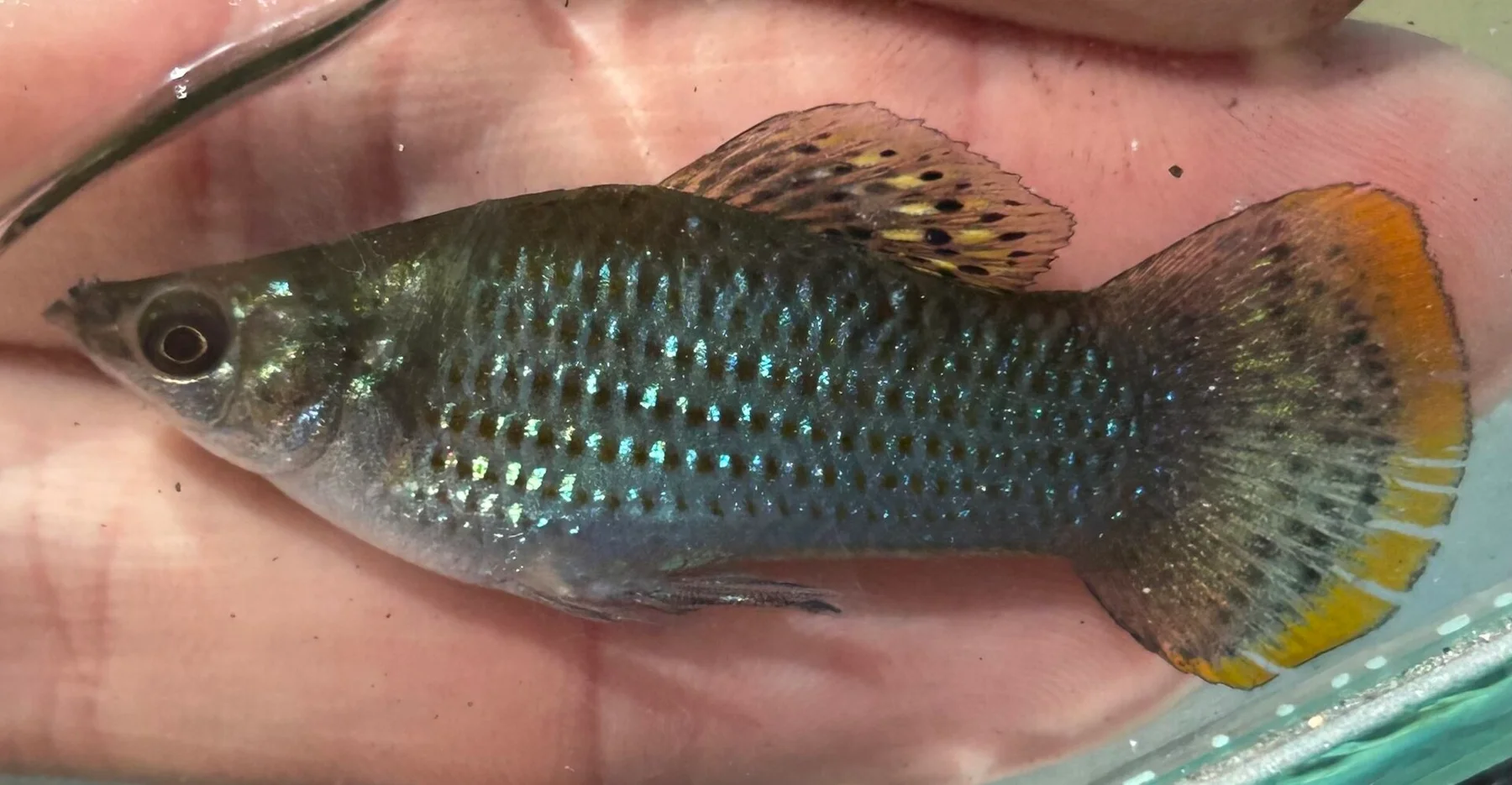
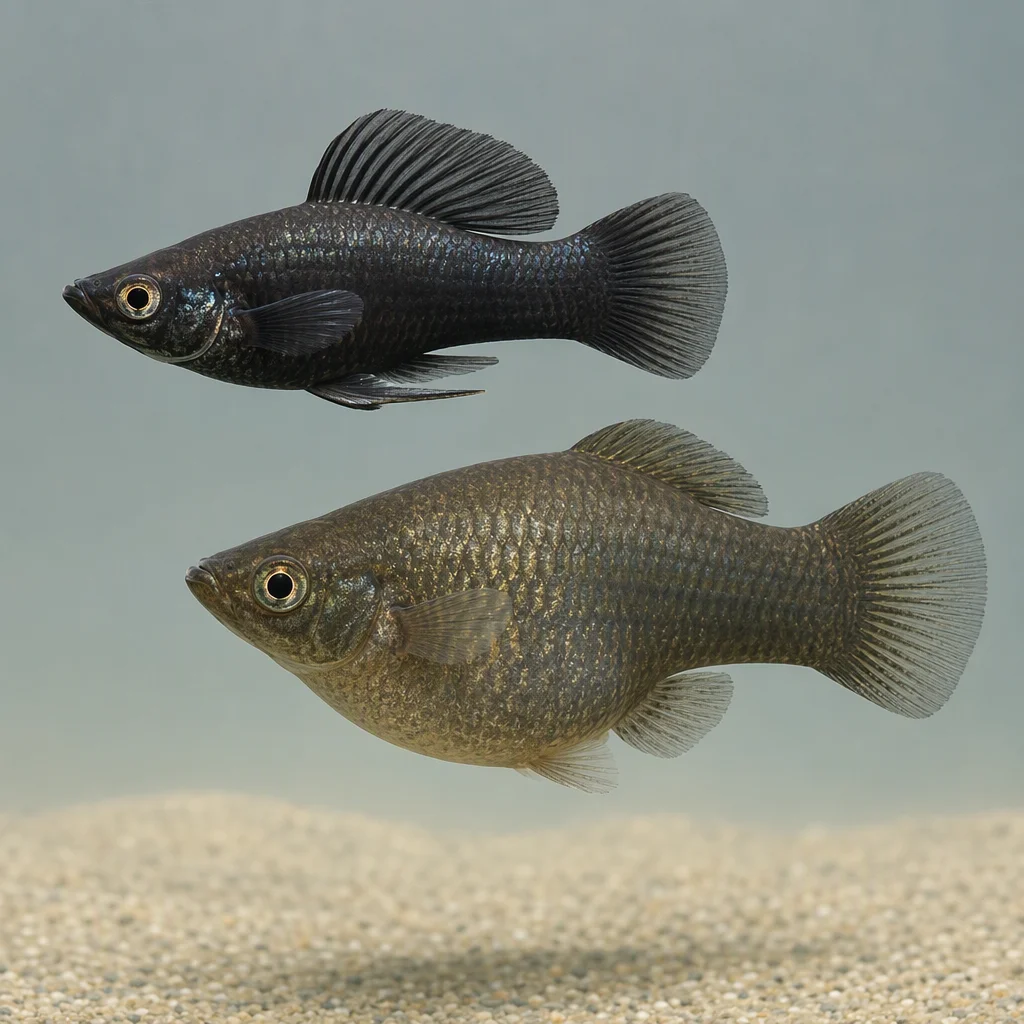 Reference illustration · may contain inaccuracies