Care
Minimum aquarium volume40–200 L (allowed 20–500 L)
Suitable aquarium proportionsStandard
Water temperature23–27 °C (allowed 20–29 °C)
pH6–7 (allowed 5–7.5)
General hardness2–8 °dGH (allowed 1–15 °dGH)
Oxygen demandOrdinary
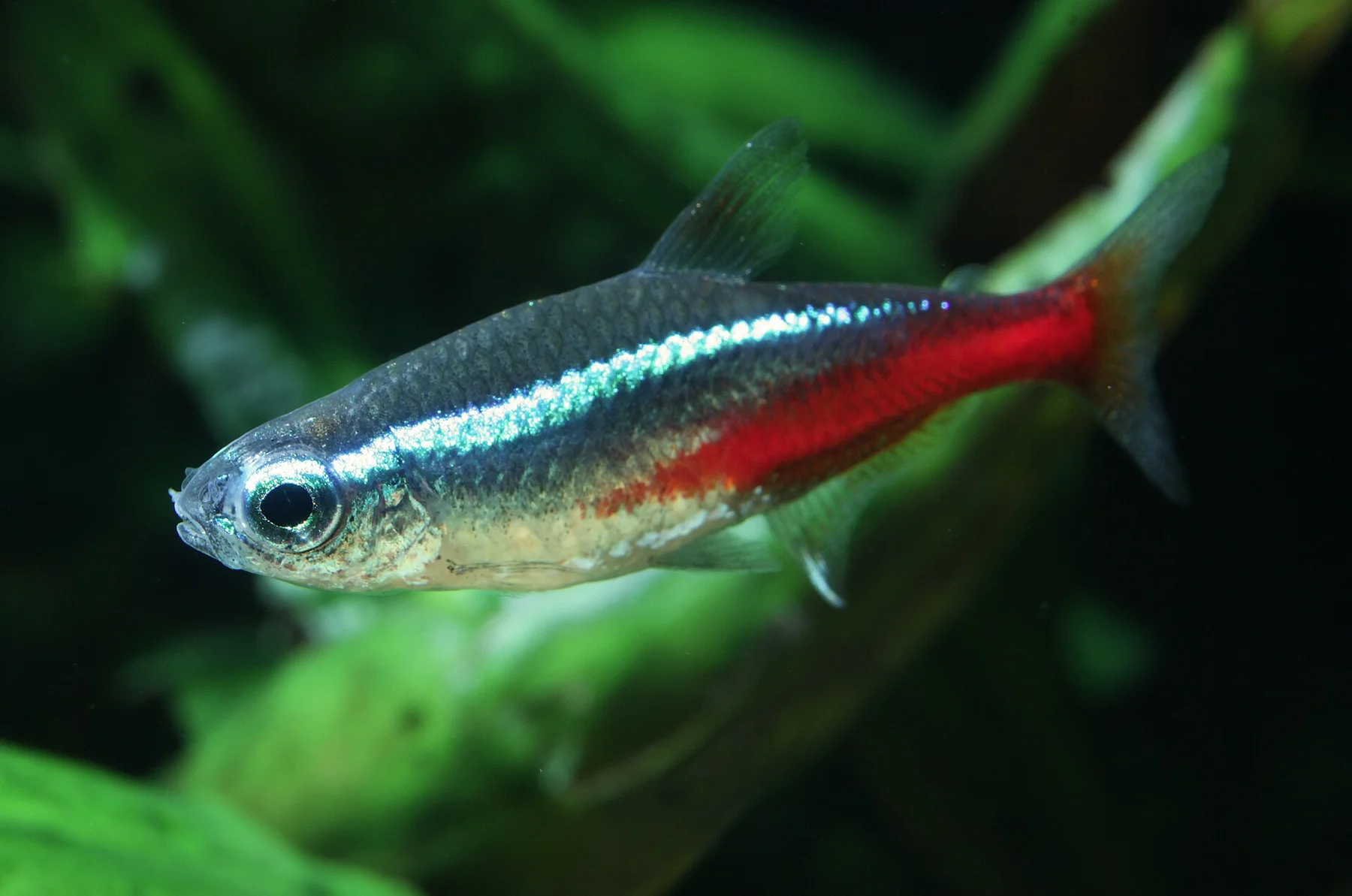
FeedingBlue neon is an omnivorous fish with a small mouth, naturally feeding on small invertebrates, copepods, and plant material; in the aquarium, it accepts small dry foods (flakes, microgranules) and requires regular supplementation with live and frozen foods (artemia, daphnia, small bloodworms).
Compatibility
CompatibilityBlue neon is a peaceful schooling fish, ideal for a community aquarium with small non-aggressive neighbors (small tetras, rasboras, corydoras, small rainbowfish, cherry barbs), but incompatible with large predatory species that perceive it as food.
Plant safetySafe
Plant-eating behaviourBlue neon does not eat or damage aquarium plants. It is a small omnivorous micro-predator: in nature, it feeds on worms, small insects, crustaceans, and partially plant matter, but it does not touch live higher plants in the aquarium. The species is considered safe for plant keepers and is actively used in aquascaping.
Interaction with invertebratesBlue neon tetra is peaceful towards adult invertebrates: it usually does not bother adult dwarf shrimps (e.g., cherry Neocaridina) and snails (neritinas, physas), so they are often kept together. However, due to its omnivorous diet and small mouth, neon tetras may eat newly hatched fry and young shrimp (shrimplets) if available — this risk is reduced in densely planted or shelter-rich aquariums. To preserve shrimp offspring, it is advisable to use dense moss thickets.
Incompatible groupsIncompatible with large and aggressive fish that perceive small neons as food: large cichlids (e.g., arowanas), goldfish, large barbs, eels, carp. Large predators are especially dangerous at night when neons are sleeping, and their neon glow attracts aggressors. Some sources note that barbs may tear fins.
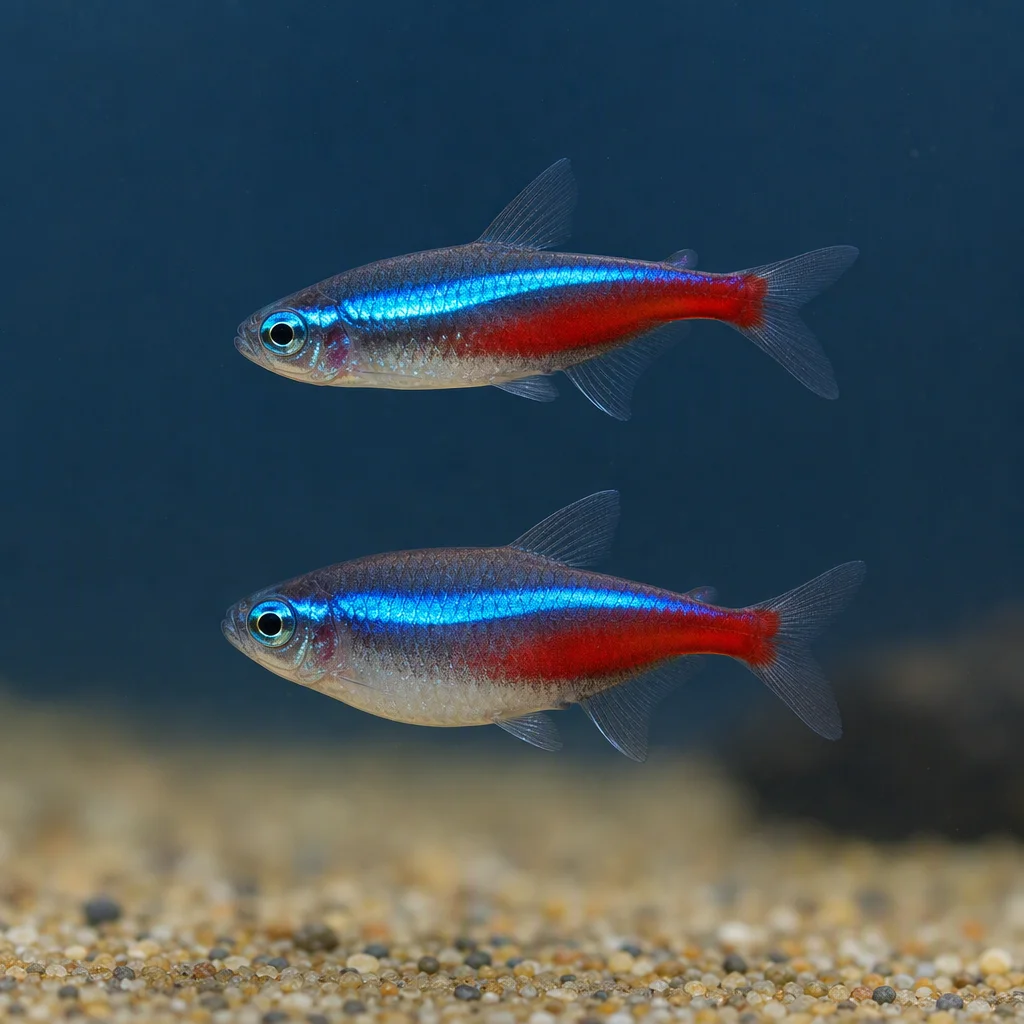 Reference illustration · may contain inaccuracies