Care
Minimum aquarium volume50–120 L (allowed 40–200 L)
Suitable aquarium proportionsStandard, Long
Water temperature23–27 °C (allowed 23–29 °C)
pH5.5–6.5 (allowed 4–7.5)
General hardness1–5 °dGH (allowed 1–12 °dGH)
FeedingRed neon is omnivorous with a tendency towards animal food. In nature, it feeds on small invertebrates, crustaceans, and worms. In the aquarium, it readily accepts high-quality dry small-fraction foods (flakes, microgranules), as well as live and frozen foods: cyclops, small daphnia, copepods, Artemia, and midge larvae. The fish has a small mouth, so food should be of appropriate size. It is recommended to feed 1–2 times a day with small portions, avoiding overfeeding.
Compatibility
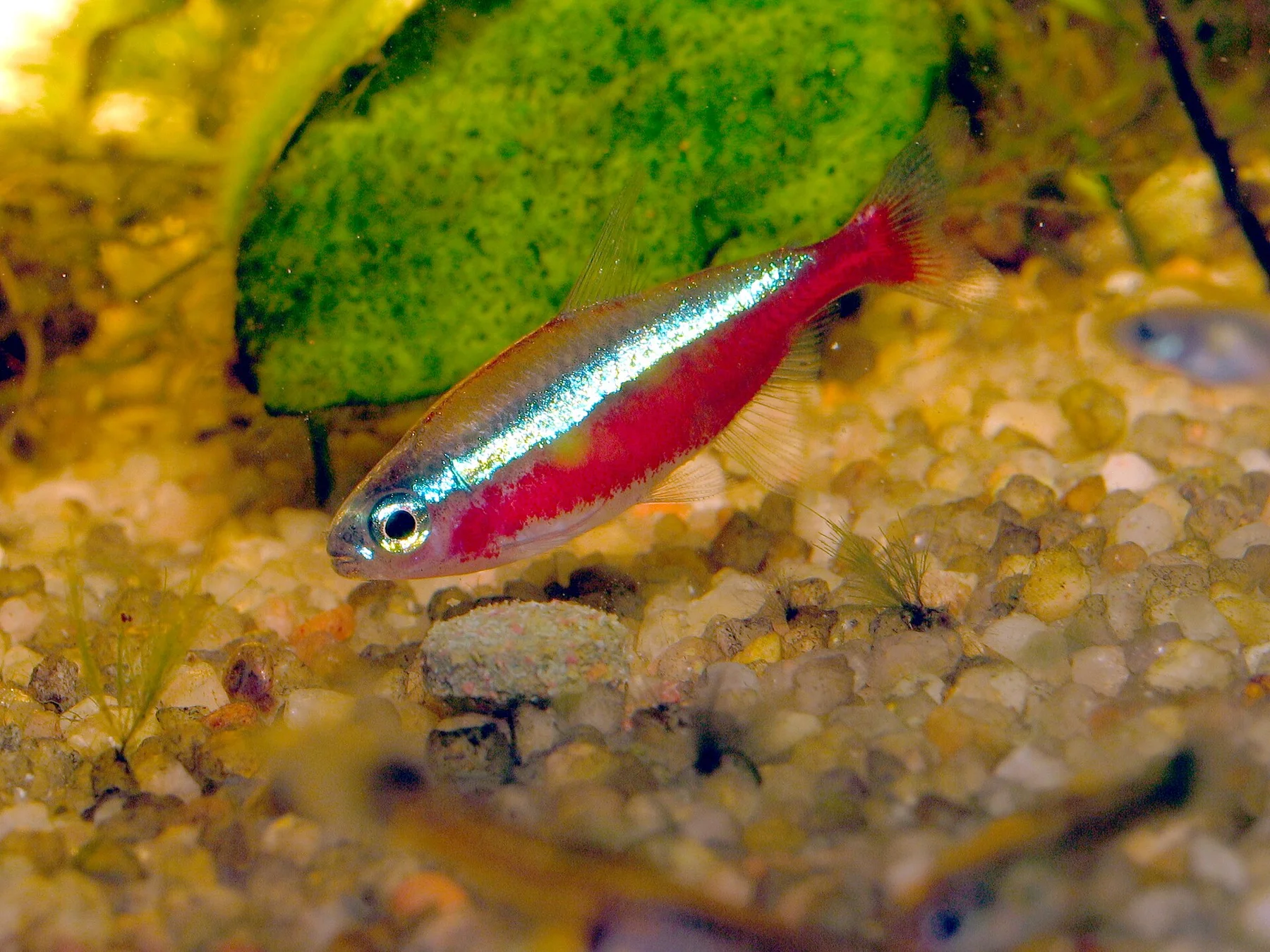
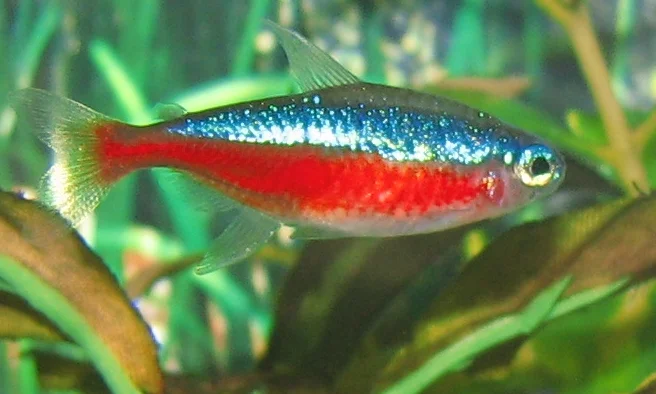
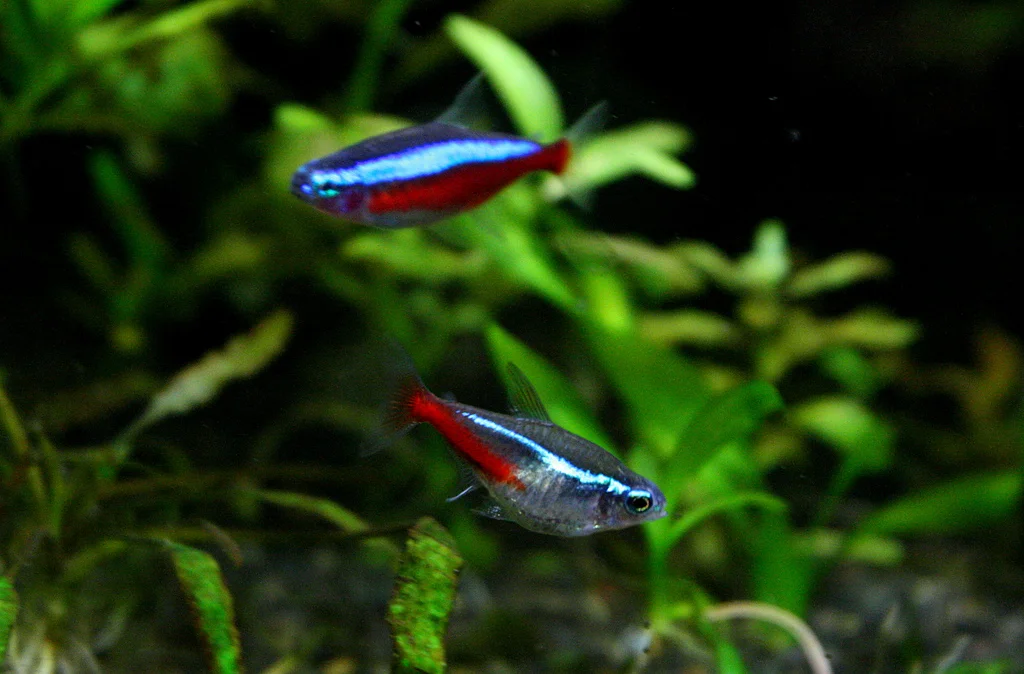
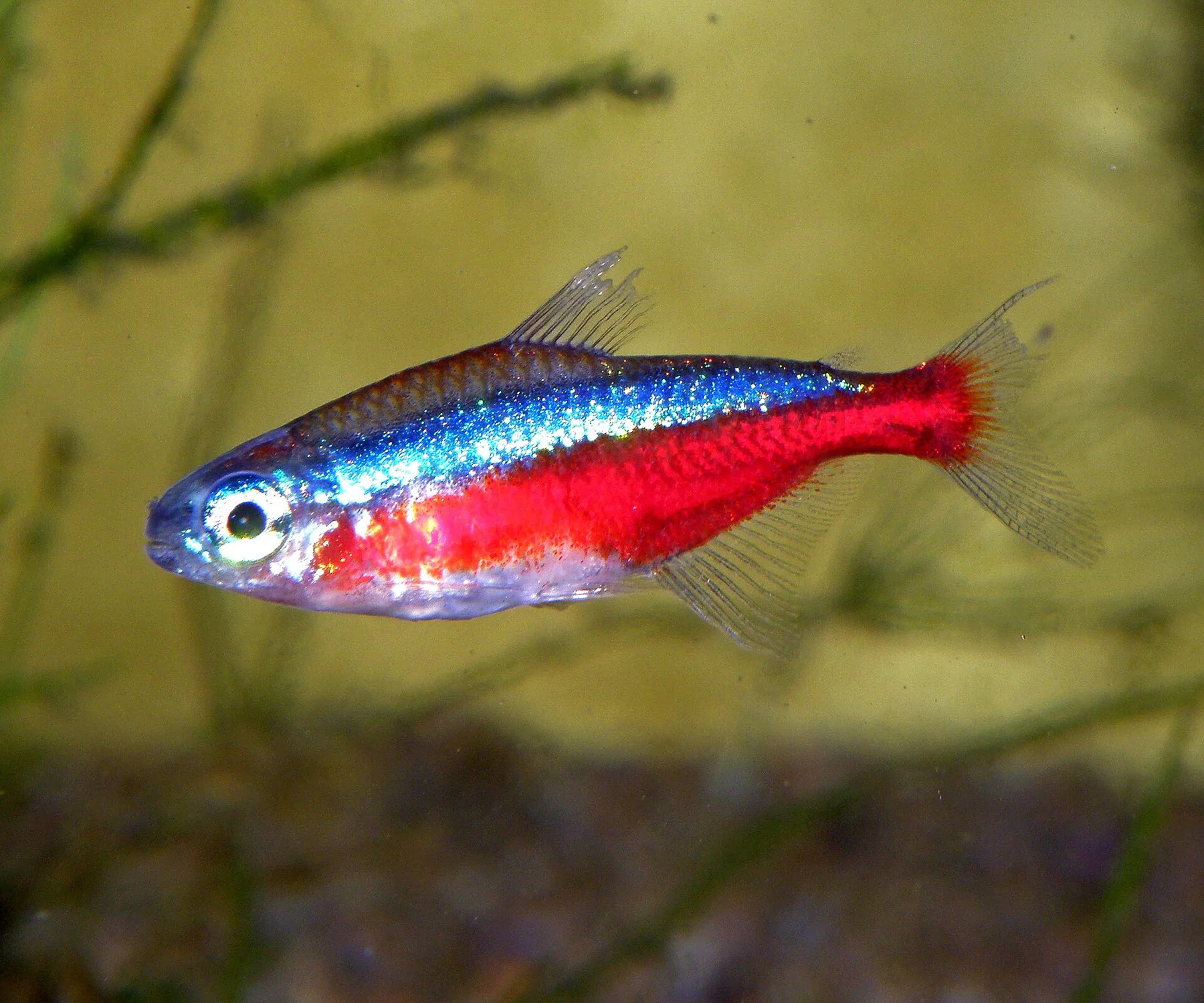
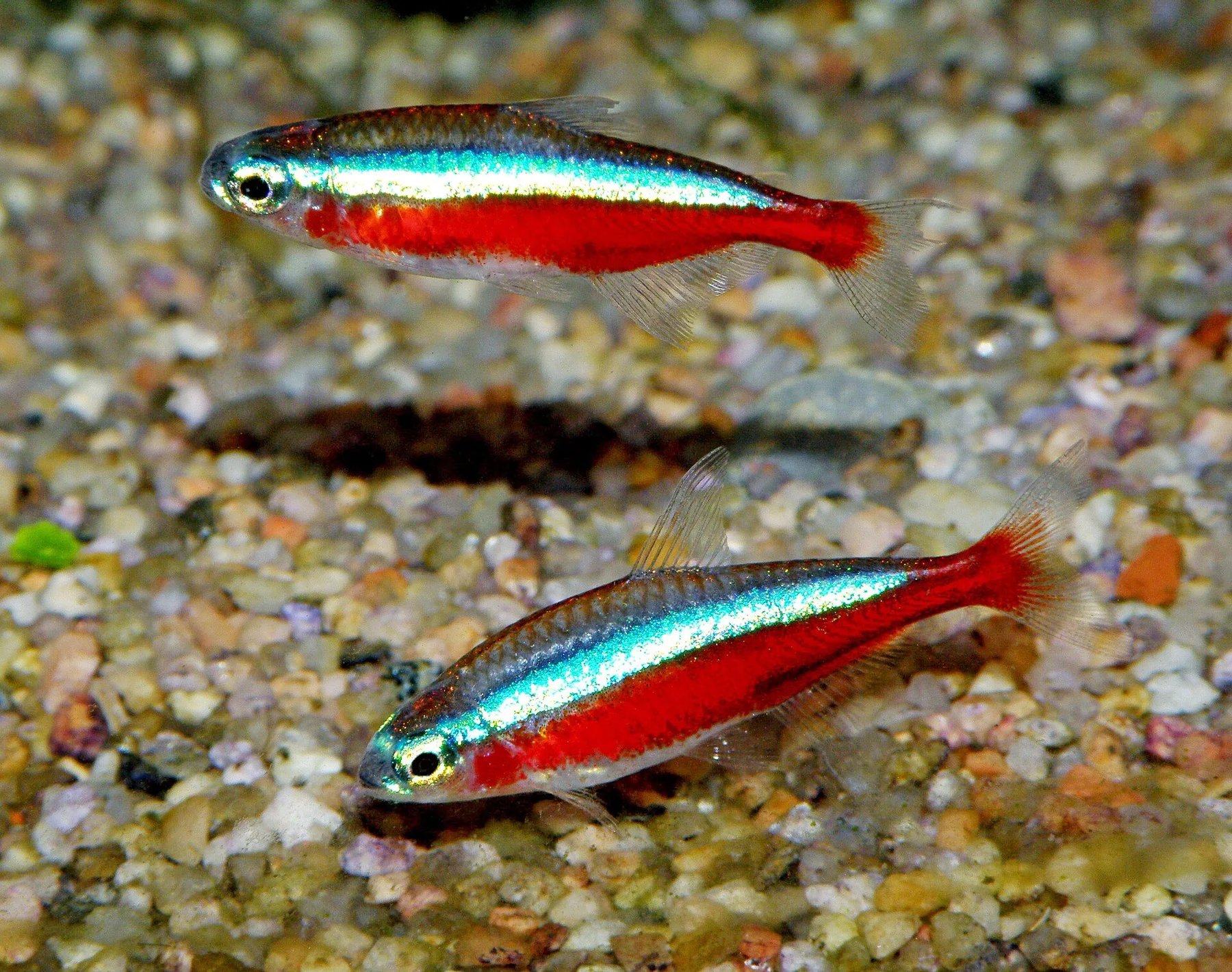
CompatibilityRed neon is a peaceful schooling fish, well compatible with similarly sized non-aggressive species that prefer soft, slightly acidic water: other neons, small tetras, rasboras, danios, peaceful catfish (corydoras), dwarf cichlids, and shrimps. It is unacceptable to keep with large fish and cichlids that perceive neons as food, as well as with aggressive or overly active species. A group of 8–10 individuals is recommended.
Plant safetySafe
Plant-eating behaviourRed neons do not eat or damage live aquarium plants: specialized sources explicitly state that the fish are compatible with plants, do not nibble or uproot them. In their natural diet, plant components (diatom and green algae, detritus) are only a secondary part, and in the aquarium, the fish do not exhibit phytophagy towards higher plants.
Interaction with invertebratesRed neons peacefully coexist with invertebrates: they can be kept with shrimp (they do not bother them) and small snails. In nature, they feed on small crustaceans and worms, so very tiny planktonic invertebrates (e.g., daphnia, Artemia) are perceived as food, but they do not pursue aquarium shrimp and snails.
Incompatible groupsDo not introduce any large and/or predatory fish that can swallow the cardinal tetra (large cichlids, big characins, gouramis, etc.) — they will see the neons as food. Aggressive, active, and quarrelsome species that cause stress to schooling fish are also contraindicated.
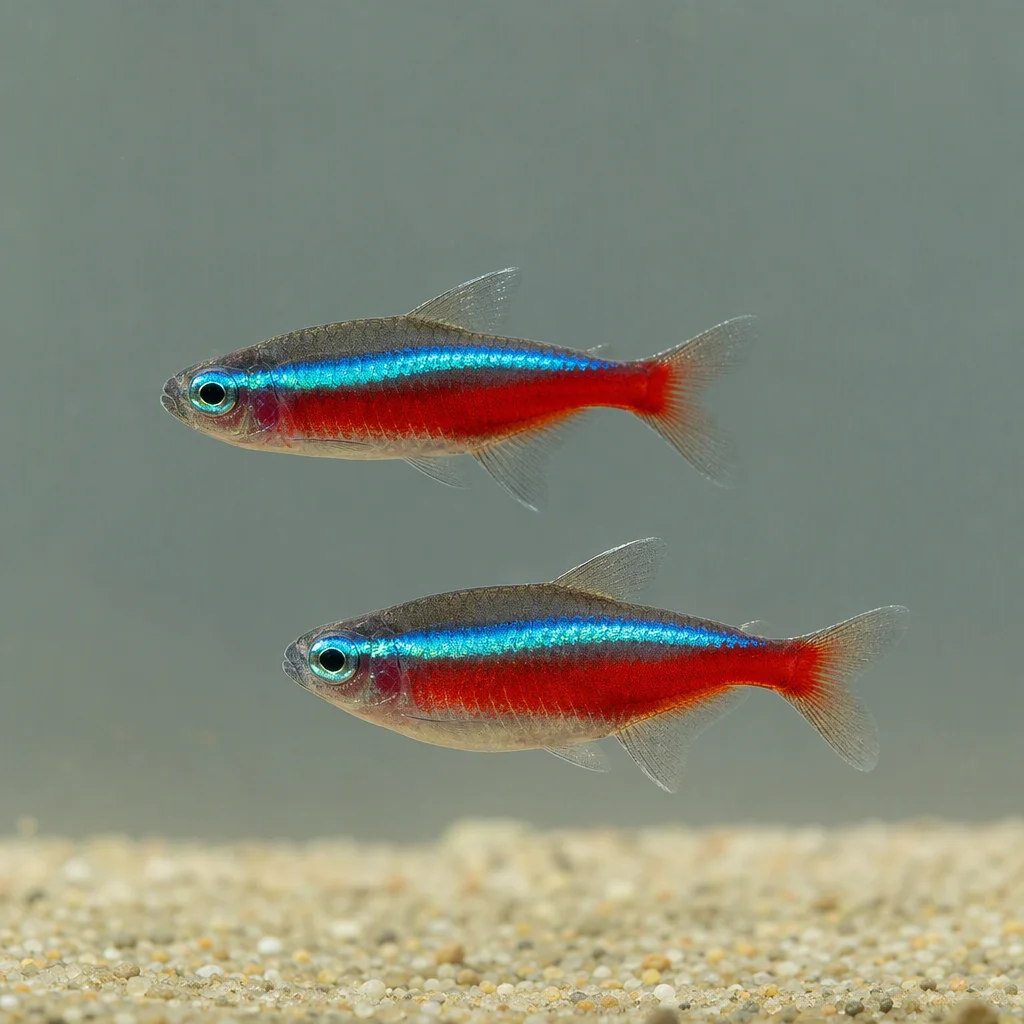 Reference illustration · may contain inaccuracies