Overview
TemperamentPeaceful
Social modelGroup
Minimum group size6
Adult size8–12 cm
Primary swimming zoneBottom
DietOmnivore
Care
Minimum aquarium volume60–80 L (allowed 50–100 L)
Suitable aquarium proportionsLong
Water temperature24–28 °C (allowed 21–30 °C)
pH5.5–7 (allowed 5.5–7.5)
General hardness0–8 °dGH (allowed 0–12 °dGH)
Oxygen demandOrdinary
FeedingFeed kuhli loaches with sinking foods (pills, granules, wafers), supplementing regularly with live or frozen foods — bloodworms, daphnia, Artemia, tubifex; as they are crepuscular and shy, and outcompeted for food, it is best to feed after lights are off or directly at their hiding places, ensuring the food reaches the bottom.
Compatibility
CompatibilityKuhli loaches are peaceful, non-aggressive bottom-dwelling fish that should be kept in groups of at least 5–6; best tank mates are small peaceful fish of similar biotopes (danios, small tetras, rasboras), while large, aggressive, territorial, or fin-nipping fish, as well as predators with large mouths, should be avoided, as kuhli loaches are outcompeted for food and may be eaten.
Plant safetySafe
Plant-eating behaviourDoes not damage live plants; omnivorous, feeds on small invertebrates, detritus, dead plant parts, and leftover food from the substrate, helping to keep it clean.
Interaction with invertebratesAdult shrimps and snails usually do not suffer from Acanthophthalmus kuhlii, but small shrimps and newly hatched shrimp fry may be eaten; keeping with large crabs and crayfish is not recommended due to the risk of injury to the fish.
Incompatible groupsLarge and predatory fish capable of swallowing worms (large cichlids, goldfish), as well as fast and aggressive neighbors that steal food from slow nocturnal bottom fish; territorial bottom species (labeo, some catfish, and gurnards) may attack kuhli loaches.

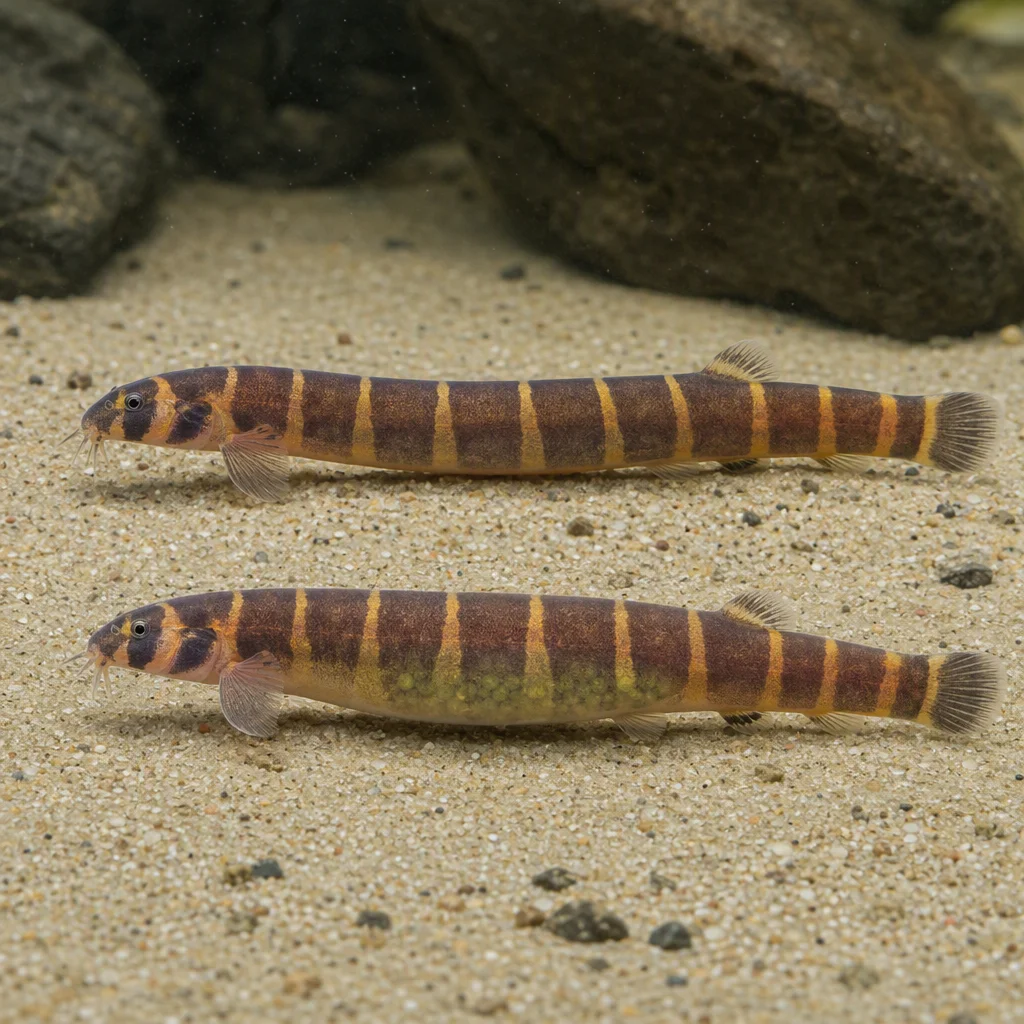 Reference illustration · may contain inaccuracies