Overview
TemperamentPeaceful
Social modelGroup
Minimum group size6
Adult size3–4 cm
Primary swimming zoneBottom
DietHerbivore
Care
Minimum aquarium volume40–60 L (allowed 30–100 L)
Suitable aquarium proportionsStandard, Long
Water temperature21–26 °C (allowed 20–28 °C)
pH5.5–7.5 (allowed 5–8)
General hardness1–12 °dGH (allowed 1–18 °dGH)
Oxygen demandElevated
FeedingIn nature, its diet mainly consists of algae encrustations and microorganisms of biofilm. In the aquarium, constant access to natural encrustations (in a mature tank) and regular feeding with plant-based foods such as sinking tablets and wafers for herbivorous catfish with spirulina, as well as blanched vegetables (zucchini, cucumber, spinach, lettuce), are necessary. The fish feeds almost continuously and should not be starved — a lack of plant food leads to rapid exhaustion. Occasionally, small live and frozen foods (artemia, daphnia, bloodworms) can be offered, but their proportion should be minimal, as the species does not require large amounts of protein. Uneaten vegetables should be removed from the aquarium no later than 24 hours.
Compatibility
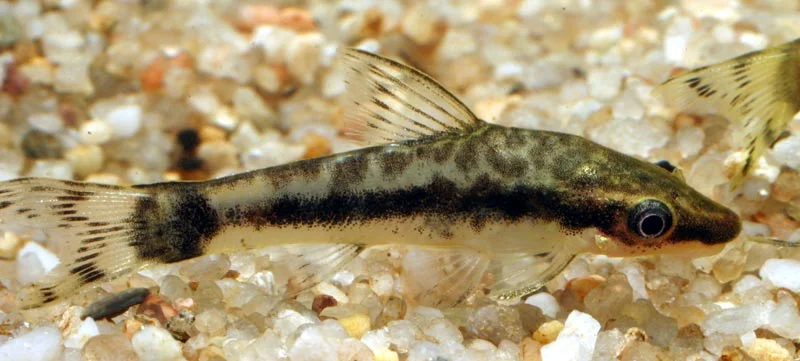
CompatibilityOtocinclus macrospilus is an exclusively peaceful, shy schooling fish that does not show aggression and does not pose a threat to neighbors. It is recommended to keep in groups of 5–6 or more. Good tank mates include small peaceful characins (neons, tetras), dwarf cichlids (Apistogramma), small Corydoras, shrimps, and snails. It is not suitable to keep with large predatory fish (Arowanas, piranhas, large cichlids) that may see Otocinclus as prey due to its small size. Also, active algae-eaters (Ancistrus, large Plecostomus) and aggressive fish that can push Otocinclus away from food should be avoided.
Plant safetySafe
Plant-eating behaviourOtozinclus macrospilus primarily feeds on algae growths, diatom algae, and microorganisms of biofilm. It does not damage healthy plant leaves; only in cases of insufficient food or on already damaged and softened leaf areas might minor nibbling occur. The fish delicately scrapes growths from leaf surfaces without damaging them.
Interaction with invertebratesSafe for aquarium invertebrates: healthy adult shrimps are not considered prey, and it does not hunt snails. Otozinclus are considered among the safest fish to keep with shrimps (Neocaridina, Caridina) and peaceful snails.
Incompatible groupsLarge predatory and aggressive fish (Arowanas, piranhas, Pacu, large cichlids including angelfish and discus) are unsuitable as they may swallow small catfish or cause stress. Active and swift competitors for food are also contraindicated: the shy Otocinclus loses in the fight for food and quickly becomes exhausted. Noisy neighbors creating constant movement at the surface and in the water column are undesirable.