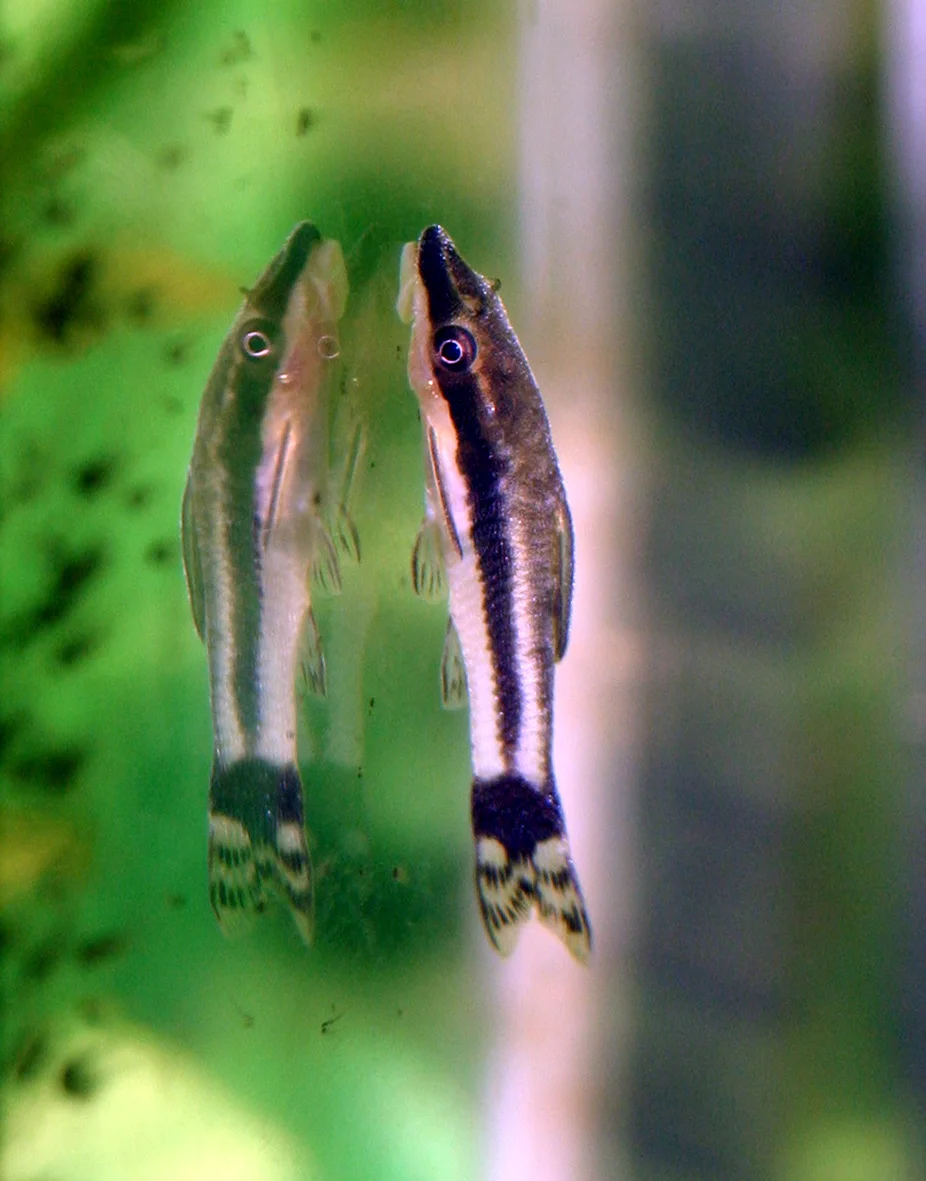
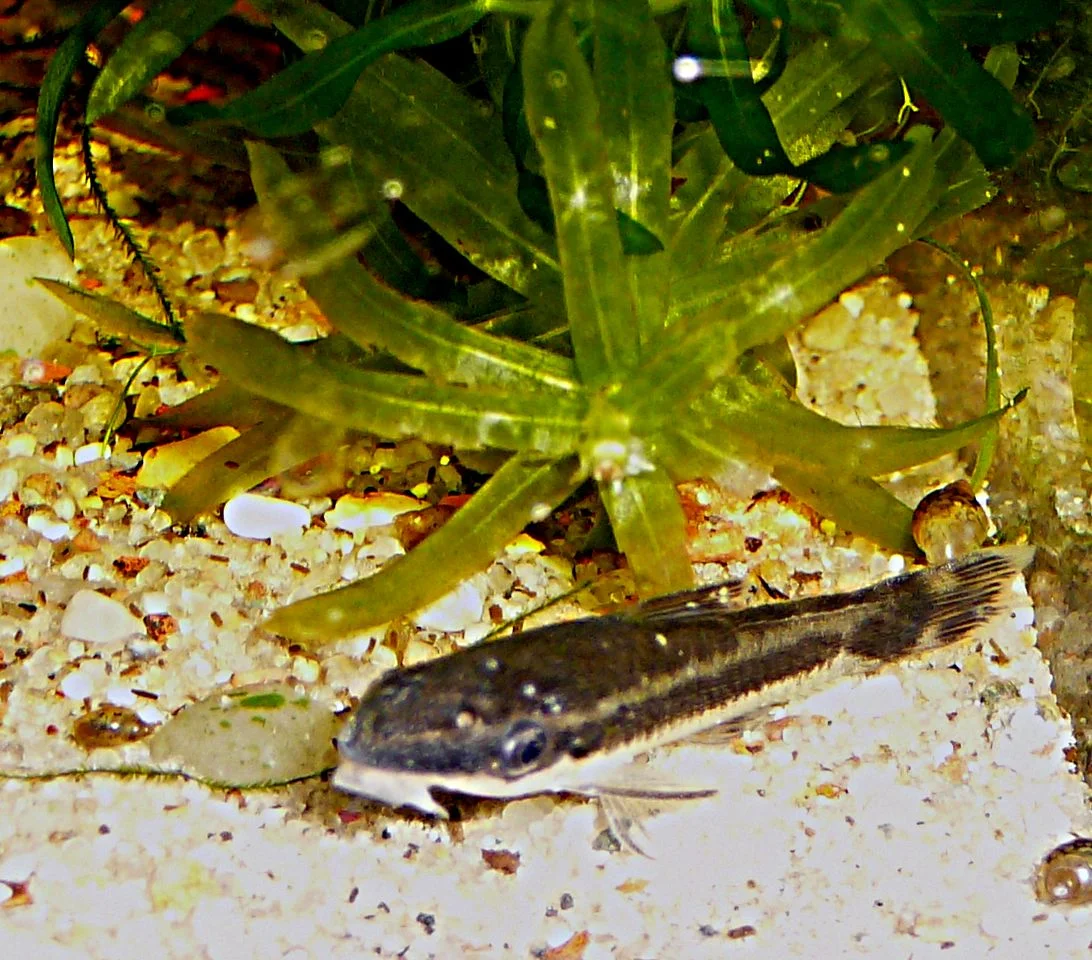
Overview
TemperamentPeaceful
Social modelGroup
Minimum group size5
Adult size3–5 cm
Primary swimming zoneBottom
DietHerbivore
Care
Minimum aquarium volumefrom 50 L (allowed from 35 L)
Suitable aquarium proportionsStandard
Water temperature22–26 °C (allowed 20–28 °C)
pH6–7.5 (allowed 6–8)
General hardness5–15 °dGH (allowed 2–20 °dGH)
Oxygen demandElevated
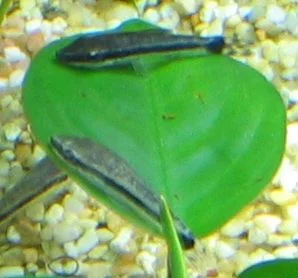
FeedingOtocinclus affinis is an obligate herbivorous algae eater. Its diet mainly consists of soft algae growths (diatoms, young green algae) and biofilm, which the fish scrapes off leaves, glass, stones, and driftwood. Hard filamentous algae (Cyanobacteria, Cladophora) and blue-green algae are not eaten. In the aquarium, natural growths are usually insufficient for feeding the group, so regular supplemental feeding is necessary: specialized sinking tablets for herbivorous catfish based on spirulina (e.g., Tetra Pleco Veggie Wafers, Tetra Pleco Spirulina Wafers), blanched vegetables (zucchini, cucumber, lettuce, spinach). Feed 1–2 times a day in small portions. It is critically important not to allow starvation — this is the most common cause of death in captivity. The aquarium should be mature (2–3 months) with established biofilm; the presence of driftwood promotes algae growth — natural food.
Compatibility
CompatibilityOtocinclus affinis is one of the most peaceful and safe aquarium fish. It is fully compatible with small, peaceful fish of similar size: neon tetras, small tetras, rasboras, guppies, dwarf corydoras, cherry barbs. It is absolutely safe for freshwater shrimp (cherry, Amano), including juveniles, and for plants — it only scrapes soft algae growths, not damaging delicate leaves. It is not recommended to keep with large predatory or aggressive fish (large cichlids, arowanas, goldfish), which may eat or stress the small catfish, as well as with large competitive algae eaters (plecos, ancistrus), which will compete for food. The species is shoaling — a group of at least 5–6 fish is required; alone, the fish become shy and may refuse food.
Plant safetySafe
Plant-eating behaviourOtocinclus affinis is an obligate herbivore: in nature and aquariums, their diet mainly consists of algae and microorganisms scraped from surfaces. They rarely damage live plants: their small teeth and delicate feeding method allow them to clean algae from delicate leaves (e.g., Hemianthus callitrichoides, Sagittaria, Vesicularia) without damage. However, if algae are scarce, they may starve, and literature (FishBase) notes that in aquariums, they also eat plants and roots — this should be considered a risk in case of diet deficiency.
Interaction with invertebratesCompletely safe for freshwater shrimp (Amano, cherry) and small invertebrates: it does not hunt or show aggression towards them. It may accidentally eat individual juvenile shrimp when scraping algae. It coexists well with peaceful snails.
Incompatible groupsLarge and predatory fish (including large and small cichlids, angelfish/discus at risk of slime-eating) capable of eating the catfish or causing stress; other active algae eaters and food competitors (Ancistrus, Gyrinocheilus, other Otocinclus) are undesirable, as they may leave the Otocinclus hungry. Be cautious with chemicals and salt: the species is sensitive to treatments.
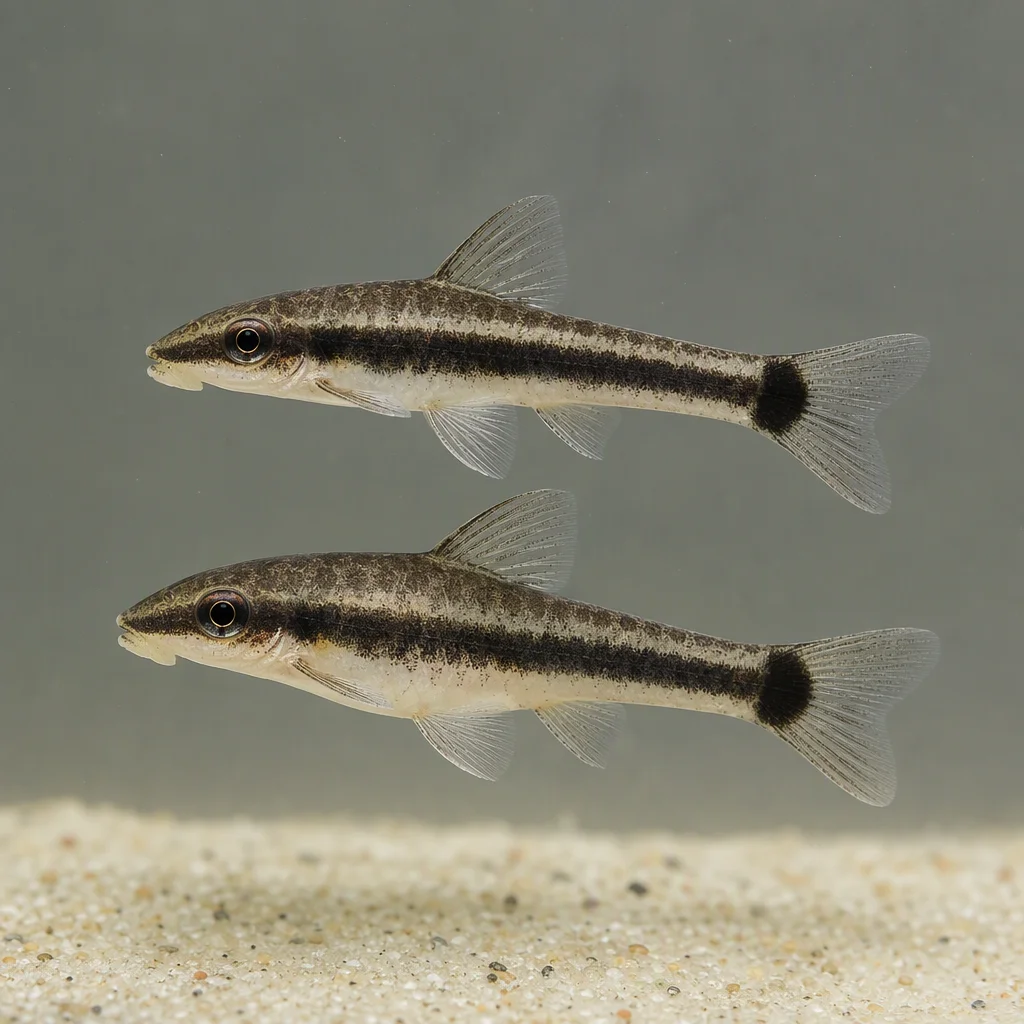 Reference illustration · may contain inaccuracies