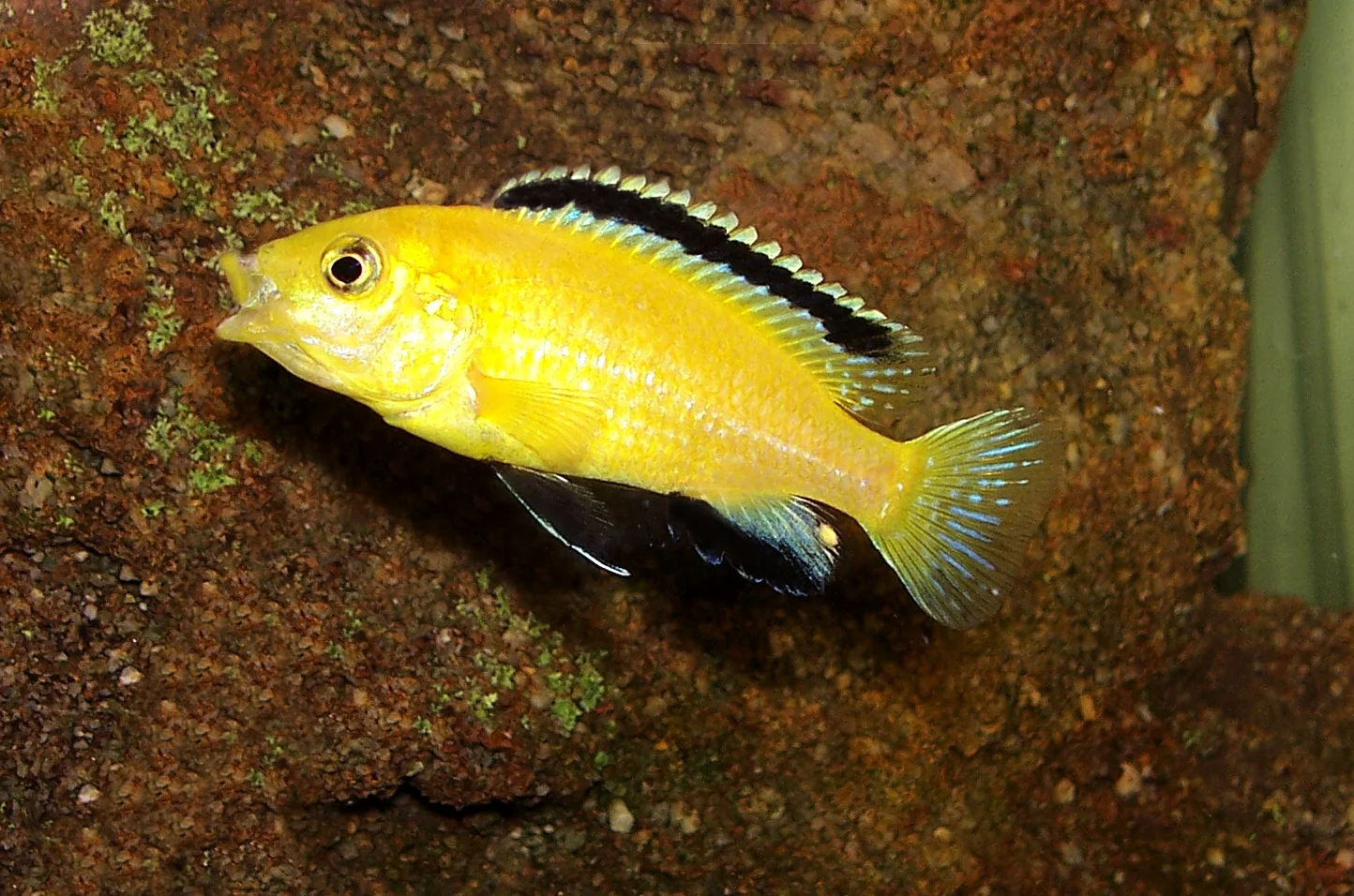
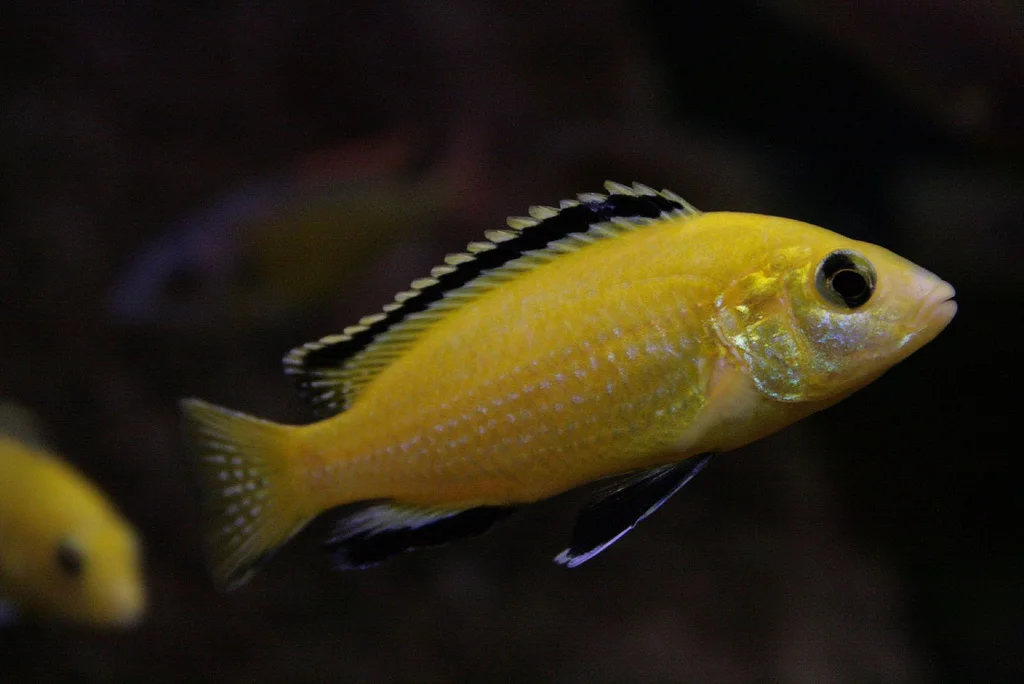
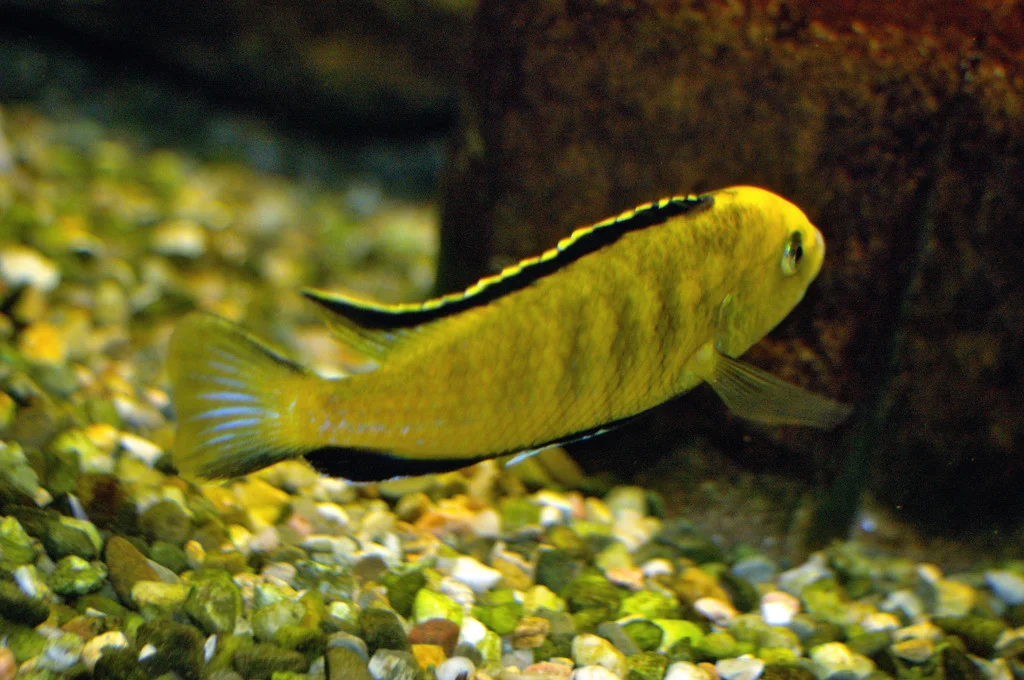
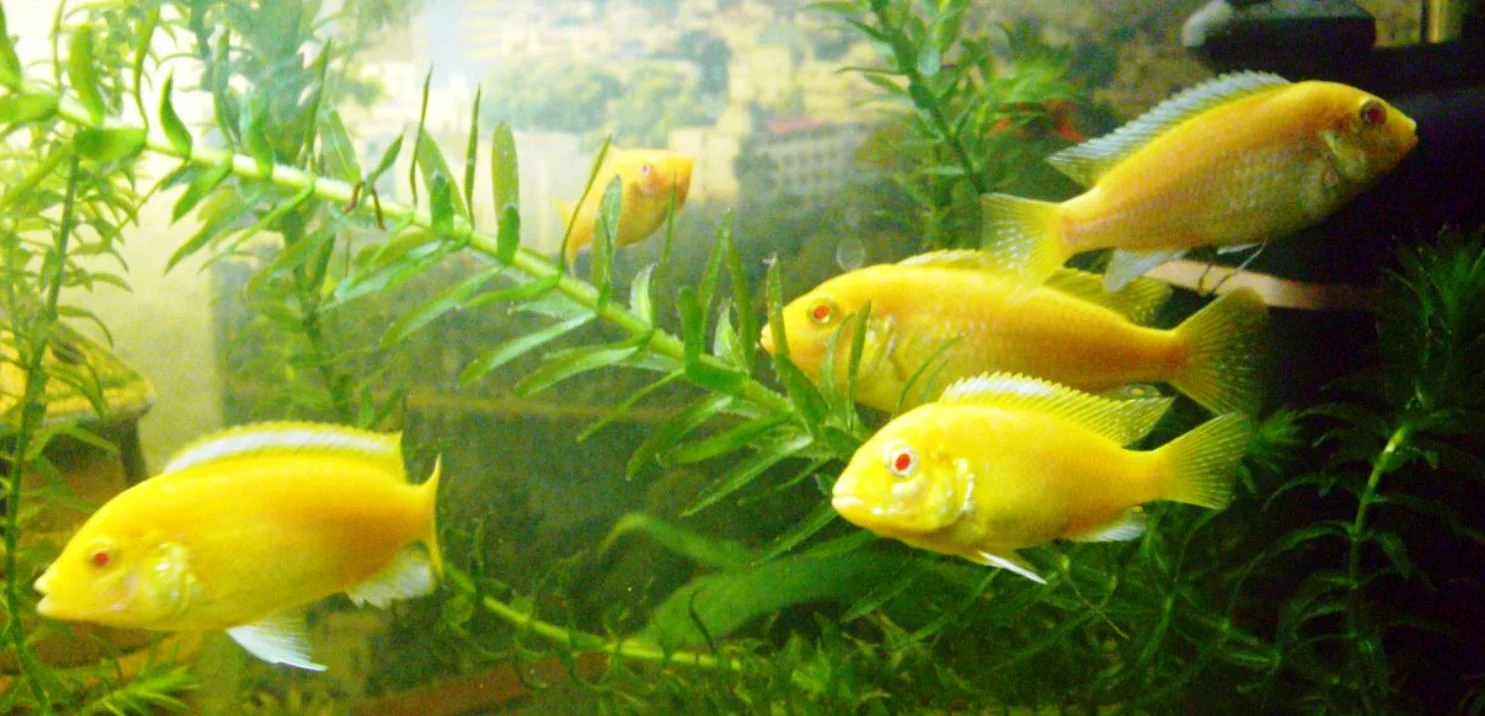
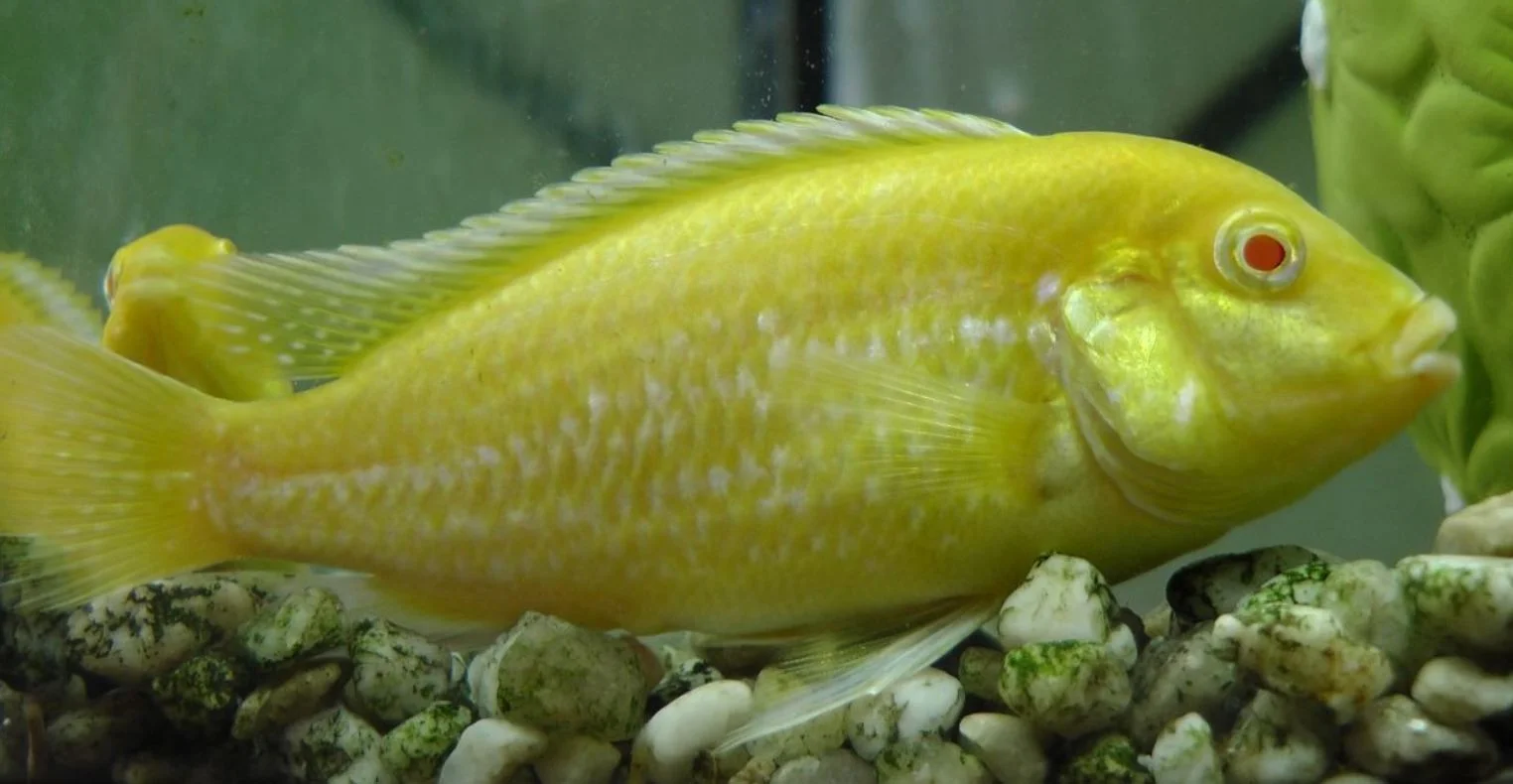
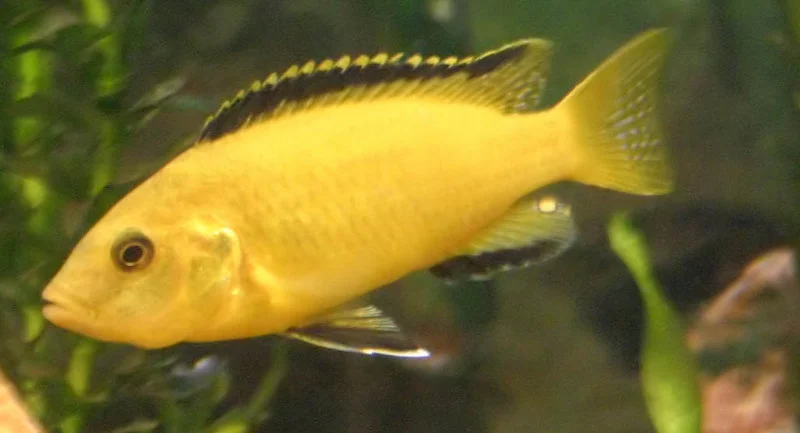
Overview
TemperamentConditionally peaceful
Social modelGroup
Minimum group size4
Adult size7–12 cm
Primary swimming zoneMid
DietOmnivore
Care
Minimum aquarium volume150–200 L (allowed 100–300 L)
Suitable aquarium proportionsLong
Water temperature24–28 °C
pH7.7–8.6
General hardness10–25 °dGH
Oxygen demandOrdinary
FeedingAn omnivorous species that readily accepts most foods. Plant matter (flakes/granules with spirulina, blanched spinach, vegetables) should constitute a significant part of the diet, supplemented with live and frozen foods (artemia, bloodworms, daphnia, krill). The diet should not consist solely of protein-rich foods to avoid gastrointestinal diseases (Malawi bloat). Feed 2–3 times a day with small portions that are fully consumed within 1–3 minutes; avoid overfeeding.
Compatibility
CompatibilityLabidochromis yellow is one of the most peaceful mbuna and a good choice for beginners with Malawian cichlids. It is best kept with other Malawian cichlids of similar size and peaceful temperament (pseudotropheus, melanochromis, peacock aulonocara, rainbowfish, botiid catfish). Very small fish and veil fin forms, as well as fish of similar yellow coloration and body shape perceived as rivals, should be avoided. It is not recommended to keep with small freshwater fish (neon, danio) and goldfish.
Plant safetyMay damage
Plant-eating behaviourDoes not typically eat plants: in nature, it is primarily an insectivorous species, picking invertebrates from rocks and Vallisneria thickets; in the aquarium, it can be kept with hardy plants (Vallisneria, Anubias, Java fern), although a spirulina-based vegetable supplement is essential for health.
Interaction with invertebratesLabidochromis yellow is an insectivorous species that in the wild feeds on small crustaceans, insects, and their larvae; in the aquarium, it may eat small shrimp and snails, so keeping it with decorative invertebrates is not recommended.
Incompatible groupsUnsuitable tankmates include small peaceful softwater community species (e.g., neon tetras, danios), as well as aggressive territorial mbuna that can suppress the relatively peaceful Labidochromis; in a general softwater aquarium without shelters, the species will suffer.

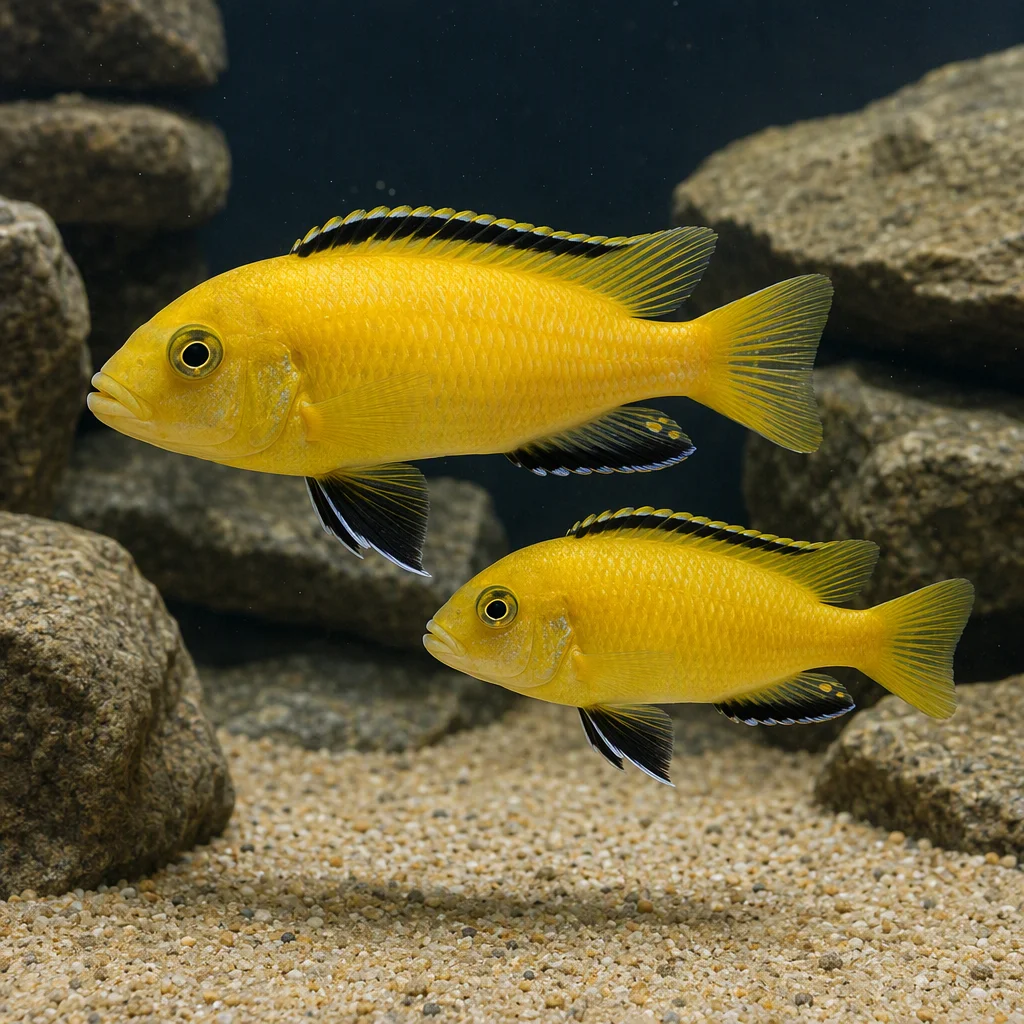 Reference illustration · may contain inaccuracies