Care
Minimum aquarium volume40–60 L (allowed 30–60 L)
Suitable aquarium proportionsStandard, Long
Water temperature24–28 °C (allowed 20–29 °C)
pH5.5–7 (allowed 5–7.5)
General hardness2–8 °dGH (allowed 1–15 °dGH)
Oxygen demandOrdinary
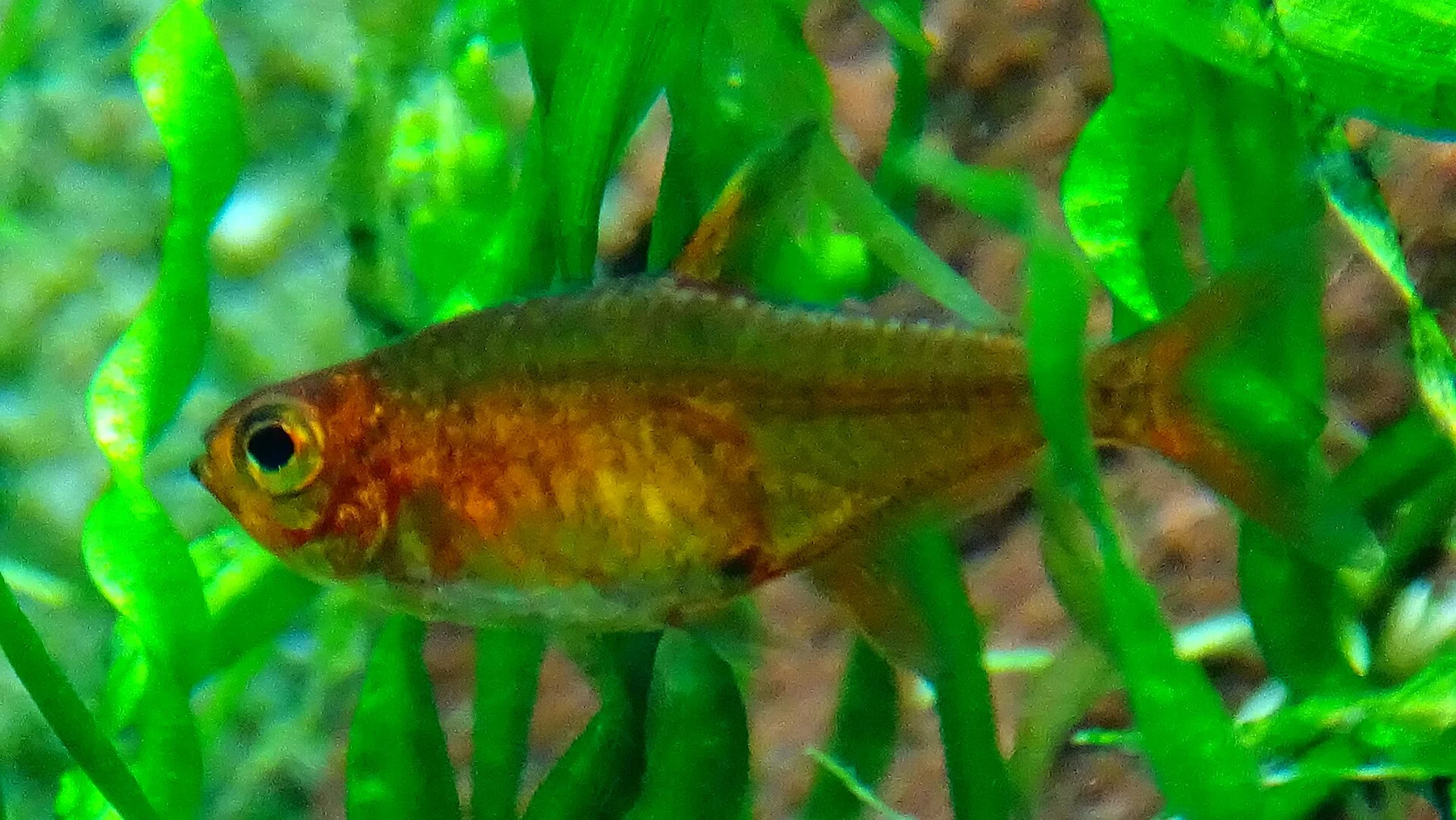
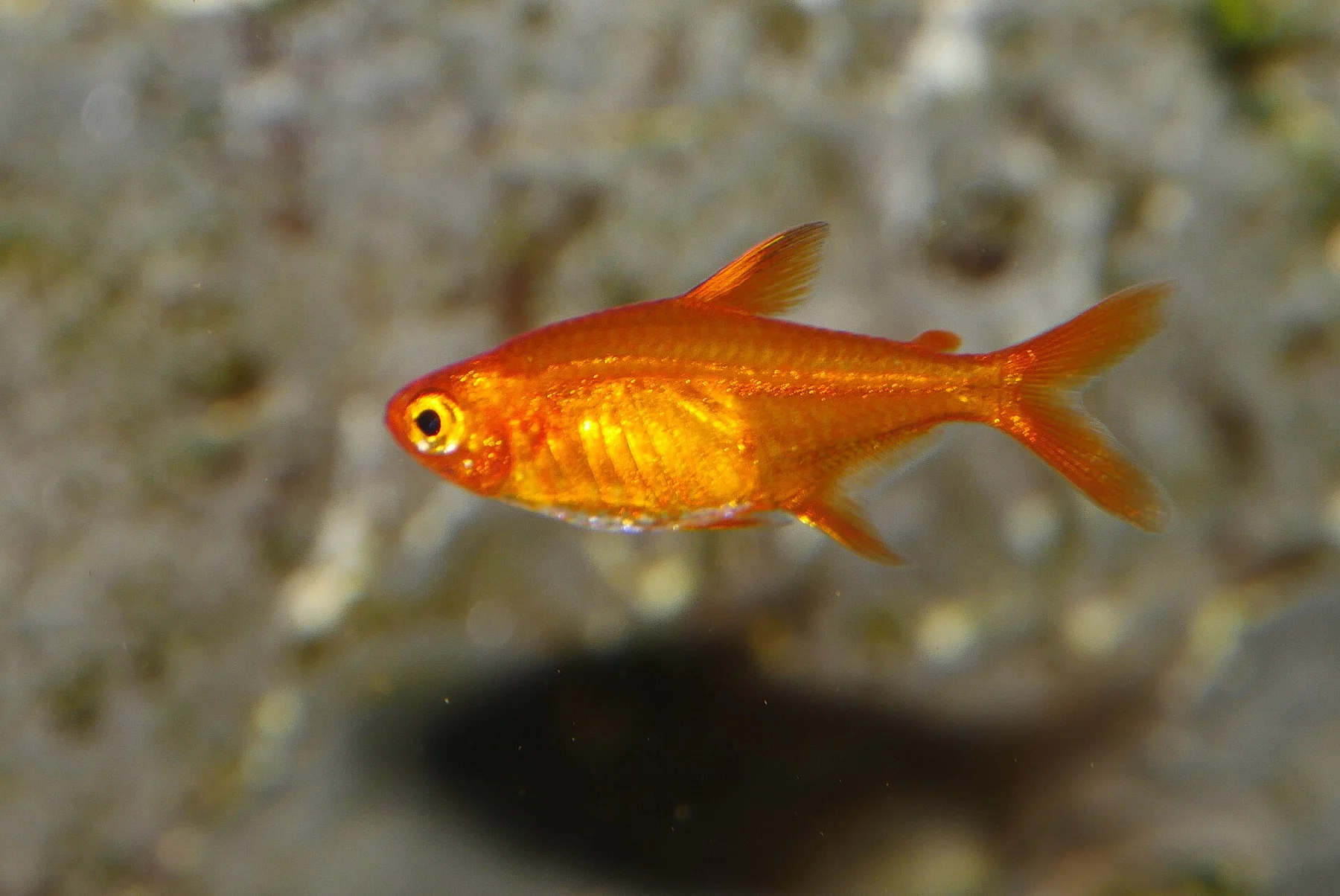
FeedingIn nature, the Amanda tetra feeds on small invertebrates and zooplankton. In the aquarium, it is undemanding but requires small fraction feed due to its very small mouth (up to 2 cm fish): micro-pellets, crushed flakes, powder feeds. Live and frozen foods are recommended: Artemia nauplii, Daphnia, Cyclops, micro-worms, chopped tubifex. Feed twice a day with small portions eaten within 1–2 minutes; a day off once a week. Important: due to its jaw structure, the fish feeds in the water column and at the surface and does not pick up food from the bottom.
Compatibility
CompatibilityThe Amanda tetra is a peaceful schooling fish of the middle water layer, well compatible with other small non-aggressive species: small characins (neons, rasboras, rodostomus), dwarf cichlids (apistogrammas), livebearers (guppies, platies), small catfish (corridors, otocinclus, ancistrus), and shrimp. It is strictly not recommended to keep with large, predatory, or aggressive fish (angelfish, large cichlids, large gouramis), which may perceive the 2-centimeter tetra as food, as well as with boisterous species capable of displacing it from feeding areas. Schooling of at least 8–10 individuals is essential.
Plant safetySafe
Plant-eating behaviourAmandae Tetra does not damage aquarium plants. The species is a micro-predator/omnivorous: in nature, it feeds on small invertebrates and zooplankton. The fish is safe for aquatic plants and aquascapes, including small-leaved plants (Java moss, Cabomba, etc.). Plants are used as cover and spawning substrate, not as food. Some sources note that algae may be part of its diet in the wild, but no damage to higher plants has been recorded in the aquarium.
Interaction with invertebratesAmandae Tetra is peaceful and safe for aquarium invertebrates: it does not bother adult shrimps (Neocaridina, Amano, etc.) and snails due to its small mouth. During irregular feeding and with hiding places, it may occasionally eat very tiny newborn shrimps; therefore, mosses are recommended for breeding shrimps.
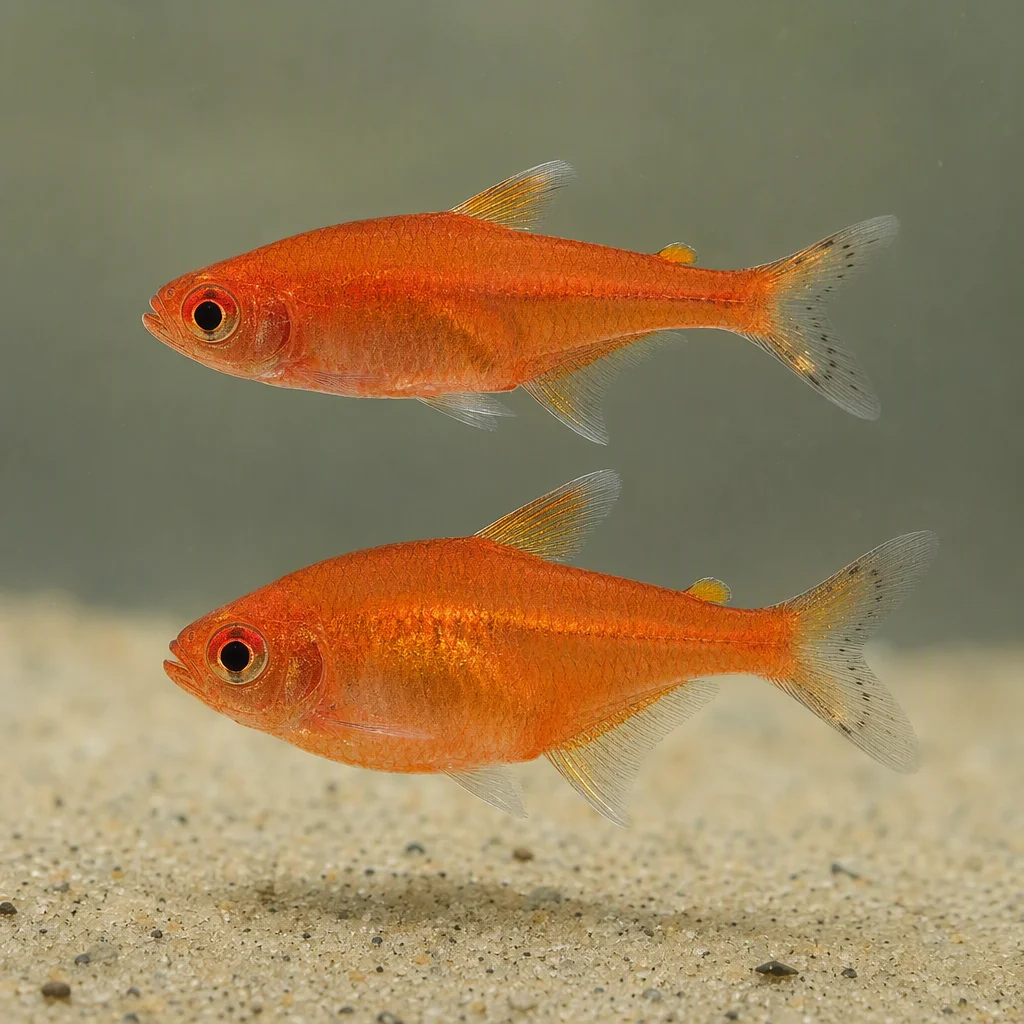 Reference illustration · may contain inaccuracies