Overview
TemperamentTerritorial
Social modelPair
Minimum group size2
Adult size2–3.5 cm
Primary swimming zoneBottom
DietCarnivore
Care
Minimum aquarium volume40–80 L (allowed 20–200 L)
Suitable aquarium proportionsStandard, Long
Water temperature20–24 °C (allowed 15–26 °C)
pH6.5–8 (allowed 6–9)
General hardness1–5 °dGH
Oxygen demandOrdinary
FeedingDario sp. Myanmar is an obligate micropredator: in nature, it feeds on small aquatic crustaceans, worms, insect larvae, and zooplankton. In the aquarium, a diet of small live or frozen foods is necessary: Artemia nauplii, Daphnia, Cyclops, Copepods (glassworms), microworms, Grindal worms, banana worms. Dry flakes and granules are ignored by most individuals. Midge (chironomid larvae) and Tubifex should be avoided or given very rarely — they cause obesity and diseases. Feed in small portions 1–2 times a day; the species is slow during feeding and cannot compete with fast neighbors.
Compatibility
CompatibilityDario sp. Myanmar is a peaceful but shy and slow micropredator, requiring a species-specific aquarium or companionship only with small peaceful fish. Recommended neighbors include Microdevario, Boraras, Trigonostigma, small Rasbora, Ember Tetra, small Corydoras, Otocinclus, peaceful shrimps (Neocaridina, Caridina). Large, fast, aggressive, or fin-nipping fish that compete for food and cause stress are not allowed. Males are territorial towards each other — in small aquariums, keep one male with several females. Mixing with other Dario species is not recommended (possible hybridization with Dario dario). Shrimp and small invertebrates may be perceived as prey.
Plant safetySafe
Plant-eating behaviourThe fish does not eat plants. Dario are micro-predators and feed on small crustaceans, worms, insect larvae, and zooplankton; plant matter is absent from their diet. Live plants in the aquarium are used by the fish as cover and spawning substrate but are not damaged.
Interaction with invertebratesDario sp. Myanmar is a micropredator that in nature feeds on small aquatic invertebrates (crustaceans, worms, insect larvae). In the aquarium, it will hunt small shrimp (including juveniles of Caridina and Neocaridina) and any other small invertebrates that fit in its mouth. Large shrimp and snails are safe and can be kept together. However, the fish itself can become prey for large predatory invertebrates.
Incompatible groupsLarge, active, or noisy fish that may intimidate the slow-moving Dario or steal its food are unsuitable. Predators capable of perceiving Dario as prey are unacceptable. Male Dario sp. Myanmar are aggressive towards each other, so keeping multiple males in a small aquarium is not recommended. Also, cohabitation with other Dario and Badis species is discouraged due to potential hybridization and territorial aggression.

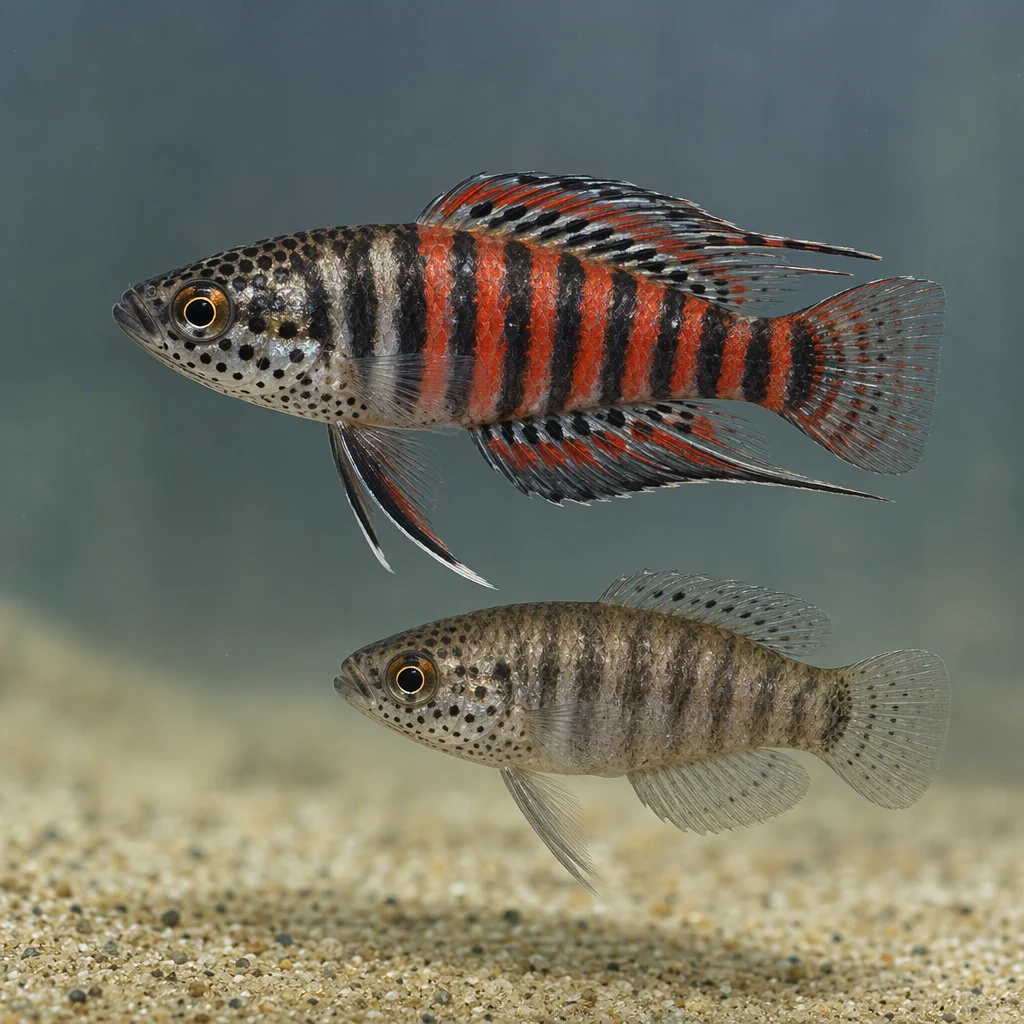 Reference illustration · may contain inaccuracies