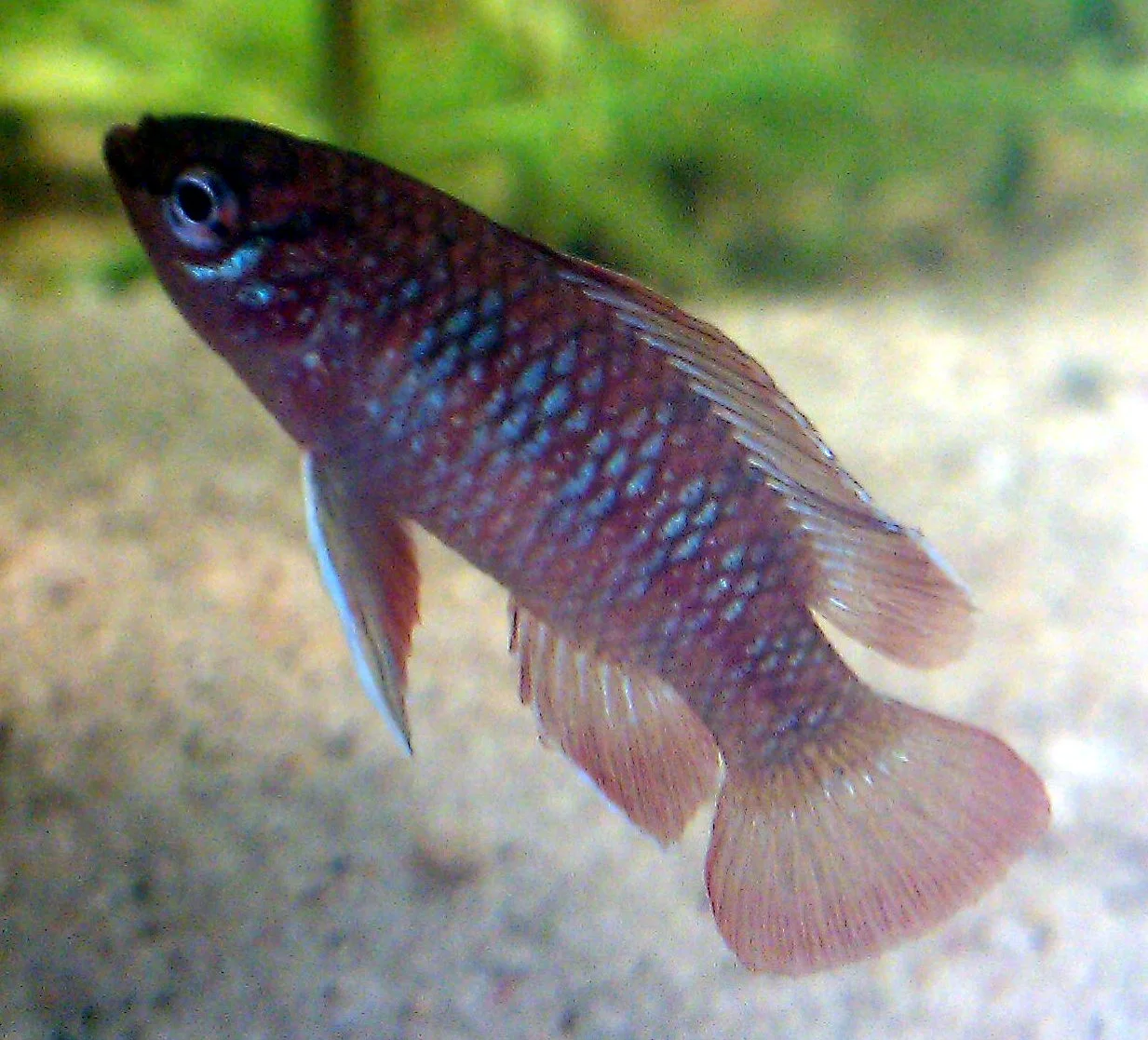
Overview
TemperamentConditionally peaceful
Social modelHarem
Minimum group size1
Adult size1.2–2 cm
Primary swimming zoneBottom
DietCarnivore
Care
Minimum aquarium volume20–40 L (allowed 10–54 L)
Suitable aquarium proportionsStandard, Long
Water temperature22–26 °C (allowed 18–28 °C)
pH6.5–7.5 (allowed 6–8)
General hardness5–15 °dGH (allowed 1–20 °dGH)
Oxygen demandElevated
FeedingScarlet badis (Dario dario) is a micro-predator that in nature feeds on small aquatic invertebrates and other accessible animal food. In the aquarium, it is advisable to offer predominantly small live and frozen foods of appropriate size.
Diet options include Artemia and its nauplii, daphnia, cyclops, small bloodworms, auloforus, and other small organisms. Frozen foods are also suitable if the fish readily accept them.
Dario dario often adapts poorly to dry foods, and some individuals may ignore them altogether. Therefore, flakes and granules should not be considered the sole diet. If the fish accept quality small dry food, it can be used as a supplement to a more varied diet.
In a community tank, it is important to ensure that badis actually get fed. These small fish may feed slowly and lose out in food competition to more active neighbors. It is best to feed small portions with a pipette and monitor that each individual receives enough food.
To maintain good condition and coloration, it is recommended to alternate several types of food and avoid feeding only one type continuously.
Compatibility
CompatibilityScarlet badis is a small and relatively peaceful fish, but due to its miniature size, dietary needs, and territorial behavior, it is not suitable for all community aquariums. Dario dario thrives best in a species-specific tank or with small peaceful neighbors that do not show aggression or create strong food competition.
Good tank mates include small, calm fish of similar size, as well as some small bottom-dwelling species. When selecting tank mates, it is important to consider matching temperature and water parameters. Large, aggressive, or overly active fish should be avoided: Dario may hide constantly, experience stress, and lose out in food competition.
Keeping multiple males requires special attention. Males are territorial and may conflict, especially in small or poorly structured tanks. Dense plantings, driftwood, rocks, and other hiding places are necessary to divide the space into separate territories.
Compatibility with shrimp is conditional. Adult shrimp of suitable size are usually less interesting, but Dario dario is a micro-predator, so small shrimp and juveniles may be seen as prey. If breeding dwarf shrimp is a goal, cohabitation with badis is not recommended.
When choosing tank mates for Dario dario, it is more important to consider not only the absence of direct aggression but also the size, activity level, food competition, and matching environmental requirements of the fish.
Plant safetySafe
Interaction with invertebratesDario dario is a micro-predator: in nature, it feeds on small crustaceans, worms, and insect larvae. In the aquarium, it will hunt for fry and small shrimp (e.g., Neocaridina), as well as small snails and their eggs; adult large shrimp (Amano, large Neocaridina) are usually too big to fit in its mouth and are relatively safe. Dense vegetation and shelters are necessary for fry when keeping with shrimp.
Incompatible groupsLarge and predatory fish that may perceive Badis as food are unacceptable. Active, fast-moving fish (Danios, Barbs, etc.) that will compete for food and cause chronic stress to slow-moving Badis are also unsuitable. It is not recommended to keep with other territorial males of Dario dario in small volumes. Small shrimp and fry may be considered as food.

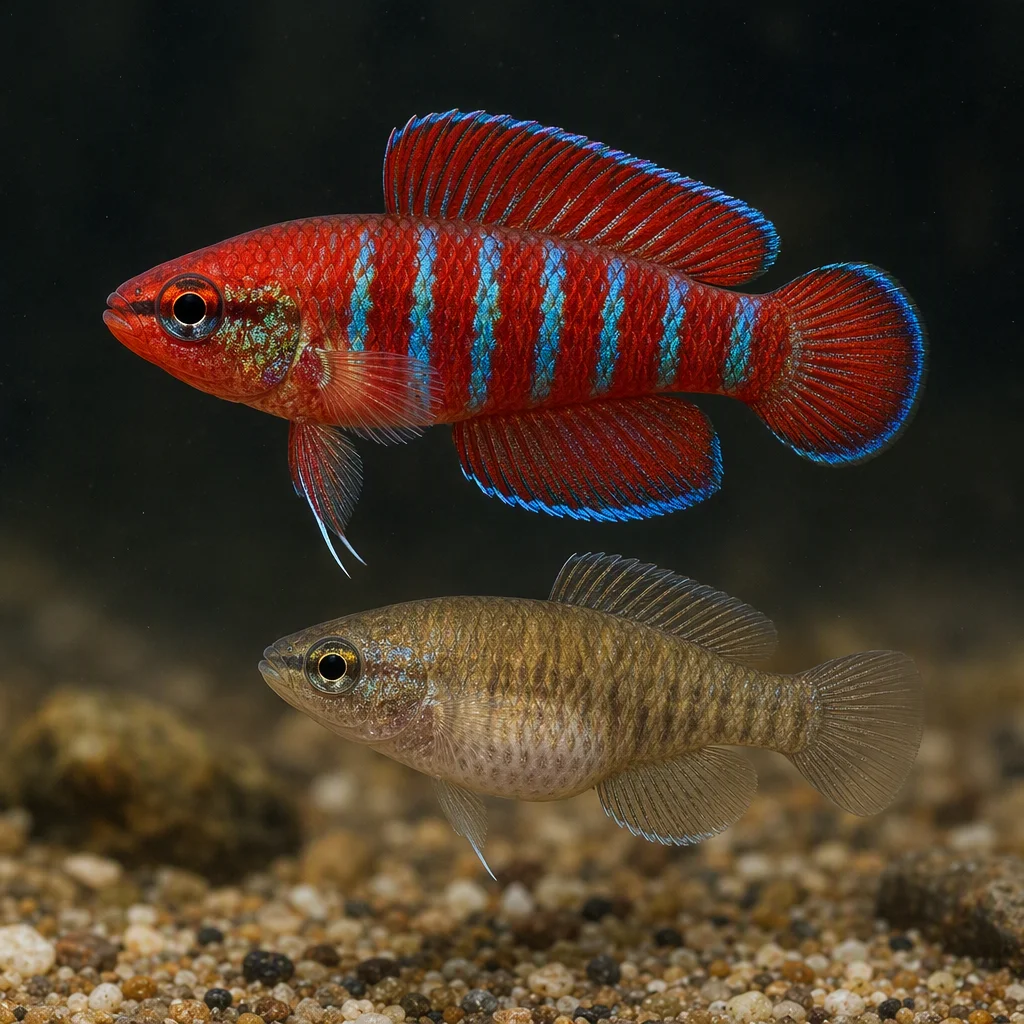 Reference illustration · may contain inaccuracies