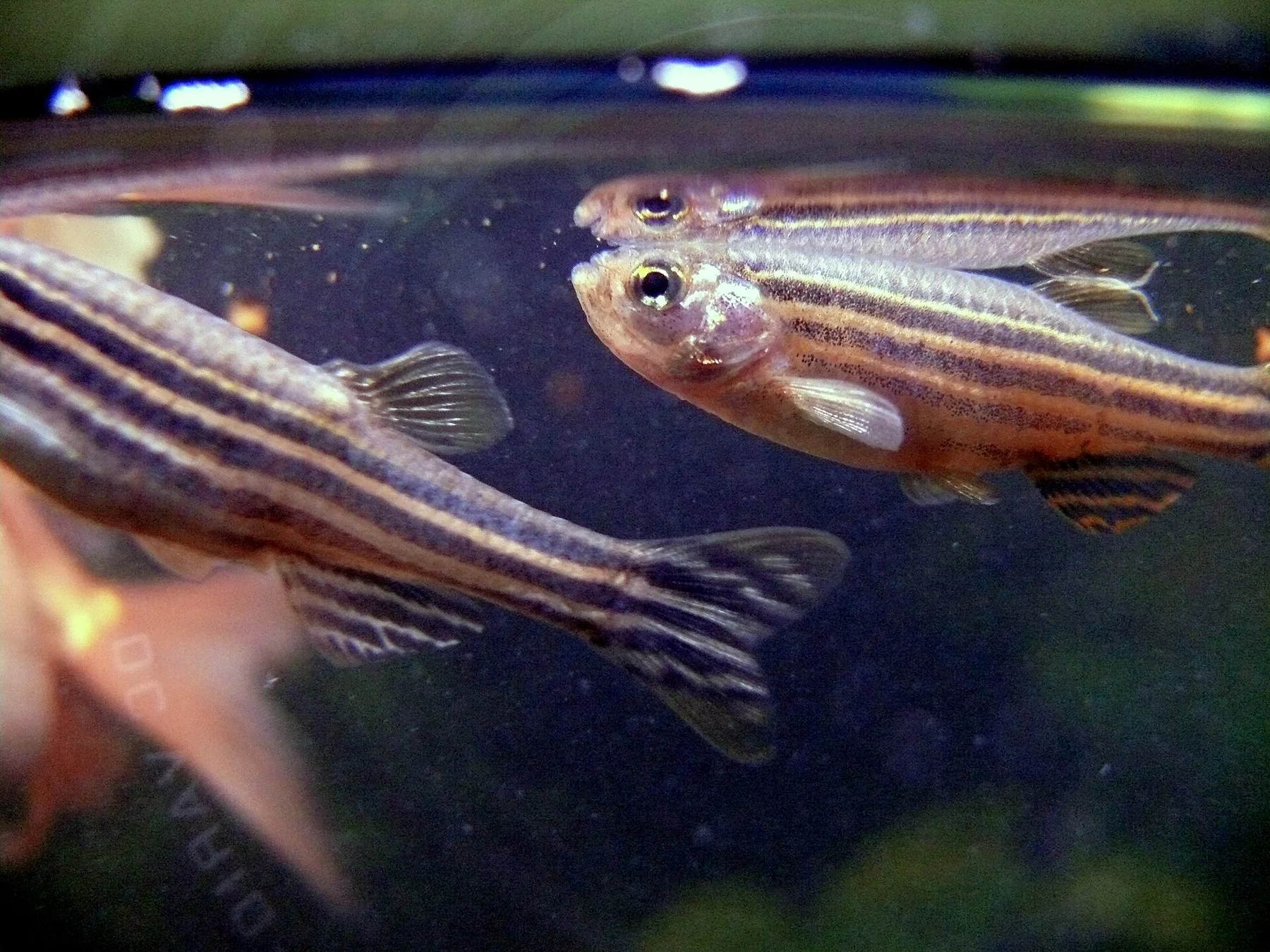
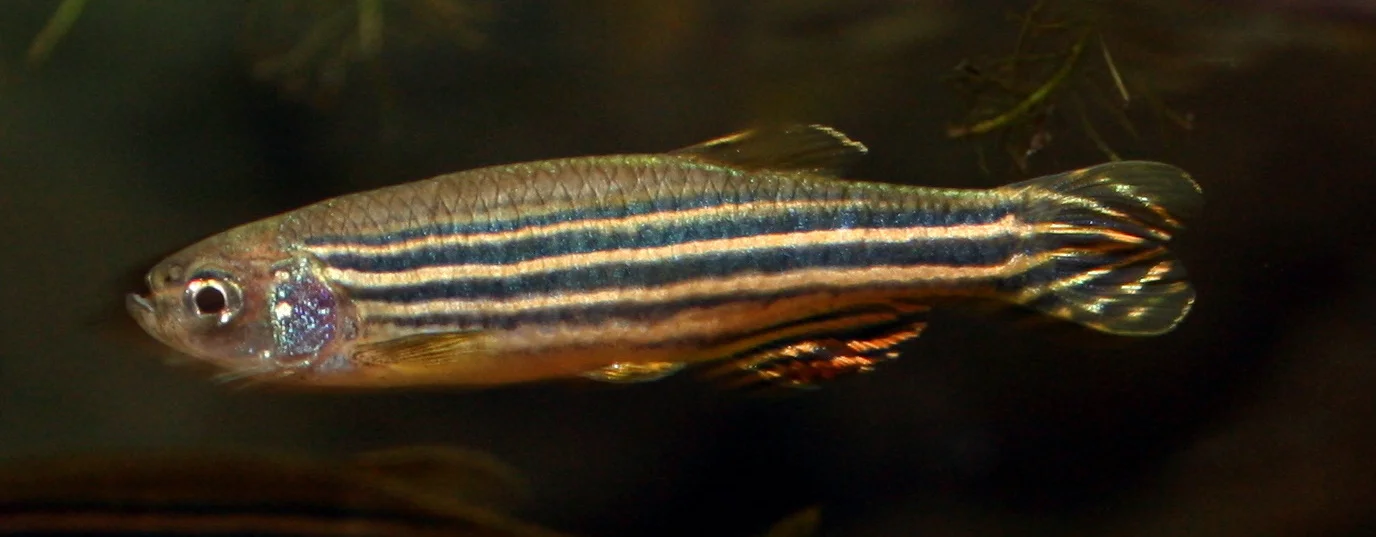
CompatibilityDanio rerio is a peaceful schooling fish that should be kept in groups of at least 6 fish (preferably 8–10). It coexists well with peaceful fish of similar size: tetras, rasboras, guppies, mollies, cherry barbs, Corydoras, Ancistrus, and larger calm species (terns, gouramis, swordtails). It is not recommended to keep with active barbs (except cherry), goldfish, or large cichlids that may eat Danios. Veil-tailed forms require especially peaceful neighbors. Danios may nip the fins of slow, long-finned fish (bettas, angelfish).
Plant safetySafe
Plant-eating behaviourDanio rerio is an omnivorous species with a primarily animal-based diet (zooplankton, zoobenthos, insects). According to stomach content analysis (FishBase, Spence et al. 2007), plant material makes up about 12% of the diet: algae (4.4%) and vascular plants (7.6%). In aquariums, danios generally do not damage healthy plants; they may nibble soft-leaved plants (e.g., Java moss) if lacking plant-based food, but are not considered plant-eaters. In nature, under stress, they may shift to a more herbivorous diet.
Interaction with invertebratesDanio rerio peacefully coexists with aquarium invertebrates — snails (ampullariids, nerite) and adult shrimps (neocaridinas, cherry shrimps). However, they may eat fry and small shrimps, as well as eggs. Large shrimps (e.g., Amano) are safe for adult danios. The fish do not show aggression towards invertebrates, but their high mobility can cause stress to shrimps.
Incompatible groupsIt is not recommended to keep Danio rerio with large predatory fish (large cichlids, arowanas, Acanthopagrus, cichlids), large goldfish, and fancy catfish that may see them as food. Also undesirable are tank mates that nip fins (some barbs, large cichlids), especially for veiled forms. Very slow and shy fish may experience stress from the activity of danios.
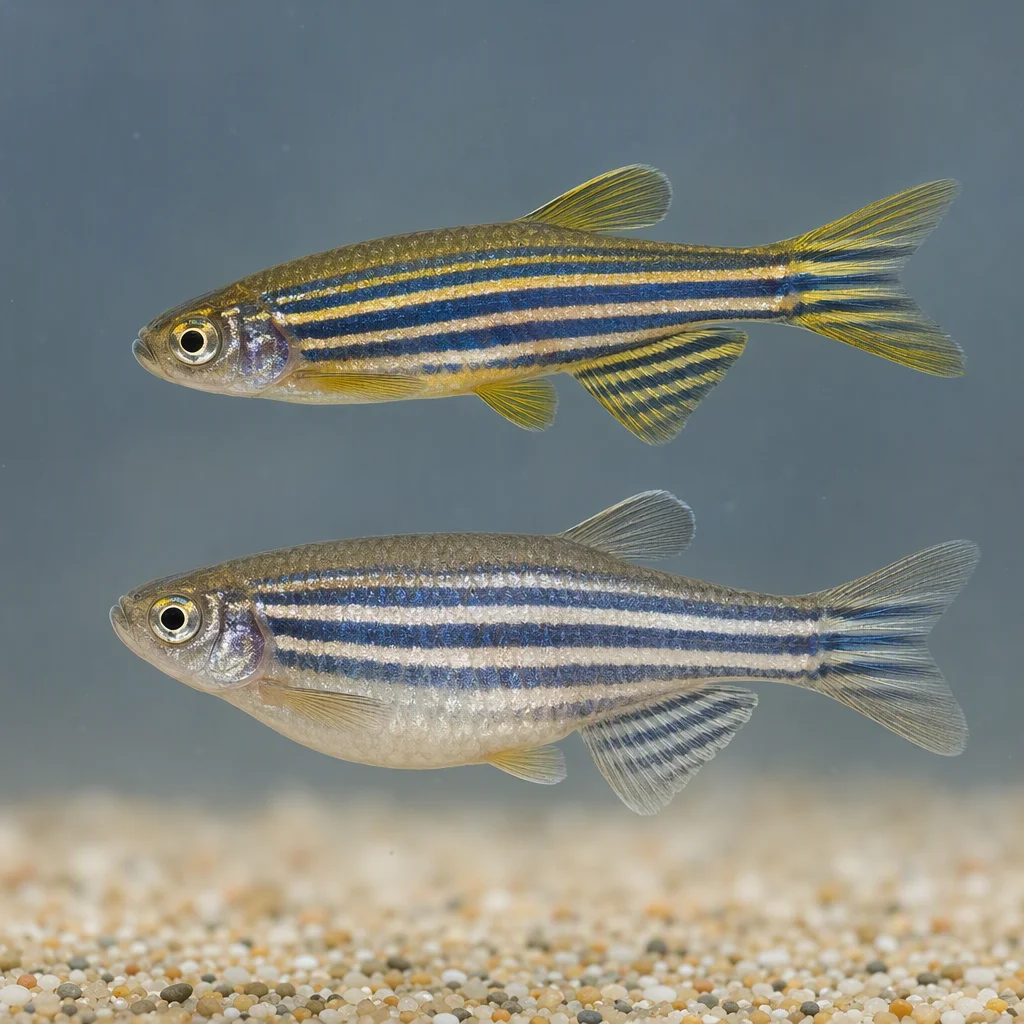 Reference illustration · may contain inaccuracies