Care
Minimum aquarium volume30–60 L (allowed 20–100 L)
Suitable aquarium proportionsStandard, Long
Water temperature22–24 °C (allowed 20–26 °C)
pH6.5–7 (allowed 6–7.5)
General hardness5–10 °dGH (allowed 2–15 °dGH)
Oxygen demandElevated
FeedingDanio margaritatus is an omnivorous species with a very small mouth, requiring appropriately small foods. In nature, it feeds on small invertebrates, zooplankton, algae, and small worms. In the aquarium, it readily accepts quality dry foods (microgranules, small flakes, microcrispies), but the diet should be varied and include live and frozen foods: Artemia nauplii, Daphnia, Cyclops, microworms. Live foods stimulate spawning behavior and enhance coloration. The fish feed in the water column and near the bottom, rarely rising to the surface, so sinking foods are preferred. Feed 2–3 times a day with small portions.
Compatibility
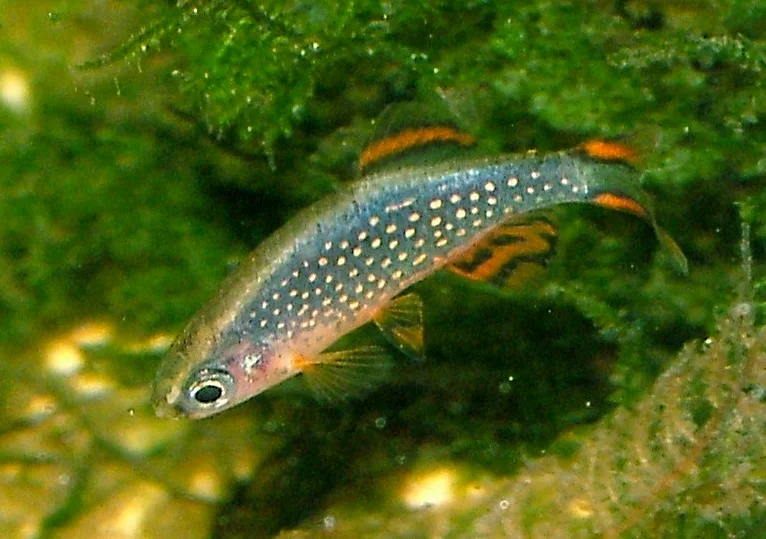
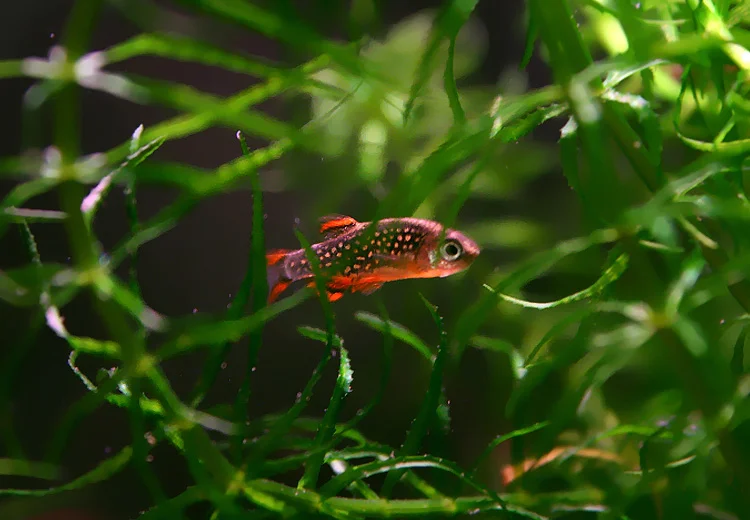
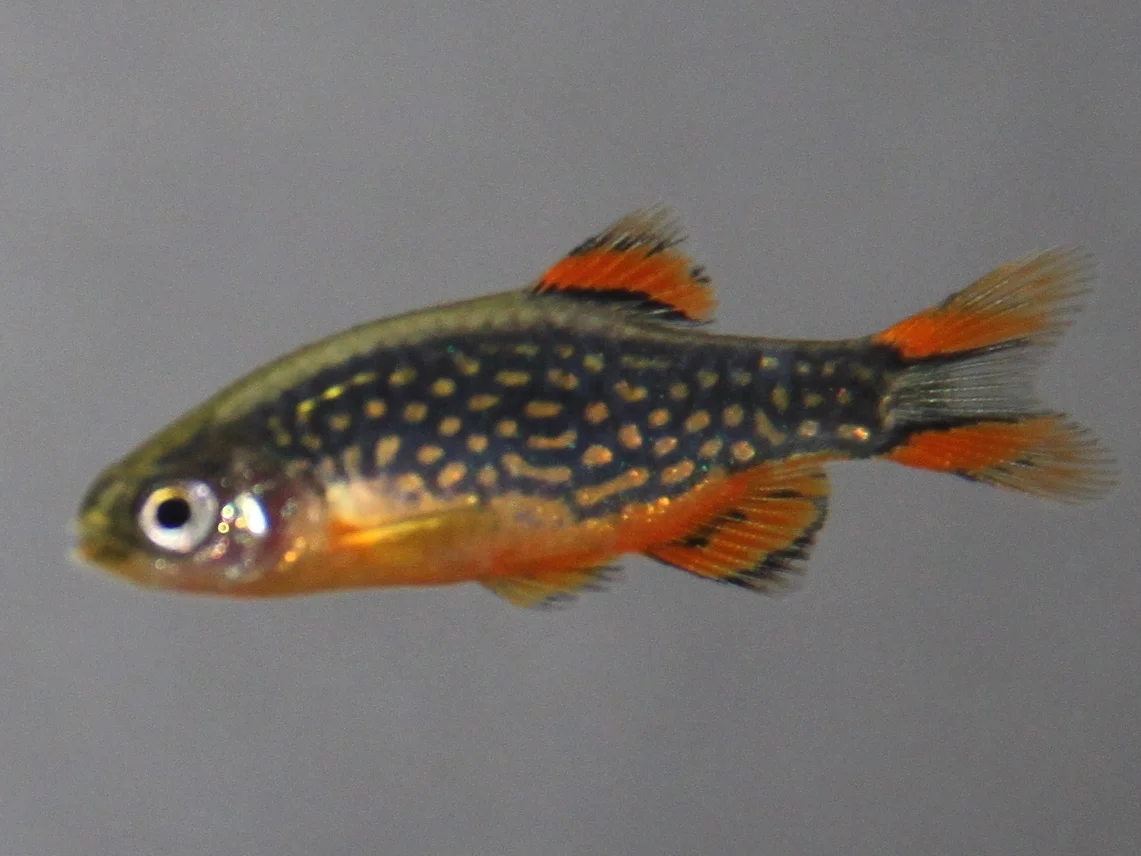
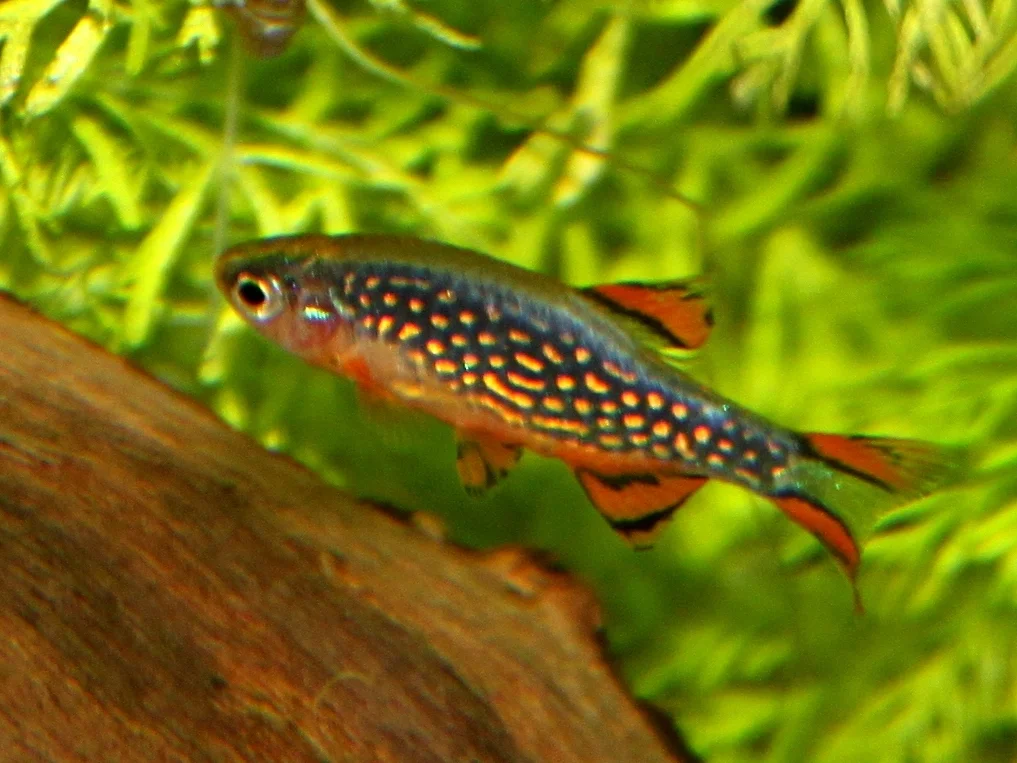
CompatibilityDanio margaritatus is a peaceful schooling fish suitable for nano aquariums and densely planted community tanks. It coexists well with other small peaceful species of similar size: small rasboras, microrasboras, ember tetras, small tetras, cardinal tetras, Endler's guppies, cherry barbs, dwarf corydoras, and shrimps. It is strictly not recommended to keep with large or predatory fish that may perceive this tiny fish (up to 2.5 cm) as prey, or with active species capable of fin nipping or competing for food. A group of 10–20 individuals is necessary within the species: males spar with each other, and in a small group, the aggression of the dominant male can lead to injuries and death of subordinates.
Plant safetySafe
Plant-eating behaviourGalaxy rasbora does not eat or damage healthy aquarium plants: live plants serve as shelter and spawning substrate, so the species is considered safe for planted tanks. Its natural diet mainly consists of small invertebrates, zooplankton, and algae; in the aquarium, the fish may nibble on soft encrustations and filamentous algae but does not harm higher plants.
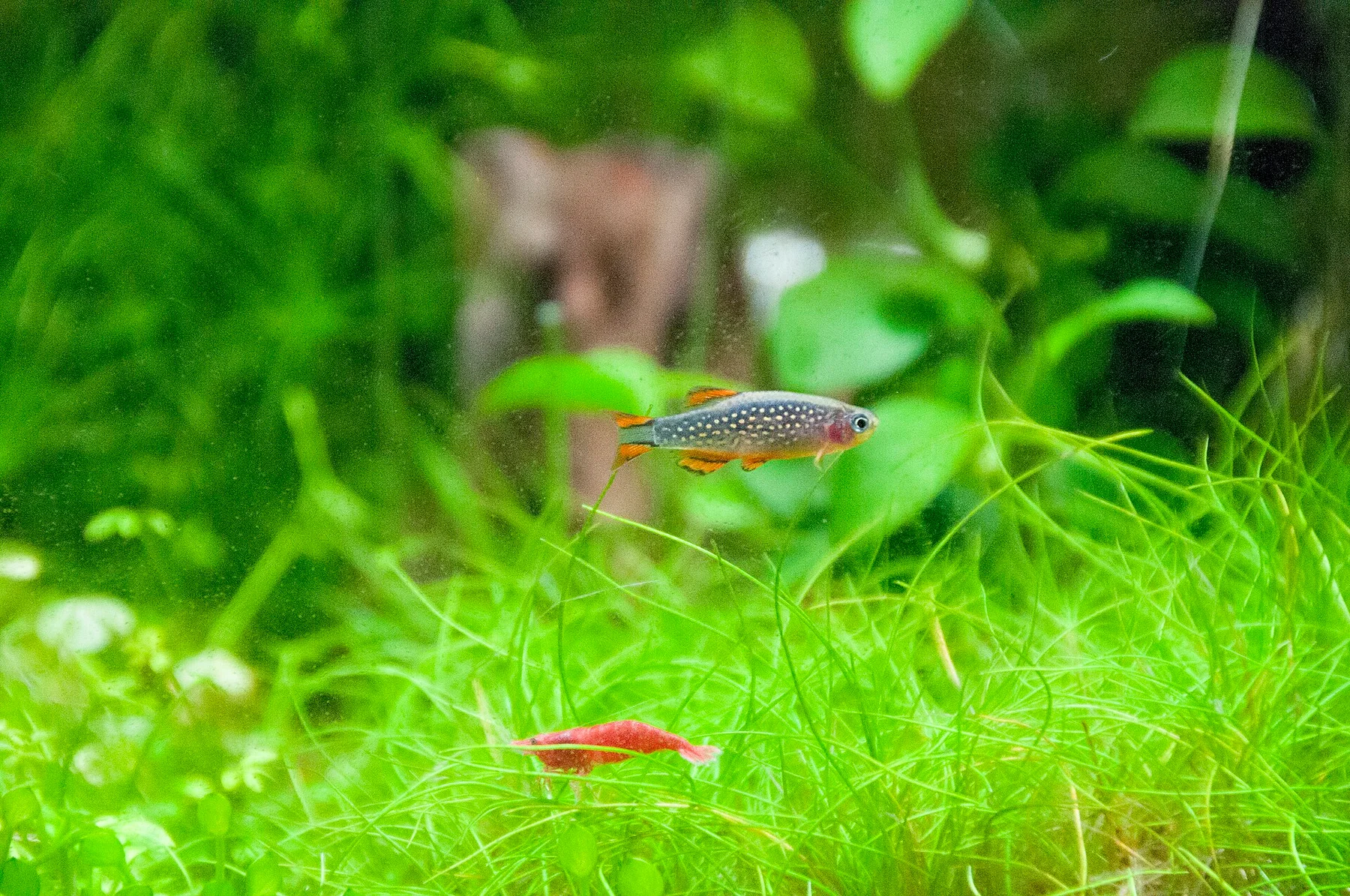
Interaction with invertebratesThe species is safe for adult crustaceans and snails (large shrimp, such as Neocaridina and Caridina) and is often kept with them in nano-aquariums/shrimp tanks. However, as a micropredator, it readily eats very small invertebrates, so it can decimate tiny shrimp (newborns) - this is their natural food. Males/fish are also not averse to eating the egg clutches of their own kind. When planning to breed invertebrate tankmates, it is recommended to exclude them.
Incompatible groupsLarge, predatory, or aggressive fish capable of perceiving the galaxy danio as food are unsuitable: cichlids, bettas, large barbs, large catfish. It is also not recommended to keep fish that create strong currents or compete for territory. Within the species, dominant males may aggressively pursue and injure weaker males, so shelters and sufficient volume are necessary.
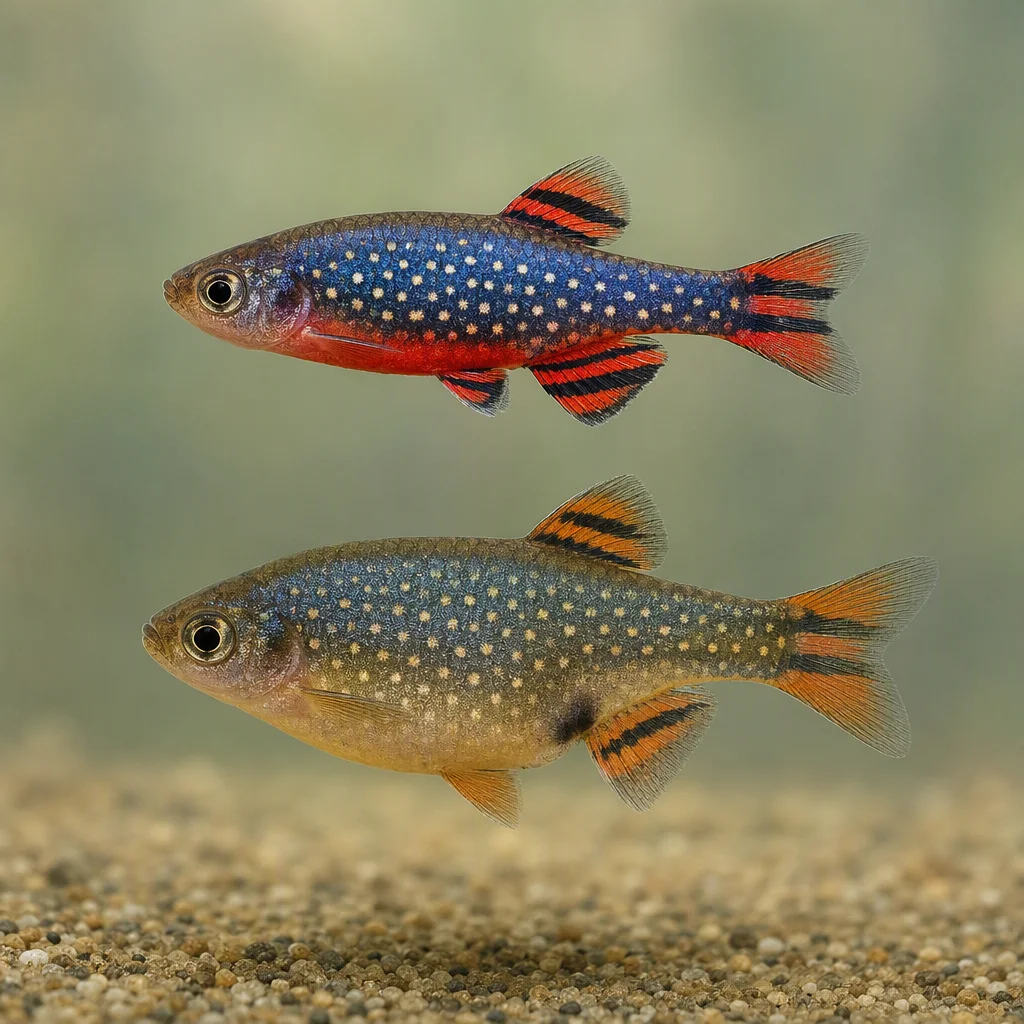 Reference illustration · may contain inaccuracies