Care
Minimum aquarium volume60–100 L (allowed 30–200 L)
Suitable aquarium proportionsStandard, Long
Water temperature22–26 °C (allowed 18–30 °C)
pH6–7.5 (allowed 6–8)
General hardness4–12 °dGH (allowed 1–19 °dGH)
Oxygen demandOrdinary
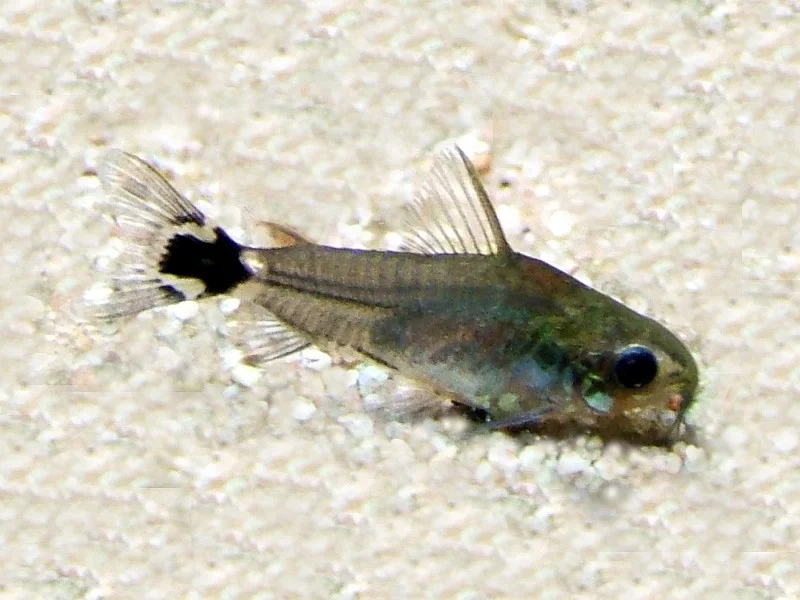
FeedingCorydoras hastatus is an omnivorous collector species. In nature, it feeds on worms, small crustaceans, insects, and plant matter, and is partially adapted to feeding on pelagic zooplankton. In the aquarium, it readily accepts sinking dry foods (microgranules, flakes, tablets for bottom fish), as well as small live and frozen foods: daphnia, Artemia, cyclops, bloodworms, tubifex. Due to its small mouth, all foods should be small. Feed 1–2 times a day with small portions. It is not advisable to rely on leftover food from other inhabitants.
Compatibility
CompatibilityCorydoras hastatus is an extremely peaceful shoaling fish suitable for a community aquarium with small non-aggressive species. Recommended companions include small tetras (ember tetras, black neon tetras), microrasboras (Boraras spp.), dwarf corydoras, small livebearers, and shrimps. In nature, the species forms mixed schools with Serrapinnus kriegi, Aphyocharax nattereri, and Hyphessobrycon elachys. Large, predatory, or fin-nipping fish (large barbs, serpae tetras, cichlids, large gouramis) are not allowed, as they may perceive the small catfish as prey or harass it. It is optimal to keep a group of 10 or more individuals.
Plant safetySafe
Plant-eating behaviourGastrodermus hastatus does not eat healthy aquarium plants. Like other members of the Corydoras genus, it is a benthic omnivorous species that feeds on small bottom invertebrates, worms, crustaceans, and organic debris, but does not damage live plants. In the aquarium, plants are necessary as shelters and resting places — fish often rest on broad leaves (e.g., Anubias, Echinodorus). The diet should include sinking foods, small live and frozen foods, as well as plant components.
Interaction with invertebratesGastrodermus hastatus is a peaceful small fish, safe for most aquarium invertebrates. Russian sources explicitly recommend keeping it in a shrimp tank with a school of shrimp. The species does not show aggression towards shrimp (e.g., Neocaridina) or snails. In nature, it feeds on small crustaceans (daphnia, cyclops, Artemia), but in the aquarium, it does not hunt adult shrimp. It should be noted that very tiny newborn shrimp could theoretically be eaten, but in practice, this is not a serious threat.
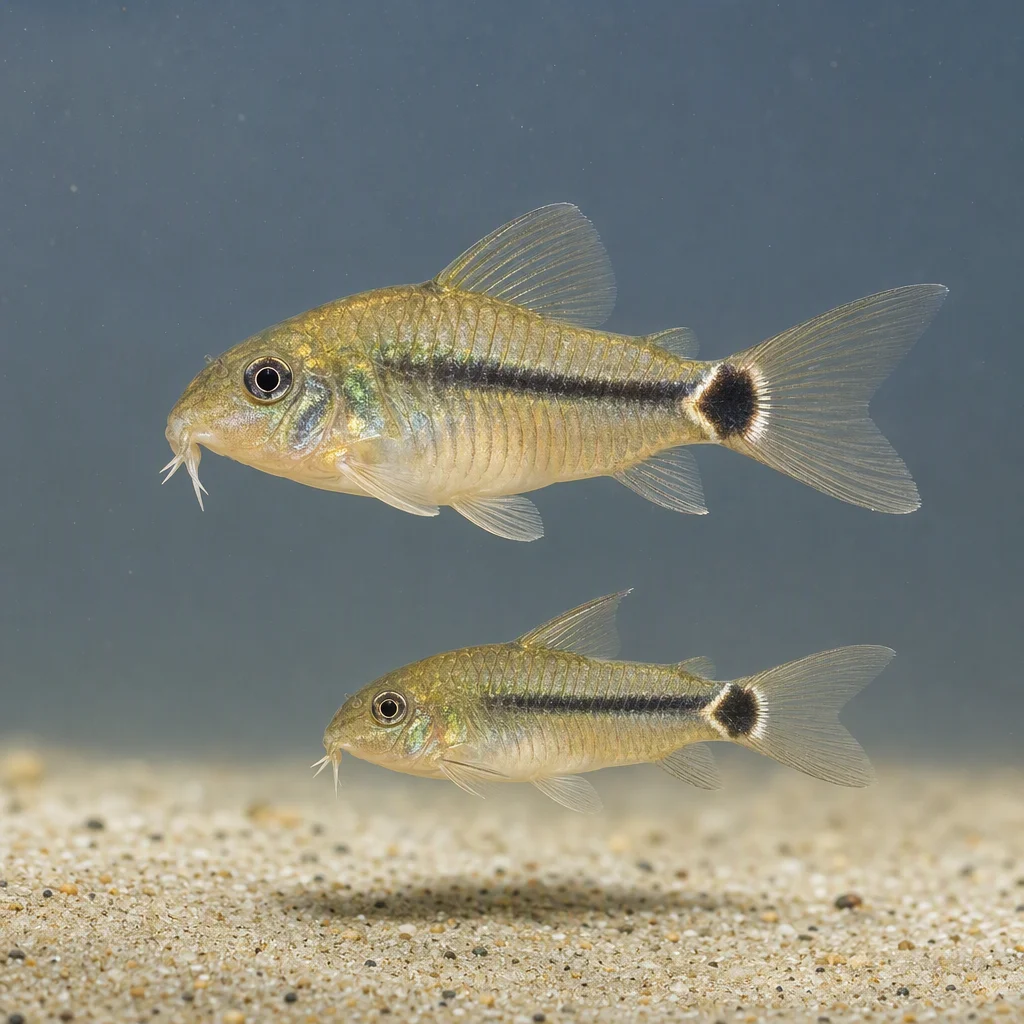 Reference illustration · may contain inaccuracies