Overview
TemperamentPeaceful
Social modelGroup
Minimum group size6
Adult size3–5 cm
Primary swimming zoneBottom
DietOmnivore
Care
Minimum aquarium volume40–70 L (allowed 25–100 L)
Suitable aquarium proportionsStandard
Water temperature22–26 °C (allowed 20–28 °C)
pH6–7.5 (allowed 5.5–8)
General hardness2–10 °dGH (allowed 1–25 °dGH)
Oxygen demandOrdinary
FeedingCorydoras habrosus is an omnivorous species. In nature, it feeds on plankton, detritus, insect larvae, worms, and small crustaceans. In an aquarium, feed with sinking foods: tablets and granules for bottom fish (Tetra Cory ShrimpWafers, Tetra Wafers Mini Mix, Tetra Tablets TabiMin), finely crushed flakes. Regularly supplement the diet with live and frozen foods: Artemia, Cyclops, Daphnia, finely chopped bloodworms, and tubifex. The food should be small enough for the fish's mouth. Feed 1–2 times a day in small portions, preferably in the evening before lights out.
Compatibility
CompatibilityCorydoras habrosus is a peaceful schooling fish suitable for nano aquariums and community tanks with small peaceful fish. It is recommended to keep in groups of 6–10 or more. Good tank mates include rasboras, microrasboras, danios, cardinal tetras, ember tetras, otocinclus, guppies, cherry barbs, and small shrimps (Neocaridina). Large and aggressive fish (angelfish, large barbs, cichlids) that may perceive the catfish as food or compete for food are not suitable. The species is completely safe for plants and does not nip fins.
Plant safetySafe
Plant-eating behaviourHealthy live plants are not eaten or damaged by Corydoras habrosus: it is a typical bottom omnivorous species, feeding on benthic crustaceans, insect larvae, worms, zooplankton, and decaying plant matter in nature. According to aquarists' observations, C. habrosus rarely disturbs live plants or shows interest in algae and vegetables, but may occasionally dig up weakly rooted ground cover plants when actively searching for food in the substrate. The species is considered fully compatible with planted aquariums.
Interaction with invertebratesCorydoras habrosus peacefully coexists with dwarf shrimp and snails. The fish do not hunt adult shrimp and snails but may accidentally eat shrimp fry that enter their mouths while searching for food on the bottom. With sufficient hiding places and plants, keeping with shrimp is considered safe.
Incompatible groupsAvoid keeping with large, aggressive, or territorial fish capable of swallowing miniature catfish or harassing them: large cichlids, angelfish, large barbs, large catfish. Also undesirable are active fish that compete for food at the bottom and species that damage barbels or fins. They do not tolerate salt and copper in the water.
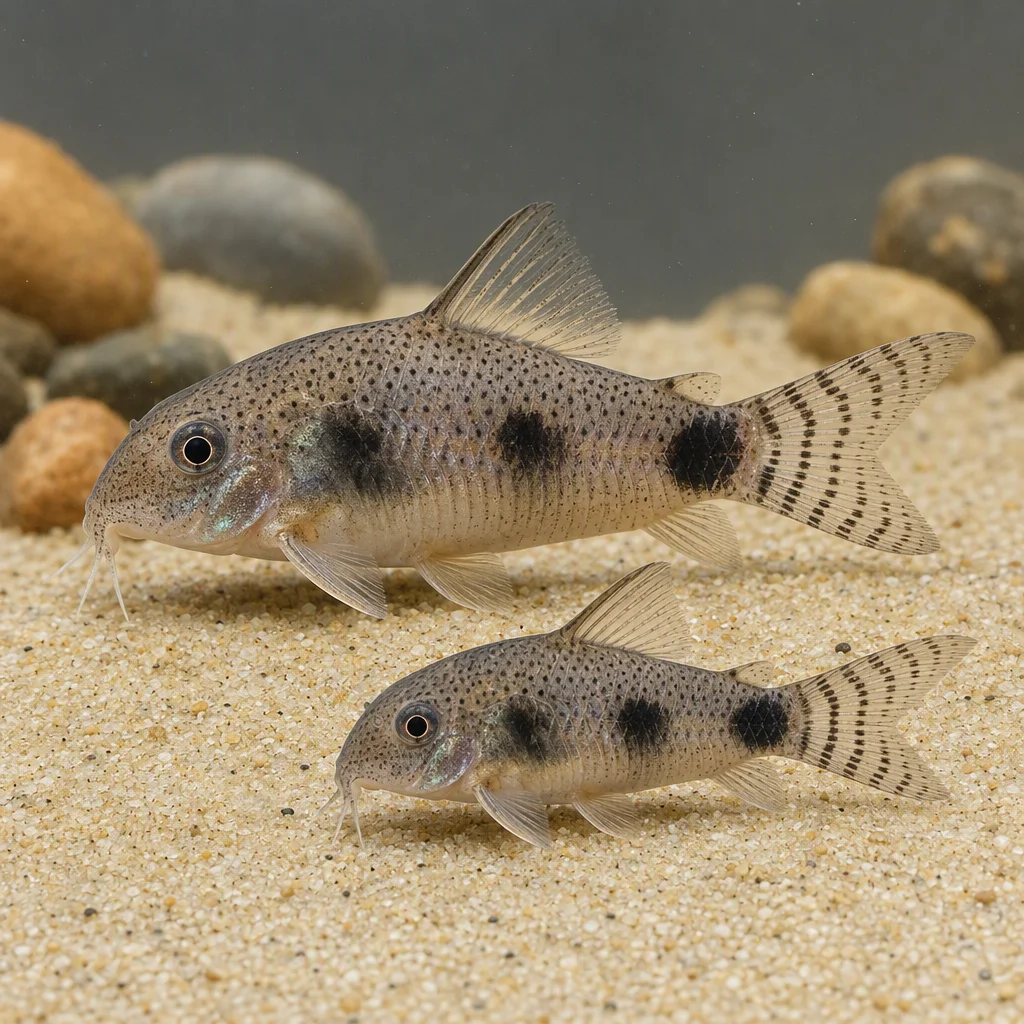 Reference illustration · may contain inaccuracies