Overview
TemperamentPeaceful
Social modelGroup
Minimum group size6
Adult size6.5–7.5 cm
Primary swimming zoneBottom
DietOmnivore
Care
Minimum aquarium volume72–80 L (allowed 60–100 L)
Suitable aquarium proportionsStandard, Long, Wide
Water temperature21–27 °C (allowed 20–28 °C)
pH6–8 (allowed 5.5–8)
General hardness2–15 °dGH (allowed 1–25 °dGH)
Oxygen demandOrdinary
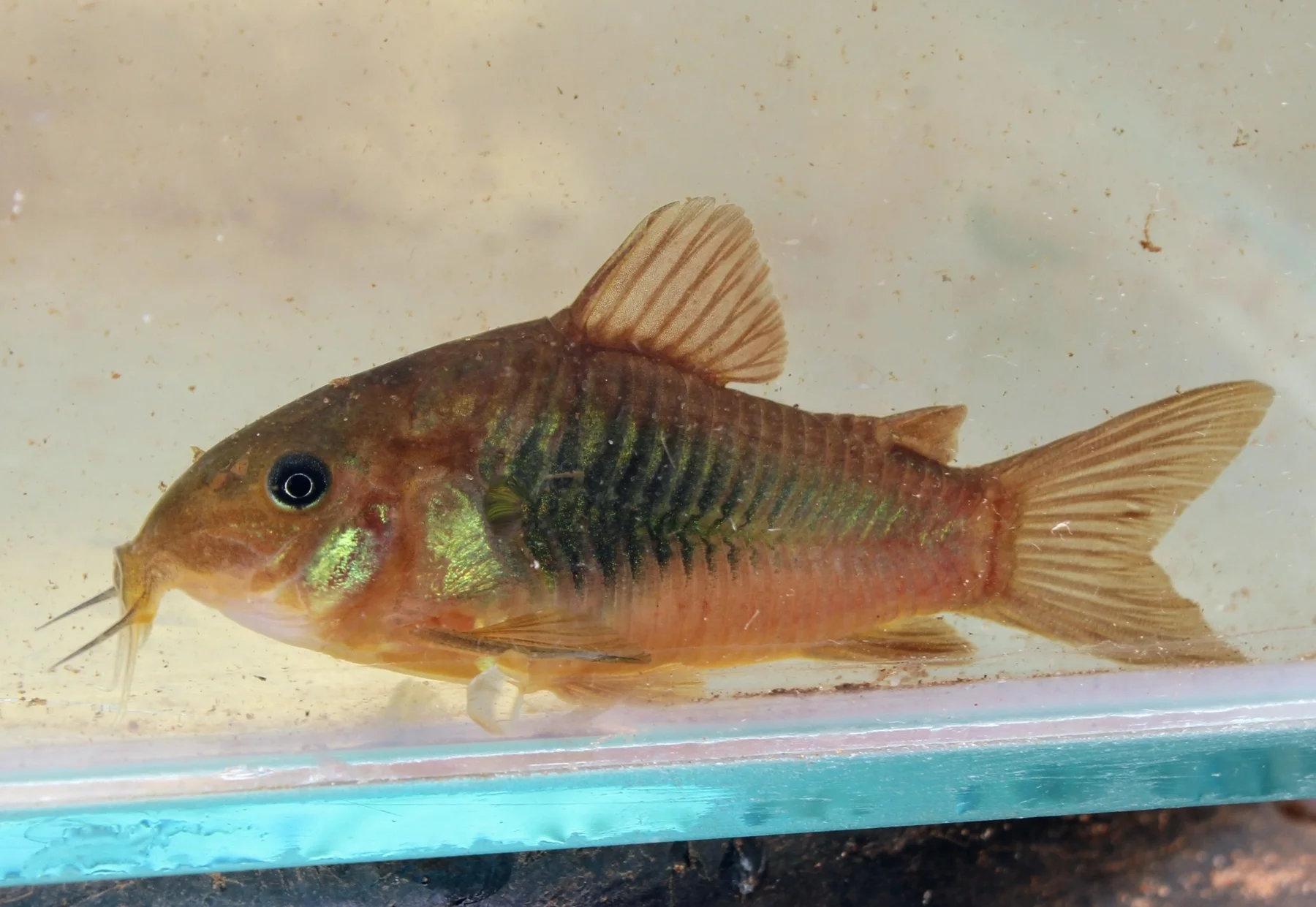
FeedingAn omnivorous bottom species that requires sinking foods: in the wild, it eats worms, crustaceans, insects, and plant matter. In an aquarium, a variety of sinking pellets/tablets, as well as frozen and live foods (bloodworms, tubifex, Artemia), should be provided. Corydoras should not be fed only on leftovers from other fish; they need proper feeding, which is more effective after lights are turned off when the fish are more active.
Compatibility
CompatibilityA peaceful schooling bottom dweller, well-suited for a community aquarium with non-aggressive neighbors: tetras, rasboras, danios, livebearers, gouramis, and small cichlids. Should be kept in groups of at least 6. It is not recommended to keep with large aggressive fish capable of swallowing the catfish or nibbling its fins, as well as with fin-nipping species (for long-finned forms).
Plant safetySafe
Plant-eating behaviourOmnivorous, feeding on worms, crustaceans, insects, and plant matter in the wild; does not damage live plants and does not consider them as primary food, making it safe for planted aquariums.
Interaction with invertebratesGenerally compatible with shrimp and usually ignores adult shrimp, but small newborn shrimp may be accidentally eaten.
Incompatible groupsLarge predatory and aggressive fish capable of swallowing or injuring Corydoras; species requiring hard, alkaline water or high temperatures outside the comfortable range; fish actively competing for bottom food and territory.
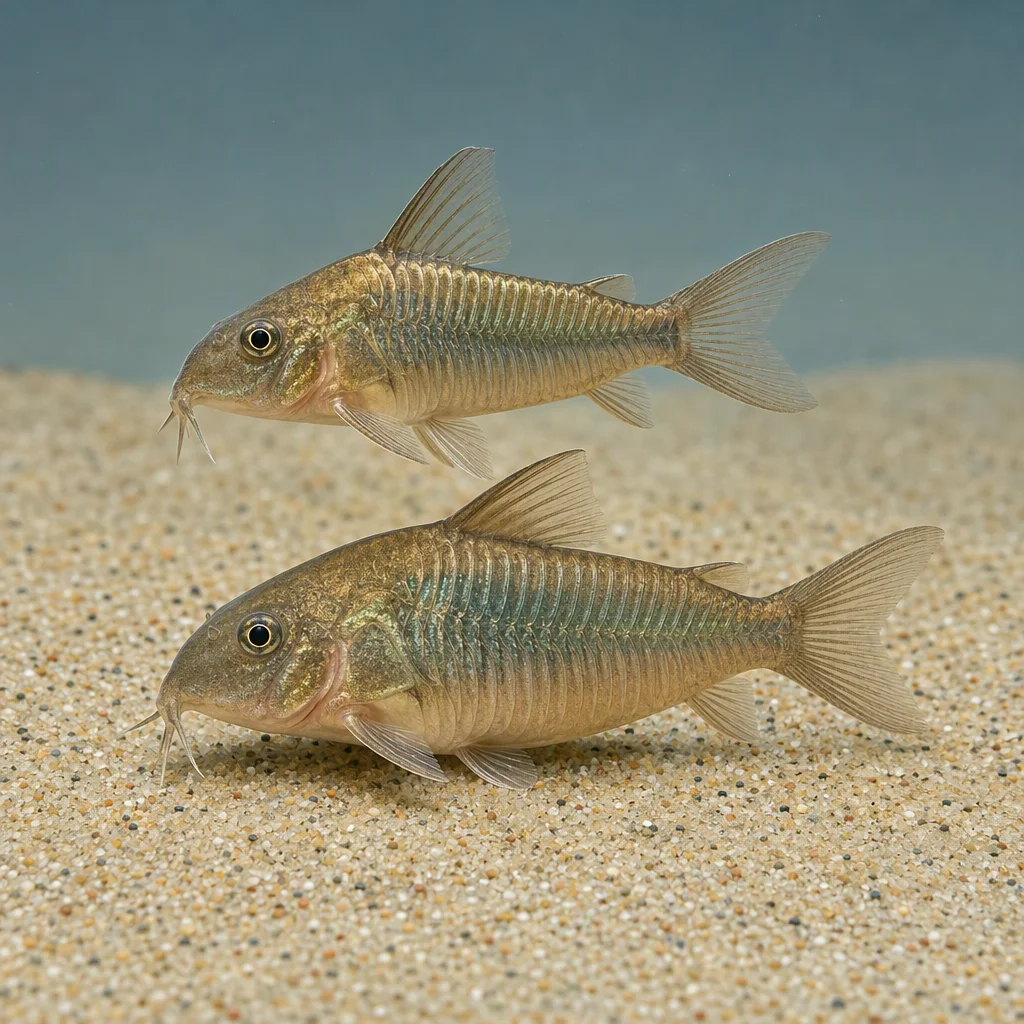 Reference illustration · may contain inaccuracies