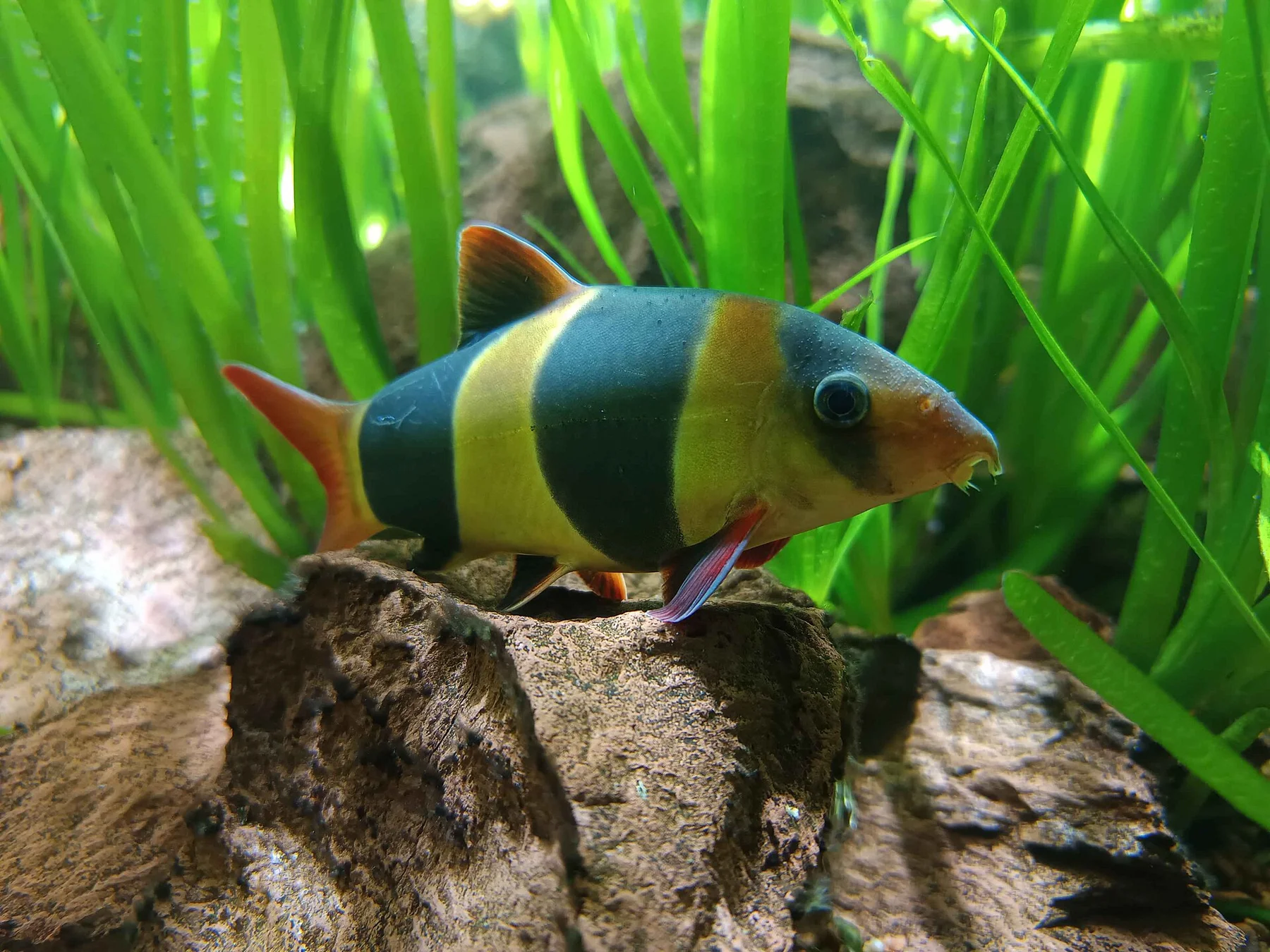
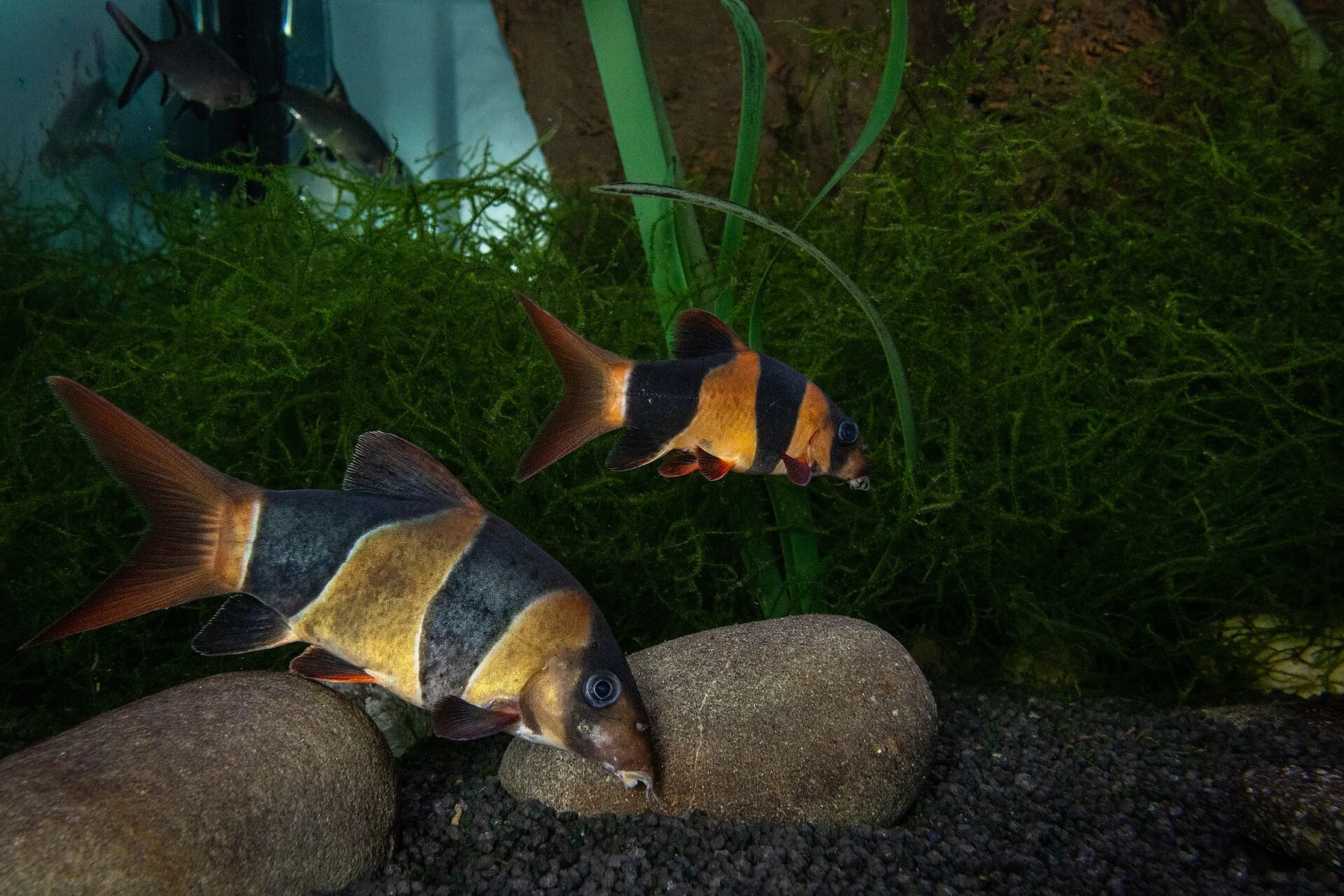
Overview
TemperamentPeaceful
Social modelGroup
Minimum group size5
Adult size20–30.5 cm
Primary swimming zoneBottom
DietOmnivore
Care
Minimum aquarium volume250–400 L (allowed 200–600 L)
Suitable aquarium proportionsLong
Water temperature25–28 °C (allowed 24–30 °C)
pH6–7.2 (allowed 5–8)
General hardness4–12 °dGH (allowed 1–12 °dGH)
Oxygen demandElevated
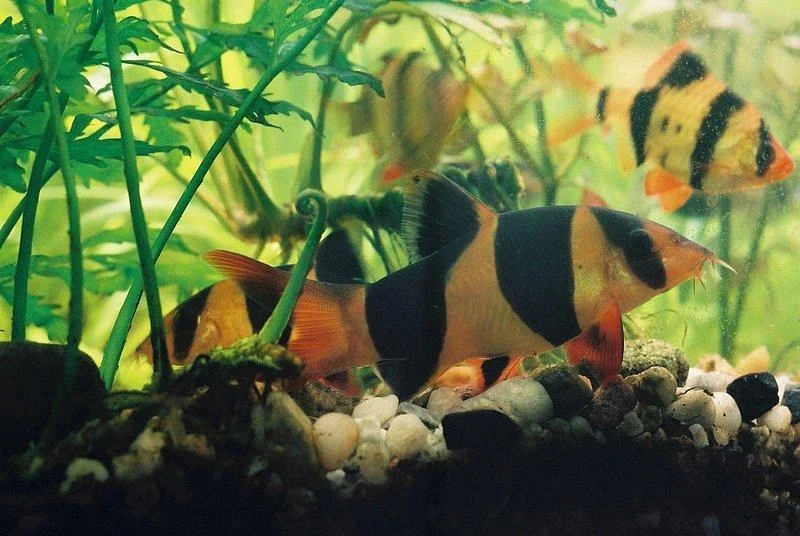
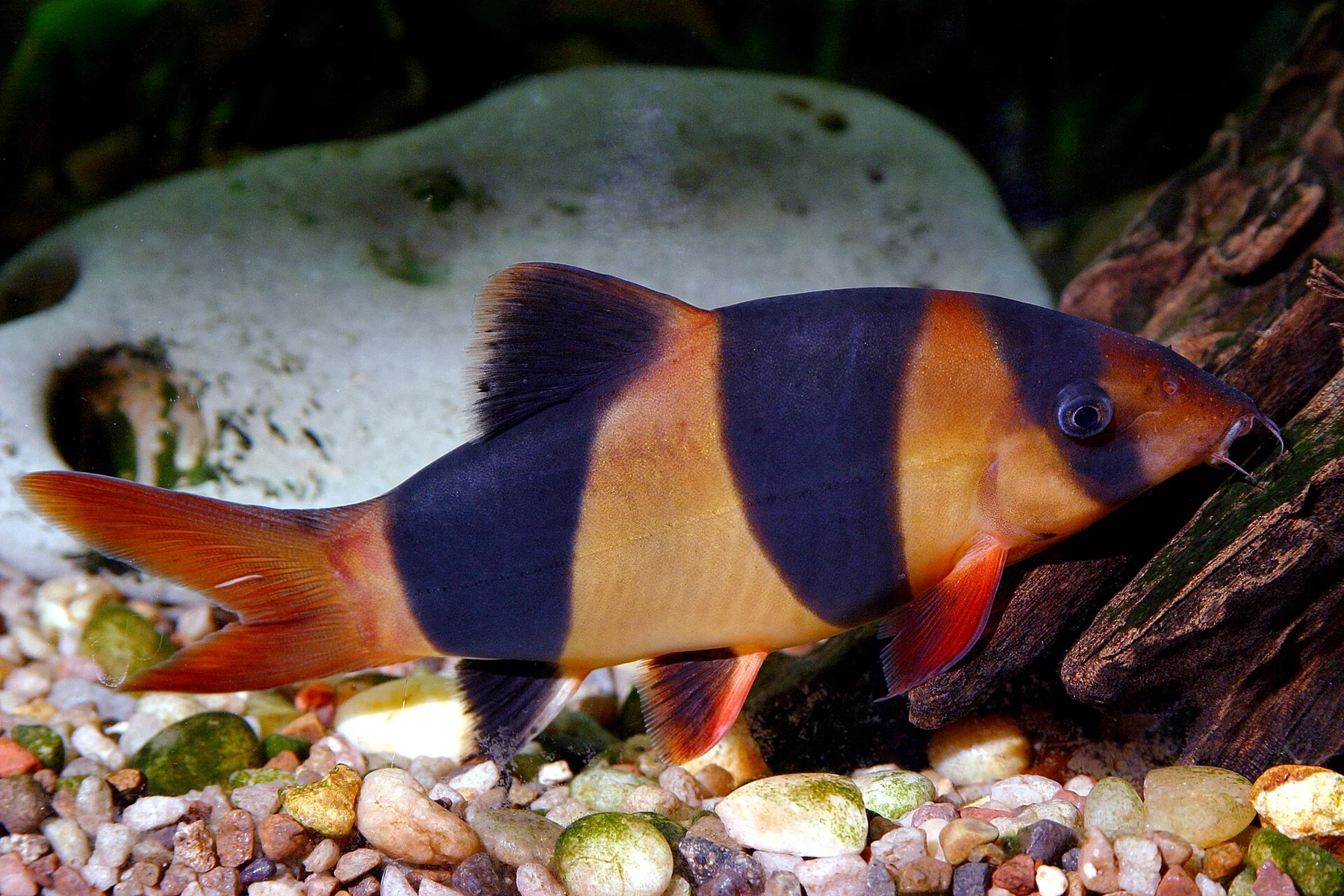
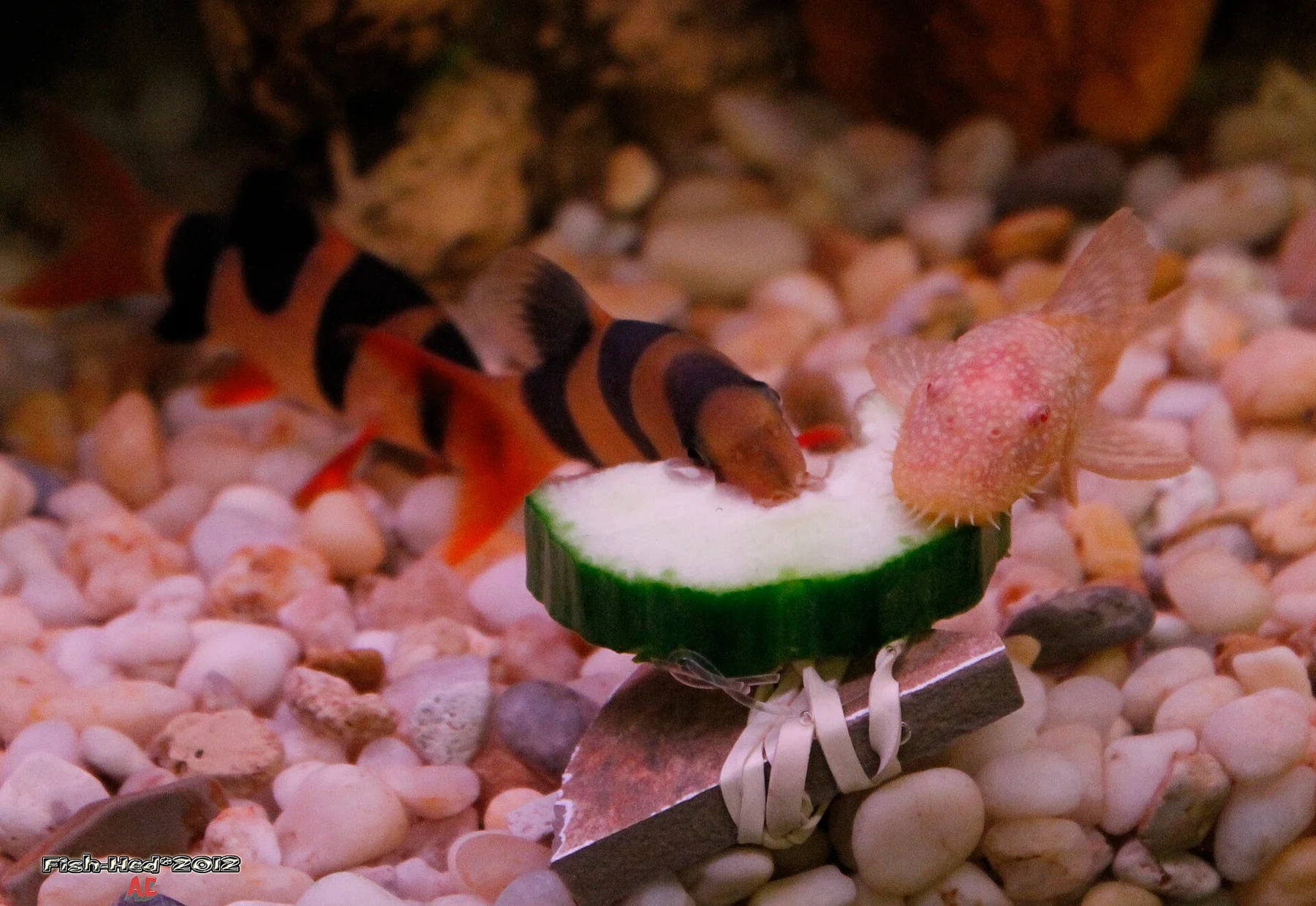
FeedingClown loach is an omnivorous, predominantly carnivorous species: in nature, it feeds on worms, crustaceans, and plant matter. In the aquarium, a varied diet of high-quality dry foods, live or frozen bloodworms, tubifex, artemia, as well as fresh vegetables and fruits (cucumber, melon, blanched spinach, zucchini) is needed. It readily eats snails but is not obligately molluscivorous.
Compatibility
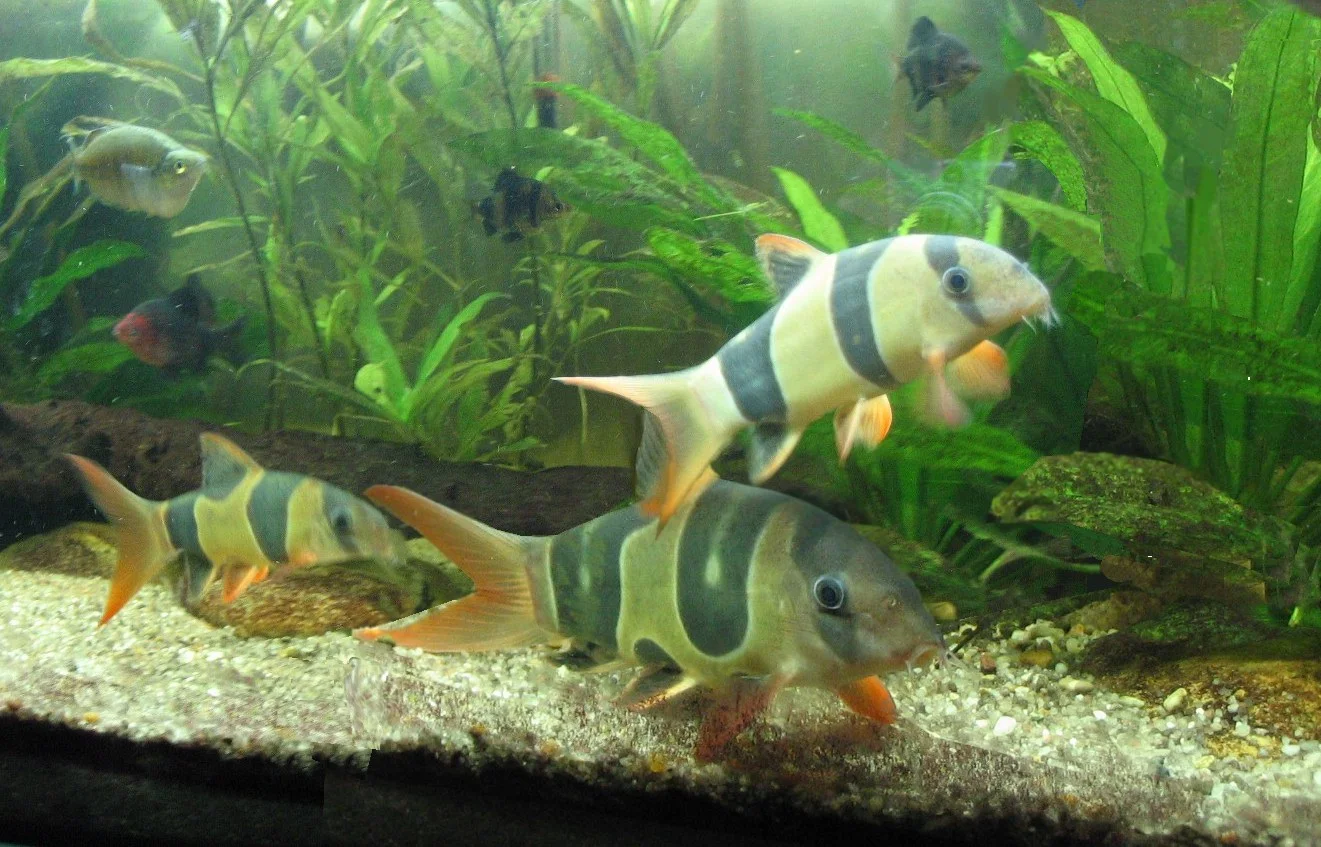
CompatibilityClown loach is a schooling, generally non-aggressive species that should be kept in groups of 5–6 or more; solitary or paired fish become withdrawn or aggressive. Not suitable with very small fish, slow-moving long-finned species, or territorial cave dwellers. It coexists well with peaceful open-water carp, other loaches, and many catfish.
Plant safetyMay damage
Plant-eating behaviourThe species is primarily carnivorous but also eats plant matter, including soft-leaved aquatic plants; adult specimens may damage or uproot plants, so only hardy species (anubias, ferns) are recommended in tanks with adult clown loaches, or live plants should be avoided.
Interaction with invertebratesLionhead Loaches actively eat snails and small shrimp, so they are not suitable for keeping with decorative invertebrates. They are not obligate molluscivores, but given the opportunity, they readily destroy snails and hunt for shrimp.
Incompatible groupsDo not keep with significantly smaller fish that clown loaches may intimidate; avoid slow-moving and long-finned species (veil types, guppies, many cichlids), which may have their fins nipped; do not house with territorial cave dwellers (plecos, cichlids), which clown loaches may disturb; a group of 5–6 or more is essential, as solitary or paired fish become withdrawn or aggressive towards similar-shaped species.