Care
Minimum aquarium volume30–60 L (allowed 20–200 L)
Suitable aquarium proportionsStandard, Long
Water temperature23–27 °C (allowed 20–28 °C)
pH5–6.5 (allowed 4–7)
General hardness1–5 °dGH (allowed 1–8 °dGH)
Oxygen demandOrdinary
FeedingIn nature — micro-predator/omnivore: feeds on small insects, worms, crustaceans, and zooplankton. In the aquarium, due to its very small mouth (terminal type), food should be finely divided: high-quality flakes/granules and microgranules, as well as small live and frozen foods (cyclops, daphnia, Artemia, microworms). Animal-based foods are preferred; a protein-rich diet enhances coloration and stimulates spawning. Suitable are slow-sinking and floating foods; overfeeding must be avoided.
Compatibility
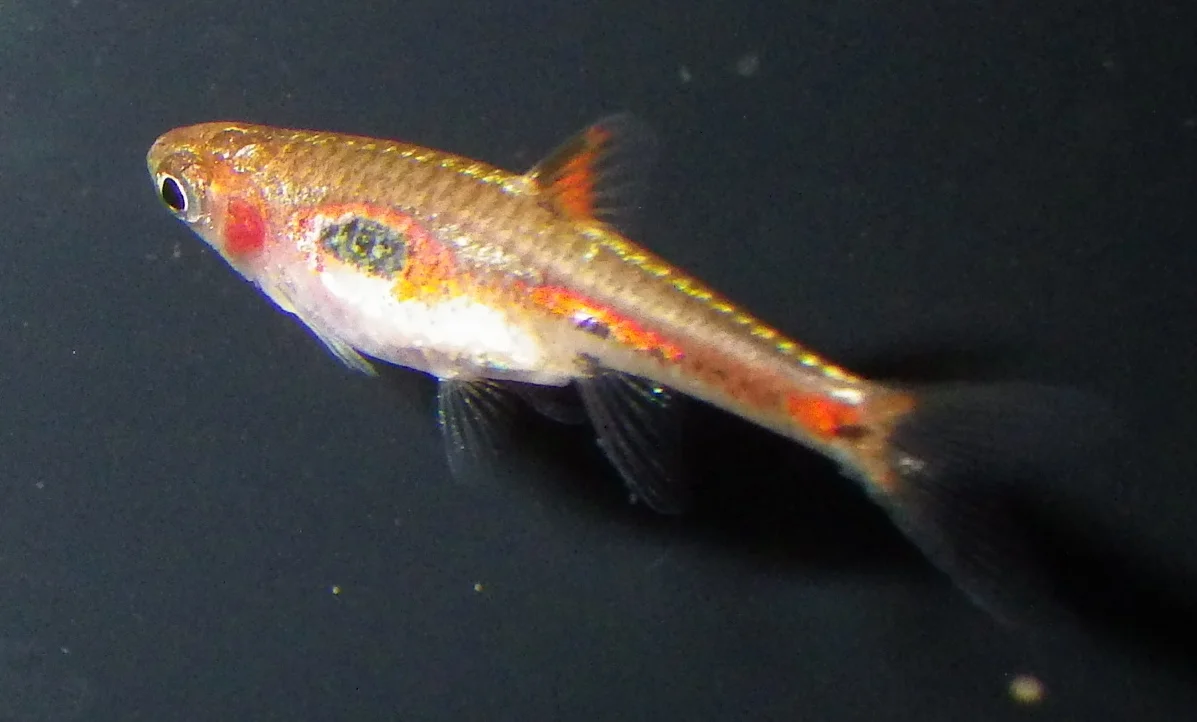
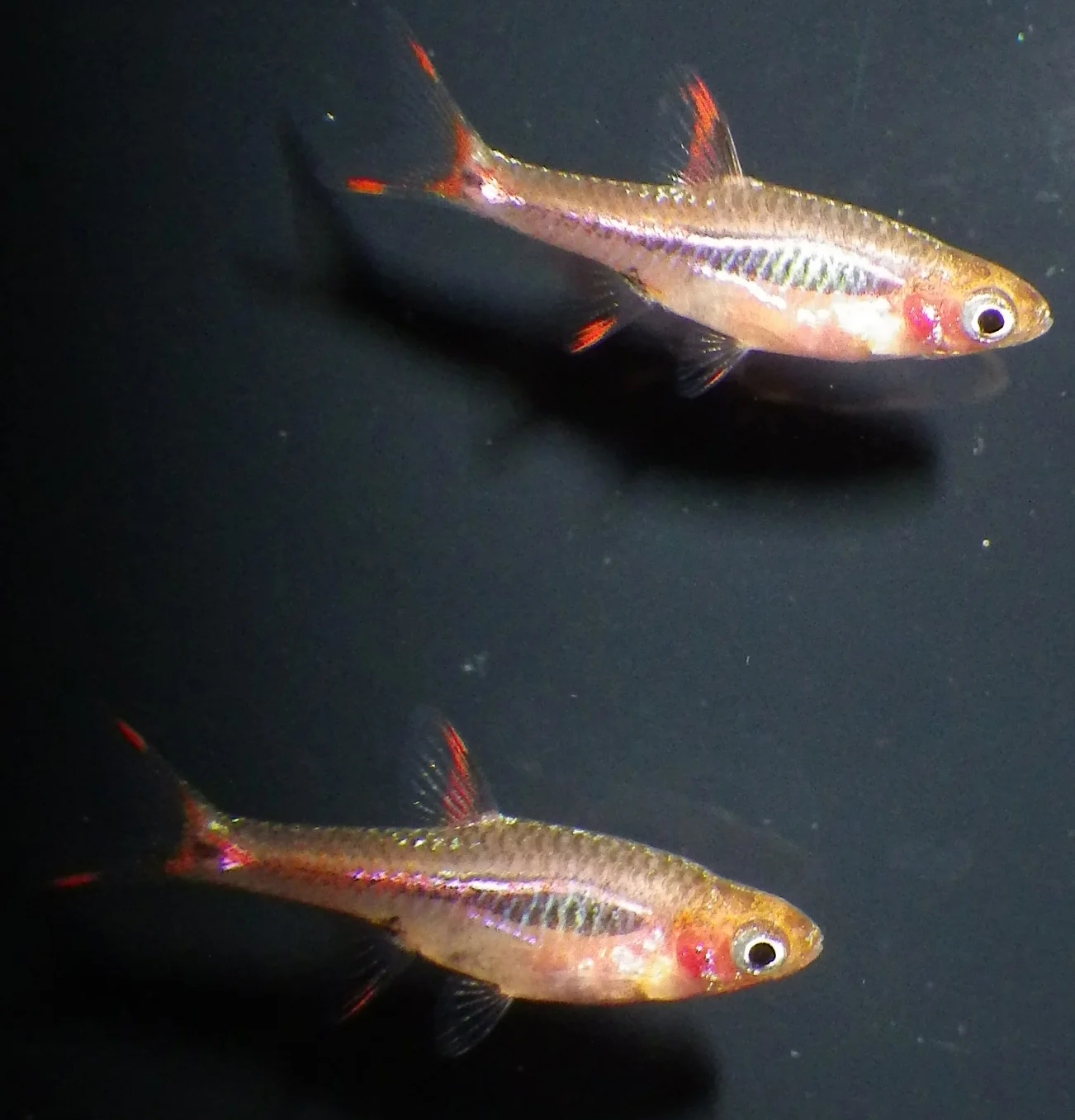
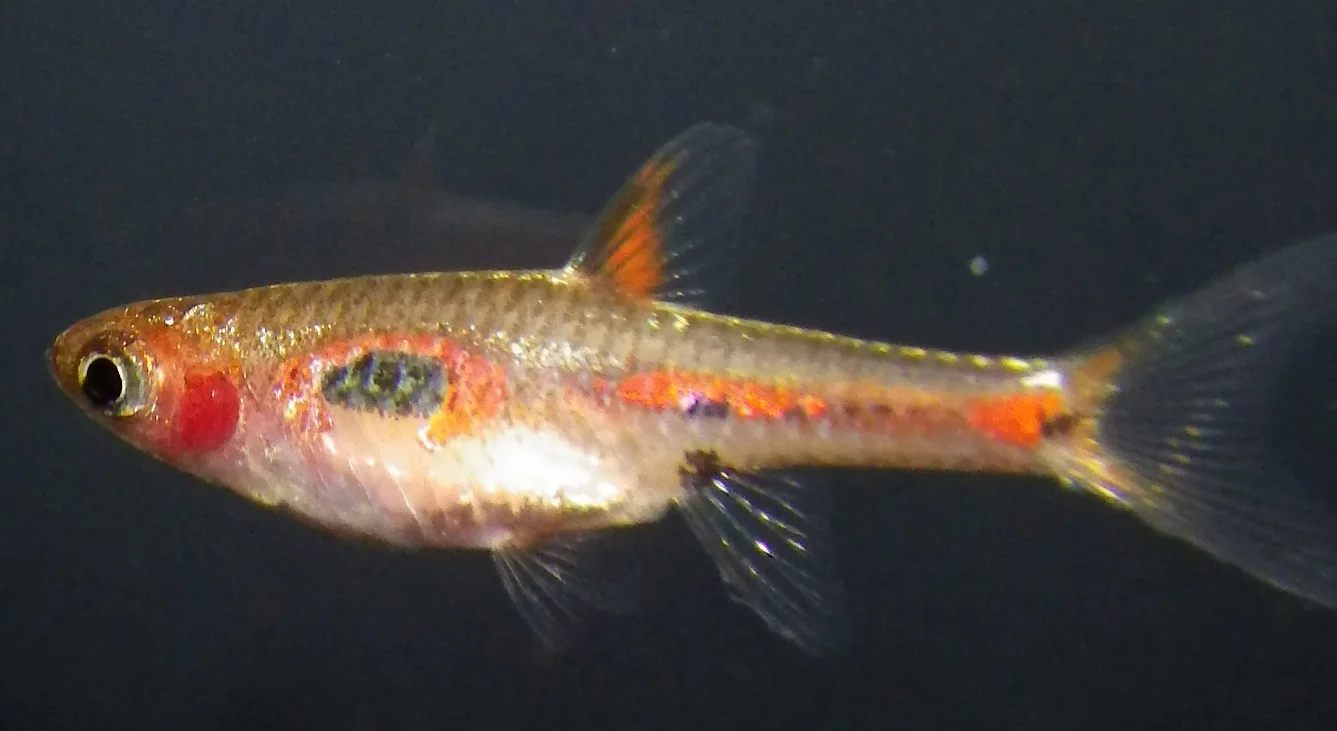
CompatibilityBoraras merah is a very peaceful schooling fish suitable for nano aquariums. It is ideal to keep the species in a group of 8–10 or with comparably small peaceful neighbors: other microboraras/rasboras, microtetras, dwarf corydoras, otocinclus, dwarf gouramis, and small shrimps (Neocaridina/Neocaridina). It should not be kept with large, active, or aggressive fish that might intimidate or eat the tiny (up to 2 cm) fish. It is safe for plants and does not harm adult shrimps (though very young shrimp may be eaten). The best survivability is in densely planted aquariums with gentle flow.
Plant safetySafe
Plant-eating behaviourDoes not eat plants or algae; not a herbivore or cleaner. Safe to keep with live plants, including small-leaved types (Java moss, ferns, crypts).
Interaction with invertebratesBoraras merah peacefully coexists with small shrimps (e.g., Neocaridina/red cherries) and does not harm adult specimens. However, the fish may eat tiny shrimp fry; with sufficient hiding places and dense vegetation, they do not cause serious harm to dwarf shrimp populations. No data on interactions with other invertebrates (snails, etc.) are provided in sources.
Incompatible groupsAny fish larger than ~2–3 cm capable of perceiving Rasbora measure as food (most fish over 5 cm), as well as aggressive, territorial, or overly active species (bettas, dwarf cichlids, large barbs, danios), which will intimidate the fish and compete for food. Large shrimps (e.g., Amano) are also undesirable as they may harass small fish.

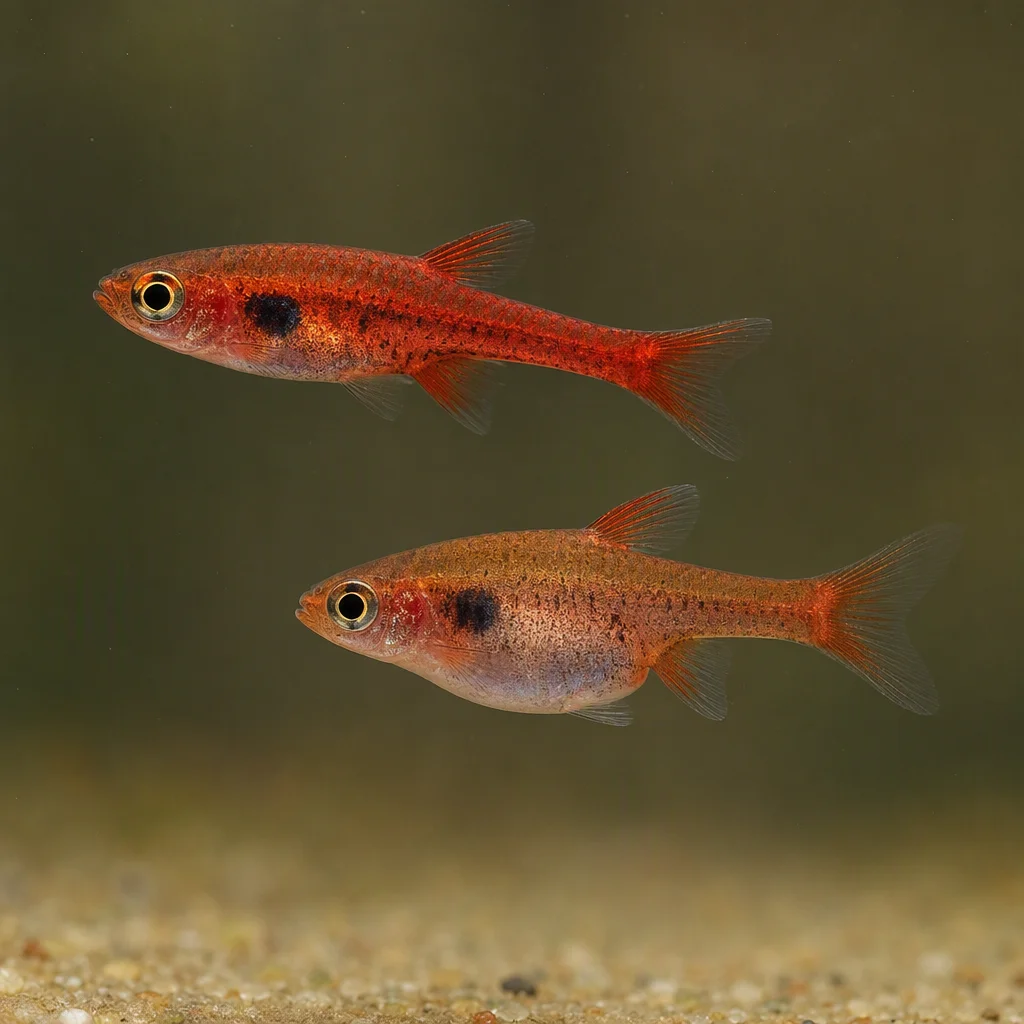 Reference illustration · may contain inaccuracies